
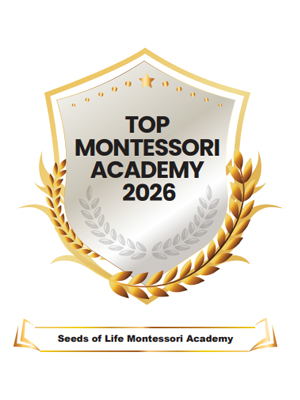
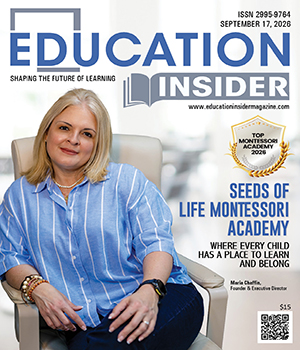
Astudent from a school designed for individual learning needs, came to Seeds of Life Montessori Academy, a Montessori school serving children from 18 months through age 12 in Sarasota, Florida. He came with a strong belief that he belonged in a regular school. His progress report indicated that he was performing at a second-grade level, even though he was entering fifth grade. Teachers at Seeds of Life invited him to complete their initial assessment, which showed that he was actually working at a fourth-grade level. Maria Chaffin, founder and executive director of Seeds of Life Montessori Academy, was amazed. She could hardly believe the difference between the report they had received and what she was seeing in front of her. The school accepted him, and Alexander went on to complete fourth, fifth, and sixth grade at Seeds of Life. A student who had been told that he might not graduate and might remain in a different type of educational program, Alexander now attends a nearby Montessori middle school and is doing remarkably well. He is now in eighth grade. “Alexander's story illustrates something fundamental about the way we approach education. A child's potential cannot always be found in a report card,” says Maria.
Healthcare and Allied Health Training
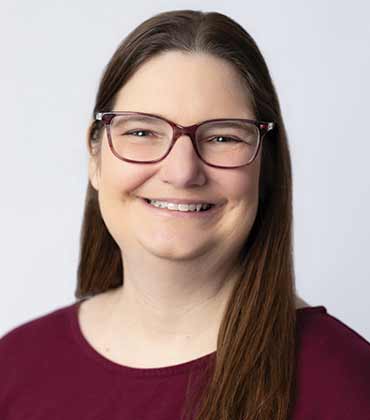
Dyslexia does not look the same in every student. One student may be able to read an entire novel but struggle to spell a word or write a paragraph. Another may read the words correctly but struggle to comprehend what they have just read. Someone else may need to start much earlier, learning to connect sounds and symbols before reading can begin to take shape. That is why helping a student with dyslexia is rarely as simple as identifying what they cannot do. The real challenge is understanding why they are struggling, what skills are getting in the way, and what kind of support will help them move forward. Because when two students can arrive with the same broad label and have completely different needs, treating them the same can leave the real problem untouched. That is where Dyslexia Achievement Center stands apart. The center provides assessment and intervention for students with and without dyslexia, and unlike many dyslexia centers, it does not require a formal diagnosis to begin working with a learner. Every student starts with a skill-level assessment to determine where they are and where intervention should begin. From there, the center looks beyond a single academic weakness. Dyslexia Achievement Center brings together special education teachers, reading specialists, speech therapists, occupational therapists, regular education teachers and a counselor. Reading and math interventions use the Orton-Gillingham, or structured literacy, approach. Instruction is one-on-one, systematic and tailored to the learner. Students do not simply move ahead because a lesson or session is finished. They work toward mastery, with the center collecting data during every session and requiring at least 90 percent accuracy before moving on to a skill. “The team looks at the specific skills a student needs to develop and matches them with an interventionist whose experience and expertise best fit those needs,” says Dr. Nicole Boyington, president and CEO..
Top Christian Boarding High School 2026

More than a century ago, families in Minnesota were asking a question that still resonates today. How do you give children a strong education without separating what they learn from what they believe? Their answer became Hillcrest Lutheran Academy. Founded in 1916 as part of a Christian revival movement, Hillcrest was established to integrate rigorous academics and Christian faith into a single educational experience. That purpose still shapes the school today through a model that remains uncommon: a classical Christian education delivered within an international boarding community. Students engage directly with foundational texts, debate ideas, ask difficult questions, and learn to explain why they believe what they believe. Just as importantly, they live those lessons alongside peers from around the world, extending learning beyond the classroom into daily community life. “We really just teach kids how to think and how to defend what they believe,” says Luke Fiskness, president and head of school.
Top Health Science Academy 2026
In most high schools, healthcare education begins with textbooks and lectures that introduce students to medical language, principles of anatomy, and the importance of care. But true preparation requires more than theory, it should provide students the opportunity to apply their knowledge and gain real-world experience. That’s where hands-on healthcare programs are transforming learning into practice, and Toledo Pre-Medical and Health Science Academy leads the way. Ranked fifth in Ohio for college readiness and among the top twenty percent nationwide with five-star rating, the academy bridges the gap between education and workforce. Seventeen-year-old Rozanae is one shining example. Each morning, she walks into school not just as a student but as a nurse in training. With more than forty college credits completed, she’s only two classes away from becoming a licensed practical nurse. Each year, students like her choose this academy as it offers the opportunity to build a future in healthcare with real tools, labs and certified experience while still being in high school. “There is a disconnect between traditional education and the modern workforce. We are filling that gap by giving students the tools, skills and credentials they need to thrive,” says Jack Hunter, principal. An Early Curriculum with Purpose The academy’s curriculum, based on the nationally recognized Project Lead the Way, puts project-based learning and career exploration first. In seventh grade students explore real-world medical problems. Whether developing orthotics to enhance mobility or adaptive toys to support children with cerebral palsy, each project fosters a blend of clinical creativity and real-world application. By eighth grade, the emphasis moves to clinical skills. Students are trained to record blood pressure, take vital signs, and determining potential causes of illness by case-based learning. In ninth grade, the students are trained in forensic science, where lab work includes DNA analysis and evidence evaluation. During their tenth-grade, students make an important transition, taking college-credit courses in human anatomy and medical terminology and choosing one of three focused career pathways. Pharmacy and biomedical science offer the chance to pursue a technician license. Nursing and patient care include preparation for state tested nurse assistant certification and hands-on experience in sterile processing. The athletic training and kinesiology leads to credentials as personal trainers, referees and physical therapy aides. These programs ensure that students don’t just learn about healthcare but begin living it. Many graduate with certifications in hand, take up part-time roles in clinics or pharmacies, or carry forward college credits that ease their journey into higher education. Equity and inclusion are central to the academy’s design. The student body reflects the diverse demographics of the city it serves, creating a learning community where different perspectives strengthen understanding and leadership. This harmony between education and representation ensures that every student feels seen, supported and prepared to thrive in the healthcare field.

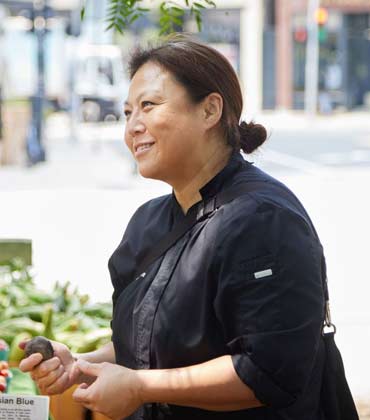
In an era where convenience often overshadows quality, Monarch Catering redefines the school food service landscape. Founded by Christine Lee, president and chef-owner, on the principles of scratch cooking and sustainable sourcing, Monarch is on a mission to bring fresh, nutrient-dense meals to students. The company is turning the often-overlooked school lunch hour into an opportunity for joy, nourishment, and community. Lee, who brings a rich culinary background to the table, describes Monarch Catering as more than a catering company—it is a movement. "By prioritizing fresh, sustainable, and regenerative ingredients, we are delivering meals that meet high nutritional standards and delight young palates," she says. A Personal Journey. A Profound Mission. Lee’s journey to founding Monarch Catering was deeply personal. Having worked in high-end restaurants and volume-based food production environments, she was no stranger to the culinary world. However, becoming a mother transformed her perspective on food. Cooking for her toddler at home presented challenges she hadn’t encountered in professional kitchens. When the opportunity arose to cook school lunches seven years ago, she embraced it with enthusiasm. It quickly became a passion project.
Christian Colleges

Three Considerations for Institutions Before Signing with a Tutoring Company
Leah Simpson, Executive Director of Online Learning, KCTCS
Test Prep and Tutoring Services
Advancing Higher Education through Data-Driven Innovation and Generative AI
Jean Mandernach, Executive Director, Center for Innovation in Research and Teaching, Grand Canyon University
Nursing Colleges
Stories Will Keep Us Human
Philippe Ernewein, Director of Education, Denver Academy
Christian Schools
Building the Next Generation of Edtech Leaders
Eden Konja, Director of Information and Academic Technology, Notre Dame Preparatory School
Public Schools
Leading by Recognizing Strengths
Kelly Coffin, Superintendent, Farmington Public Schools, Michigan
IN MY OPINION
STEM Schools
Building Strong School Communities around Student Success
Liza Aldana-Broughman, School Principal, Arlington Public Schools
LAST WORD
High Schools
Leading Education Beyond the Four Year Path
Dr. Kimberley James, Superintendent, Willis ISD
IN FOCUS
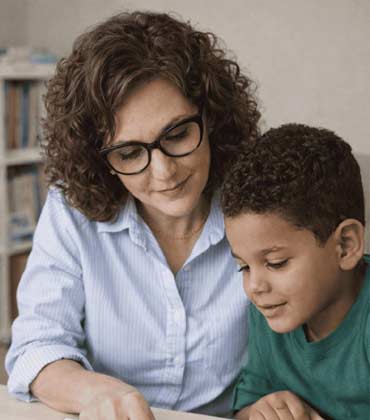
Advancing Personalized Learning with Dyslexia Tutoring and Testing Services
Dyslexia tutoring and testing services improve literacy through personalized instruction, assessment, technology, accessibility, and confidence-building.
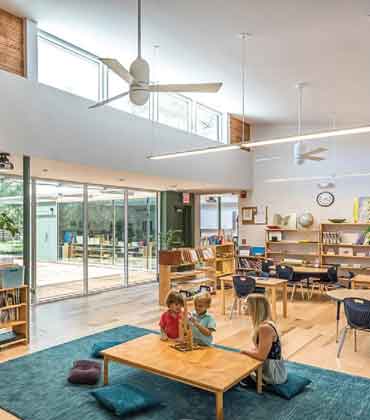
Montessori Academies Pioneering the Future of Early Learning
Montessori academies encourage creativity, foster critical thinking skills, and improve student engagement.
EDITORIAL
Education That Meets Learners Where They Are
At the heart of this issue, Seeds of Life Montessori Academy, named Top Montessori Academy 2026, puts the child at the center of education. Serving children from 18 months through age 12, it combines Montessori principles with research on child development, brain development and neurodiversity. Through careful observation, individual adaptations and close family partnerships, the academy creates an environment where children can learn, belong and develop independence.
The issue also highlights schools giving students meaningful paths to follow. Toledo Pre-Medical and Health Science Academy, named Top Health Science Academy 2026, combines personalized learning with healthcare exposure, college coursework, hands-on simulations and industry credentials while helping students build leadership, empathy and a sense of responsibility to their communities. Hillcrest Lutheran Academy, recognized as Top Christian Boarding High School 2026, brings strong academics, Christian faith and an international boarding experience together, encouraging students to think deeply, question ideas and understand what they believe and why. Dyslexia Achievement Center, named Top Dyslexia Tutoring & Testing Services 2026, takes a highly individual approach, bringing together structured literacy, assessment and targeted support to help students build skills they can use not only in school but in everyday life.
Our CXO contributors deepen these themes. Philippe Ernewein, Director of Education, Denver Academy, explores how personal stories help students reflect on challenges, choices and outcomes. Cynthia Ogaz, D.B.A., M.B.A., Managing Director, Center of Accredited Interprofessional Continuing Medical Education, Texas Tech University Health Sciences Center, emphasizes needs-based professional development, measurable objectives and effective evaluation.
Together, these stories show that meaningful education starts with understanding learners and responding to their needs, offering readers a grounded look at the future of education.

