


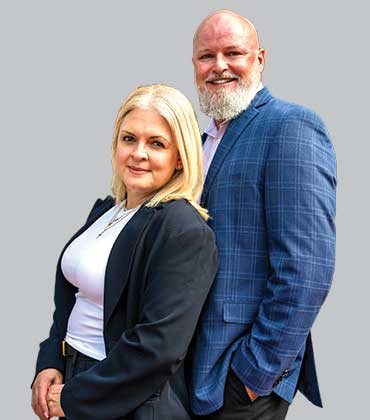
 Maria Chaffin, Founder & Executive Director and Jeff Chaffin, Founder & Head of School
Teachers at Seeds of Life invited him to complete their initial assessment, which showed that he was actually working at a fourth-grade level.
Maria Chaffin, founder and executive director of Seeds of Life Montessori Academy, was amazed. She could hardly believe the difference between the report they had received and what she was seeing in front of her. The school accepted him, and he went on to complete fourth, fifth, and sixth grade at Seeds of Life. A student who had been told that he might not graduate and might remain in a different type of educational program, he now attends a nearby Montessori middle school and is doing remarkably well. He is now in eighth grade.
“His story illustrates something fundamental about the way we approach education. A child's potential cannot always be found in a report card,” says Maria.
Seeing the Child Before the Label
That principle shapes how Seeds of Life approaches every student, whether the child is neurotypical, neurodivergent, advanced in one area, struggling in another, or simply developing at a different pace.
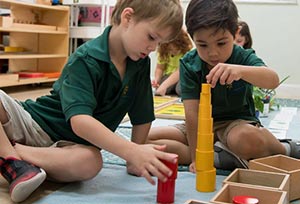 Chaffin's career began more than 25 years ago in Venezuela, where she worked with children with special needs and advocated for them. After moving to the U.S., she discovered Montessori and saw in it an approach that could support the kind of inclusive education she had long believed in. She spent 17 years working in Montessori and eventually began training other Montessori educators in inclusion.
Through her work and travels in the Montessori community, she saw a need for schools to better understand how to practice inclusion authentically. Six years ago, she decided to build the kind of school she had spent years talking about.
That became Seeds of Life Montessori Academy.
Here, inclusion is not treated as a separate service or something reserved for children with a diagnosis. The school adapts its environment to the child rather than expecting the child to adapt to a rigid system.
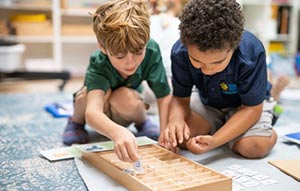 In practice, that might mean recognizing that a child is overwhelmed by sound and providing headphones or a quieter space. Another child may benefit from a visual schedule or from having a lesson broken into smaller steps. The Montessori environment remains intact, but the way an individual child accesses it can change.
“Our goal is not simply to help a child function inside a classroom. It is to create a community where the child belongs,” says Jeff.
Montessori With a Modern Lens
Seeds of Life takes Montessori seriously, but not as a collection of materials or classroom routines. Every lead teacher and assistant is Montessori-trained, with training through accredited programs recognized internationally. The school is also part of the American Montessori Society and is currently an AMS verified school. Additionally, the school is seeking further accreditation through Montessori Educational Programs International (MEPI), where Maria has recently been named to the board of directors. Maintaining Montessori fidelity is a priority across the school.
Our goal is not simply to help a child function inside a classroom. It is to create a community where the child belongs.
At the same time, the academy describes itself as research-driven. Chaffin continues to study current research and uses that knowledge in her work with teachers. The aim is to preserve the foundations of Montessori while applying them to what educators understand today about child development, brain development, and neurodiversity.
Observation sits at the center of that approach. Before deciding what a child needs, teachers watch. They look at how the child moves through the environment, responds to other people, approaches work, handles challenges, and develops independence. That observation becomes the starting point for understanding the child.
Montessori itself was rooted in observation, and Seeds of Life applies that principle alongside current research in child development, brain development, and neurodiversity.
A School Where Everyone Knows Your Child
The personal nature of the school becomes especially apparent as children move through its programs. Seeds of Life serves children from 18 months through age 12, moving from Nido to Casa, lower elementary, and upper elementary. But the transition between these stages is not simply a change of classroom.
-
His story illustrates something fundamental about the way we approach education. A child's potential cannot always be found in a report card.
Teachers across the school know the children. A teacher working with older elementary students may already know a child who is still in the younger years. As students move forward, they are already familiar faces within a community where educators understand more than their academic progress. They know their strengths, their struggles, their interests, and the small details that help build a relationship.
That continuity matters because the school sees education as something built on safety and connection. A child who feels secure is better positioned to learn, explore, and develop independence.
 The same philosophy extends to parents. At Seeds of Life, enrolling a child means becoming part of the community. Families are welcomed from the beginning through new-family gatherings, classroom observations, and community events. Parents can volunteer, read with students, garden, have lunch with their children, or simply spend time in the classroom.
Families receive daily and weekly updates through a dedicated portal covering their child's academic, social, and emotional development, including photographs.
The school also hosts parent education events, sometimes bringing in outside experts to discuss child development and different stages of learning. Parents can attend with childcare provided by the school, giving them an opportunity to learn about Montessori and understand how to bring elements of that philosophy into their homes.
“We view parents as experts on their own children and work alongside them to gradually bring Montessori principles into the home,” says Maria.
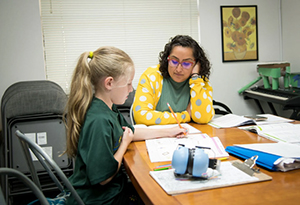 That partnership continues beyond formal conferences. Parents can attend student demonstration nights, observe classrooms, and participate in open houses. During some events, parents can even experience Montessori materials themselves through a “silent journey” in the classroom, giving them a firsthand look at what their children experience.
The distinction reflects what the school calls family enablement. Rather than making every decision for families, Seeds of Life tries to bring parents into the decision-making process and give them a meaningful role in their child's education. That philosophy can be seen in seemingly small choices. The school has uniforms, for example, but they are not mandatory.
The same flexibility was evident when the school itself had to respond to an unprecedented challenge. Seeds of Life opened during the pandemic. When families were suddenly faced with limited options for their children's education, the founders did not simply move the classroom onto a screen.Instead, they created two learning pods, one in Sarasota and one in Bradenton. Families provided space in their homes, teachers created fully equipped Montessori learning environments there, and children continued learning in person. Chaffin coordinated the exchange of materials and held meetings with the teachers online.
When circumstances change, the question remains the same: What does the child need?
Growing a Philosophy Beyond One School
The academy's experienced educators are involved in teacher training and professional education, while Maria travels internationally to speak and consult with schools about Montessori and neurodiversity. Through the school's sister organization, Montessori Behavior, she provides training and consulting to educators around the world.
Teachers from countries including Egypt, Australia, and India have joined the online training Maria provides on neurodiversity and maintaining Montessori fidelity. She also provides free educational content and webinars for teachers, sharing practical ideas from her work.
That broader work extends the school's influence beyond its own classrooms, allowing Maria and her team to share their approach with educators elsewhere.
The school itself is also growing. Demand in the Bradenton-Sarasota area is driving the school's next phase of growth, with the founders looking for a larger property or new campus and additional classrooms.
 Yet growth does not mean moving away from the model that brought the school here. Maria and Jeff founded and continue to own and operate Seeds of Life themselves. As larger companies increasingly consolidate independent schools, they have chosen to remain independent. The people who founded the school are still the ones running it and interacting with families every day.
And perhaps that brings the story back to the student whose progress report gave the school one version of who he was. Observation gave them another. Seeds of Life chose to begin with the child.

