

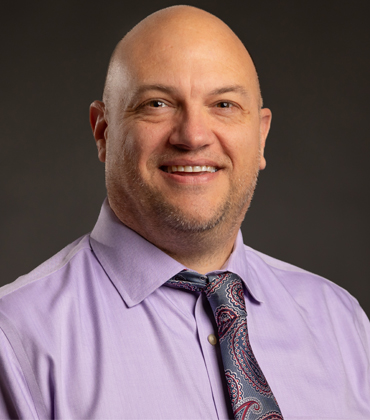
 Jack Hunter, Principal
Toledo Pre-Medical and Health Science Academy was established to prepare students for healthcare careers even before they step into higher education. Acknowledging that every student learns at a different pace, it moves away from a traditional assembly-line learning model to a holistic, Montessori-inspired approach based on personalized learning pathways. Students’ schedules are organized around individual needs, interests and career aspirations to ensure everyone reaches their potential.
The academy operates within Toledo Public Schools and works with ProMedica and Mercy Health for healthcare exposure, while Mercy College expands students’ access to college-level coursework. Through these partnerships students gain hands-on experience in healthcare settings and institutions gain a steady entry-level workforce pipeline.
“We're not just preparing students to graduate. We're preparing them for success in college and healthcare careers,” says Jack Hunter, principal.
The impact of this approach is evident in student outcomes. The academy reports a 100 percent graduation rate, with 95 percent of graduates pursuing college and the rest entering military service.
Immersive Learning for Future Caregivers
Toledo reinforces learning through a level of immersion that few secondary schools can offer.
Going beyond textbooks, students learn through realistic, controlled healthcare environments. High-fidelity patient mannequins, AI-supported clinical scenarios, code blue simulations and anaphylactic shock response exercises transform theoretical concepts into practical experiences. A fully functioning ambulance on campus supports EMT training, while three Anatomage Tables enable students to explore human anatomy through advanced digital cadaver technology.
-
We're not just preparing students to graduate. We're preparing them for success in college and healthcare careers.
Toledo integrates new technology only when it demonstrably improves educational outcomes, whether it is artificial intelligence helping students master complex scientific concepts or digital tools enhancing clinical simulations.
Many students begin taking college-level coursework in seventh and eighth grade, earning college credit. This includes designing assistive solutions for individuals with disabilities like cerebral palsy and exploring technologies that improve patient outcomes. The earned credits frees up students’ schedule for additional coursework when they enroll in college, giving them more time working with practitioners.
Where Classroom Learning Meets Clinical Reality
Toledo’s partnerships further enhance learning. Healthcare professionals from ProMedica and Mercy Health regularly engage with students through mentoring, shadowing and internship opportunities. More than 50 volunteers contribute their expertise each week, giving students unprecedented access to practitioners working in the field.
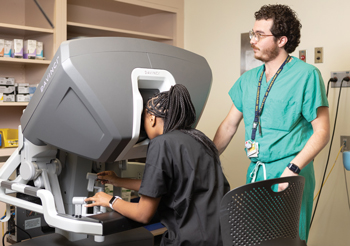 These partnerships often translate into tangible career opportunities for students. Many have secured healthcare-related employment with competitive wages while still in high school. Every student graduates with industry-recognized credentials alongside a high school diploma.
But Toledo’s intention extends beyond accumulating credentials or work experiences. Its goal is to build strong foundations in mathematics, chemistry and other core subjects, so that students find it easier to get admitted to the college of their choice and are positioned to succeed from day one.
Developing Responsible Professionals, Not Just Graduates
A healthcare professional must communicate effectively, demonstrate empathy and navigate diverse environments with a sense of responsibility.
Toledo intentionally cultivates these capabilities through leadership initiatives, public speaking opportunities and mandatory community engagements that promote professional etiquette. For instance, all students are required to perform 30 hours of community service a year. Philanthropic and volunteering activities are encouraged.
The academy’s diverse population further exposes students to different perspectives. It helps them develop empathy and cultural competency, a crucial skill in healthcare environments that serve patients from all walks of life.
Students are also asked to conduct tours for visitors to hone their soft skills, and are expected to learn digital communication skills to master professional etiquette.
The impact can be seen in students, some of whom arrive at the academy disengaged and lacking confidence.
One student disillusioned by her previous educational institution experienced a vastly different culture at Toledo. She was able to participate in leadership opportunities and community engagements and became a passionate advocate for others. She launched an autism-focused school event inspired by her brother’s experiences, emerging as a student leader and ultimately becoming president-elect of a statewide HOSA organization representing more than 12,000 members. Along the way, she discovered a calling in public health.
Toledo Pre-Medical and Health Science Academy gives a new direction to how healthcare education is delivered and healthcare professionals are developed. It will continue to prepare students for healthcare careers and empower them to become problem-solvers who improve the health of their communities, while strengthening the future healthcare workforce.

