 Dr. Nicole Boyington, President and CEO
That is why helping a student with dyslexia is rarely as simple as identifying what they cannot do. The real challenge is understanding why they are struggling, what skills are getting in the way, and what kind of support will help them move forward. Because when two students can arrive with the same broad label and have completely different needs, treating them the same can leave the real problem untouched.
That is where Dyslexia Achievement Center stands apart. The center provides assessment and intervention for students with and without dyslexia, and unlike many dyslexia centers, it does not require a formal diagnosis to begin working with a learner. Every student starts with a skill-level assessment to determine where they are and where intervention should begin.
From there, the center looks beyond a single academic weakness. Dyslexia Achievement Center brings together special education teachers, reading specialists, speech therapists, occupational therapists, regular education teachers and a counselor.
Reading and math interventions use the Orton-Gillingham, or structured literacy, approach. Instruction is one-on-one, systematic and tailored to the learner. Students do not simply move ahead because a lesson or session is finished. They work toward mastery, with the center collecting data during every session and requiring at least 90 percent accuracy before moving on to a skill.
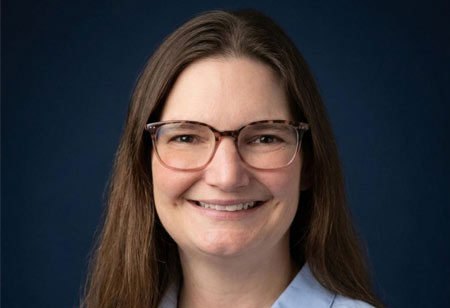
“The team looks at the specific skills a student needs to develop and matches them with an interventionist whose experience and expertise best fit those needs,” says Dr. Nicole Boyington, President and CEO.
The multidisciplinary team also allows the center to address challenges that can affect learning beyond reading. Occupational therapists work on areas such as executive functioning, handwriting, coordination and organization. Speech therapists address language-related needs, while the counselor supports emotional regulation and parent education.
But perhaps the clearest measure of the center's work is what students can do with those skills outside the classroom. One young adult arrived with a high school diploma but could not read basic words. He wanted to become a firefighter. When the team connected his lessons to material from a technical college related to his goal, reading suddenly had a purpose he could understand.
Another student routinely ordered hamburgers at restaurants despite not liking them because that was the only menu item they could identify from a picture. Learning the word ‘chicken’ changed that. The student could finally choose what they actually wanted to eat.
These are small moments with a much bigger meaning. Dyslexia Achievement Center views reading not only as an academic skill but as a life skill, one that affects independence, work and everyday choices.
-
The team looks at the specific skills a student needs to develop and matches them with an interventionist whose experience and expertise best fit those needs.
The center is also working to make specialized support more accessible through its Read and Succeed Project. In its first year, the initiative funded assessments for five students, supported nine families and siblings, and provided more than 246 hours of intervention. Partnerships with schools have also allowed the center to reach students who face financial or transportation barriers.
Now, Dyslexia Achievement Center is looking beyond Southeastern Wisconsin, with plans to expand into areas such as Madison and Illinois and, eventually, nationally. It is also becoming a training site for educators outside the organization, extending its reach by helping other teachers better support students with learning differences.
For Dyslexia Achievement Center, the goal is to understand the learner, find what works, and give that learner the skills and confidence to use them in the real world.