


Matt Montaño is the superintendent of Bernalillo Public Schools in New Mexico, a district he once served as a substitute teacher and later as a classroom educator, assistant principal, and principal. Since returning to lead his hometown schools, Montaño has championed educational equity, cultural responsiveness, and instructional leadership. Prior to rejoining Bernalillo, he served as Deputy Commissioner for Special Populations at the Texas Education Agency overseeing statewide special education initiatives and held leadership roles at the New Mexico Public Education Department, including Deputy Secretary for Teaching and Learning and Director of Educator Quality, where he managed professional licensure, bilingual education, virtual learning, and educator ethics. Leading Bernalillo Public Schools in a Time of Change When I first accepted the role of superintendent of Bernalillo Public Schools, I knew the responsibility would be immense. I was stepping into a district that stretches across fifteen different communities, nine campuses, and serves thousands of children from pre-K through twelfth grade. At the heart of this district lies the town of Bernalillo, but our reach extends far beyond it, touching seven sovereign tribal nations and the many small rural towns that dot our part of New Mexico. Each community has its own history and traditions. Each one entrusts us with its children, asking us to prepare them for a future that looks very different from the world in which their parents grew up. That trust weighs on me every day, not as a burden but as a calling. My role, simply put, is to ensure that our schools are places of opportunity. That means managing instruction, overseeing operations, maintaining safe and welcoming facilities, and using every public dollar responsibly. But more than that, it means keeping the promise that every student, regardless of where they come from, will leave our schools ready to succeed in college, careers, and life

Community Schools
“Every child is brilliant in their own way, and when education helps them discover where they thrive, their confidence and talent take flight,” says Jeanine Fitzgerald, founder. At Fitzgerald Community School (FCS), this foundational belief shapes the perception towards education. Compared to traditional schooling, which often begins with grade levels, benchmarks, and standardized curricula, FCS starts with a question. Who is this child? That question guides every choice the school makes. FCS’ student-centered mindset is formalized in a framework called Education with Insight, developed over thirty-seven years of practice by Fitzgerald. The framework creates a personalized learning profile for each learner. Educators, called Learning Coaches, use tools such as BOTS to discover each child’s inherited temperament through stories and choices. They assess sensory preferences and modalities within learning styles and identify multiple intelligences for each learner. With this information, classrooms are designed to reflect the composition and strengths of learners. No two classrooms are alike, and children are grouped by ability rather than grade level. FCS’s classrooms are more than framework-driven, after all, relationships are more important, or at least, equally as significant as content. Who a child is, influences how they learn and how they learn influences how we interact and teach.

Top STEM Charter School 2025

Very few educational institutions extend their reach beyond academics to uplift families and bring the community together through compassion and collective growth. In Duval County, River City Science Academy (RCSA) is a testament to this progress, having evolved from a single campus with just 170 students in 2007 to six thriving campuses serving grades K–12. Its growth is rooted in an approach that combines a strong STEM curriculum with opportunities that encourage academic achievement and civic responsibility. Today, RCSA stands as the first charter in Duval County to achieve both an A-grade and high-performing status from the Florida Department of Education. Every campus in the RCSA network holds the accreditation—a distinction that highlights consistent quality across all schools. “Our goal is to equip students with the skills, character and vision to thrive in a changing world and shape stronger communities for future generations,” says Dr. Dogan Tozoglu, executive director. Beginning in kindergarten, students take part in daily, hands-on activities in science, coding and robotics that spark curiosity and build technical skills. By middle school, they participate in Olympiads, STEM clubs and advanced courses, while high school students pursue the AP Capstone program and dual enrollment, earning college credits. RCSA’s waitlist is a testament to its growing demand. Families recognize the value of a school system where conviction drives results. Each student benefits from learning methods tailored to their strengths, interests and goals. Teachers and senior students serve as mentors, guiding peers and younger cohorts through academic support, one-on-one guidance, leadership programs and service-learning projects that strengthen relationships across grade levels. Teachers receive ongoing training that blends rigorous pedagogy with technology integration, equipping them to design instruction that fosters critical thinking and project-based learning while applying AI tools.
Top Classical Catholic Academy 2025
When you turn onto Pine Street in Bally, PA and approach the campus of Most Blessed Sacrament (MBS) Parish and Saint Francis Classical Catholic Academy, (SFCCA) you cannot help but feel like you are going back into time, back to an era where the pace was slower, the neighbors knew each other, and both the parish and the school worked together to help the children know Jesus. This feeling is easy to explain, as the campus has been in operation since 1741 with an educational history dating back to 1743, when Father Theodore Schneider established the first Catholic school in the original thirteen colonies, a school that has been in operation for over 280 years. In the fall of 2020, Saint Francis Academy was operating as an early education school after the main part of the grade school had been closed the previous spring. However, as more and more families became dissatisfied with the educational status quo in America at that time, it became clear that the Holy Spirit once again had big plans for Bally. A group of visionary MBS parishioners, along with their pastor Father Richard James, answered the call to re-found Saint Francis as a Classical Catholic Academy, a school that is unapologetically Christian, is committed to being intimate and nurturing, and inspires students to learn the founding principles of their country, which are told through the great works of Western civilization. The school is happy to report that in fewer than three years of operation, they have more than doubled enrollment and is set to have their first high school graduate this spring. Headmaster Dr. Richard A. Brake explains, “I believe it is safe to say that for many reasons, there is a growing dissatisfaction in our country with the educational status quo from families who just want a safe, sane, and serene school setting for their children. Those of us laboring in the vineyard of Classical Catholic education have been waiting for the dam to break, so to speak, in conventional education, and if Saint Francis Classical is any indication, I do think the holes in the levee are getting bigger.” Tradition Reimagined As the only independent and classical Catholic school in the Diocese of Allentown, SFCCA has a unique opportunity to combine the very best of the Catholic liberal arts with the same spirit of dynamism and innovation that has existed on its campus for centuries, sharing the wisdom of the past with today’s youth and making it relevant in this social media age. What was old has now become quite new at SFCCA. The school offers a full slate of courses in humanities, mathematics, and science, along with art, music, drama, and CYO athletics. They have recently started a guild program for the older students to help them recover some of the “lost arts” of cooking, gardening, and carpentry. Most importantly, they attend to the spiritual needs of their students with daily Mass, prayer throughout the day, and intentional character formation. As the school’s mission statement expresses, Saint Francis Classical Catholic Academy exists to partner with parents in forming their children in mind, body, and spirit, inspiring them with joy to embrace the truth of the Gospel, the goodness of the Golden Rule, and the beauty of God’s creation.

Top Education Services Provider 2025

As classrooms across the U.S. grow increasingly diverse, one critical component of educational equity remains under-addressed: bilingual special education. That’s where Bilingual Special Education Services of Connecticut (BSESC) comes in. Founded and led by bilingual school psychologist Amparo Rinaldi, the company helps schools close a dangerous classification gap, where language access, cultural context, and clinical precision intersect. Left unaddressed, this gap can lead to misclassification, inappropriate interventions, and long-term consequences for students. Through trauma-informed, culturally responsive evaluations, BSESC delivers life-changing results for bilingual learners, reshaping what equitable special education can look like. Though currently a small team of five, Rinaldi has built a reputation that far exceeds the size of her team, offering services that are expansive in reach and deeply personal in impact. Getting It Right from the Start BSESC partners with school districts across Connecticut, particularly those in under-resourced or rural areas, to provide bilingual and monolingual psycho-educational evaluations, speech and language assessments, consultation, and document translation/interpretation services. Its core strength lies in assessing each child within their full context: language background, cultural experiences, emotional development, and home life. This level of nuance is often lost when schools rely on standard screeners or monolingual evaluators. “It's very important for me to identify what are a child’s unique challenges and how they can be supported to make optimal growth. A single approach doesn’t fit everyone and this includes children who have a disability and who are bilingual. For example, a high functioning student who has Autism and is Spanish dominant can be easily missed by an evaluator who doesn’t have the necessary dual language skills,” says Rinaldi. By conducting emotionally attuned, culturally aware, and linguistically accurate evaluations, BSESC helps schools uncover root causes, rather than misreading symptoms.
Social and Emotional Learning

Leveraging Community Support to Create Career Pathways
Gary Udouj, Ed.D., Director of Career Education and District Innovation, Fort Smith Public Schools
STEM

Shaping the Future of STEM Education: Trends, Challenges, and Opportunities Ahead
Victoria Webster, Director of STEM at Mansfield ISD
K12

Experience As The Great Equalizer: The Future Of Stem Education
Justin Luttrell, Ed.D, Director of Secondary Education, Pulaski County Special School District (PCSSD)
Programs and Curriculum

The Importance of Course Purge Policies in Higher Education
Tony Sovak, Ph.D., Director LMS & eLearning Quality, Pima Community College
Student Loan

Heart Work on Every School Cafeteria Tray
Casey Dickinson, Assistant Director of Food and Nutrition Services, Chesterfield County Public Schools
School Services

Leading Hutto ISD to New Heights
Jeni Neatherlin, Superintendent,Hutto Independent School District (ISD)
Programs and Curriculum
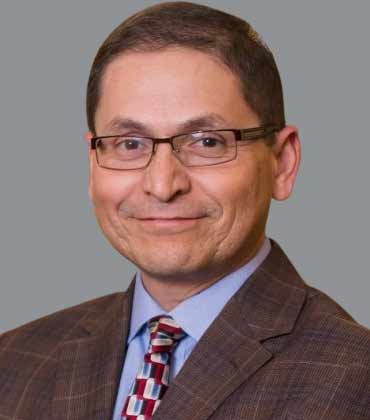
Advancing Institutional Goals with Planning and Trust
Jesus H. Campos, EdD, JD, Interim VP of Information Services, Planning, Performance, & Strategic Initiatives, South Texas College
School Services

Transforming Schools through Empathy, Equity, and Engagement
Dr. Felicia Adams, Superintendent, Southwest Public Schools
School Services

Shaping the Future with Systems and Heart
Joey Adame, Superintendent, Gonzales Unified School District
Publishing Services

From Publishing to Mentoring
Tanya Tarbutton, EdD, Senior Director, MA Education Programs and Lori Doyle, PhD, Director, MA Educational Leadership, Concordia University Irvine
Private Schools

Elevating Education through Collaboration and Commitment
Matt Degner, Superintendent, Iowa City Community School District
Public Schools

Transforming Public Education through Inclusive, Equity-Driven Leadership
Kimberlee Armstrong, Superintendent, Portland Public Schools
School Services

Redefining Education through Purposeful Leadership
Dr. Luke Meinert, Superintendent, Fairbanks North Star Borough School District

IN MY OPINION
Christian Schools
Building a Student-Centered Future in Education
Cindy Kilpatrick, Director of the Center for Teaching and Learning, Stephen F. Austin State University

LAST WORD
Insurance and Financial Services
Higher Education Finance: What Does Success Look Like?
Liam McClary, Associate Director of Finance for UO Libraries, University of Oregon
IN FOCUS

ESPs in a Growing Global Education Services Market
Schools are evolving from self-contained institutions to collaborative hubs, leveraging Educational Services Providers for specialized expertise, innovation, and support to effectively meet diverse student needs.

The Rise of Community Schools as Social Infrastructure
The community school model shifts focus from academic metrics to holistic student success, addressing physical, emotional, and social needs through integrated support and family engagement.
EDITORIAL
Cultivating Tomorrow’s Learners Grounded in Purpose
STEM charter schools are driving this evolution with curricula grounded in real-world innovation—from robotics and data science to sustainable engineering. By connecting students directly with the tools of modern industry, they create learning environments that cultivate problem-solvers ready for the digital economy.
Yet amid this progress, classical Catholic academies are ensuring that advancement remains balanced with purpose. Through the integration of philosophy, logic and ethics with modern technology, these academies are cultivating responsible leadership grounded in intellectual discipline and enduring humanistic values.
The infrastructure supporting this transformation comes from education services and technology partners that are modernizing teaching systems, streamlining administration and enabling personalized learning. Their work forms the digital backbone schools need to adapt and scale.
Community schools are bringing these advancements to life at the local level. They are using data and collaboration tools to deepen family engagement and align education more closely with community realities.
This edition of Education Insider explores how schools across diverse models are evolving to meet modern needs by blending innovation with purpose and community connection.
Featured thought leaders include Gary Udouj, director of career education and district innovation at Fort Smith Public Schools. He highlights how the Peak Innovation Center, a career and technical education hub in Fort Smith, collaborates with schools and industries to build a skilled regional workforce. Casey Dickinson, assistant director of food and nutrition services at Chesterfield County Public Schools, emphasizes the power of combining hard work, heart work and compassion in school nutrition to nourish children and strengthen communities.
We hope this edition sparks new perspectives on how schools can evolve with purpose while staying deeply connected to those they serve.

