


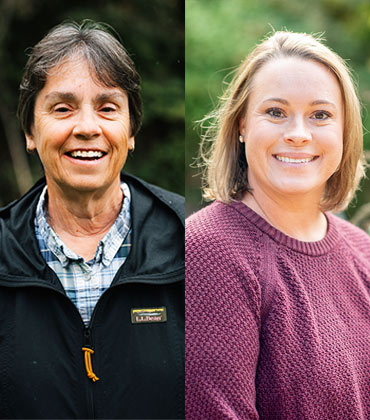
 Jeanine Fitzgerald, Founder and Erin Fournier, Head of School
At Fitzgerald Community School (FCS), this foundational belief shapes the perception towards education. Compared to traditional schooling, which often begins with grade levels, benchmarks, and standardized curricula, FCS starts with a question. Who is this child?
That question guides every choice the school makes. FCS’ student-centered mindset is formalized in a framework called Education with Insight, developed over thirty-seven years of practice by Fitzgerald. The framework creates a personalized learning profile for each learner. Educators, called Learning Coaches, use tools such as BOTS to discover each child’s inherited temperament through stories and choices. They assess sensory preferences and modalities within learning styles and identify multiple intelligences for each learner. With this information, classrooms are designed to reflect the composition and strengths of learners. No two classrooms are alike, and children are grouped by ability rather than grade level.
FCS’s classrooms are more than framework-driven, after all, relationships are more important, or at least, equally as significant as content. Who a child is, influences how they learn and how they learn influences how we interact and teach.
“Since all effective approaches begin with adult behavior, relationships are at the center of learning,” explains Erin Fournier, Head of School. This philosophy positions both parents and Learning Coaches in a shared partnership that facilitates communication and the transformation of environments and approaches to help children thrive.
Each year begins with a home visit to build rapport with families before the first day of school. The first six weeks are dedicated to understanding each child academically, socially, and emotionally. Once trust and understanding are established, the programs begin to take shape. FCS runs preschool, transitional kindergarten, elementary programs and extended care. Its summer camps feature weekly themes that provide hands-on, real-world learning experiences.
-
Every child is brilliant in their own way, and when education helps them discover where they thrive, their confidence and talent take flight
Across all programs, two values are constant. The first is 'honoring,' which is defined as the highest level of respect for themselves, others, and the community. The second is 'transforming,' which equips children with the tools they need, skills and attitudes to transform their lives in the best possible ways. These values permeate every experience, from nature-based and project-based learning in ways that positively impact the greater community.
The impact of these values and programs is best illustrated by how learners grow and develop. For instance, a boy came to FCS from public school, struggling with defiance, withdrawal, work refusal and repeated disrespect toward peers and employees. In the first year at FCS, he continued to disrupt class and resist engagement.
By graduation, he had become kind, helpful, and socially engaged. The turning point came when educators started building trust with him, and helping him identify his area of competence. They taught him tools to manage his emotions, fostering discipline rather than punishment. A ten-week curriculum called "Building a Life" played a key role in imparting the importance of choices, accountability, and habits for success, positively shifting even the classroom dynamics.
This instance demonstrates how FCS builds a community that ensures a genuine sense of belonging, with learners reflecting, “We are not just a class, we are a family.”
Such personalized, quality-driven education is made possible through independence. Unlike larger systems bound by scripts and rigid fidelity, FCS can adapt midstream. If something is not working, the team can change course quickly. Learning Coaches are empowered to experiment and bring forward solutions drawn from years of experience.
For Fitzgerald, this autonomy was the very reason she founded the school: to give families an alternative to bureaucracy, one that honors children and equips them for the lives they are meant to lead. At Fitzgerald Community School, education is not about fitting children into structures. It is about creating structures that fit children.

