


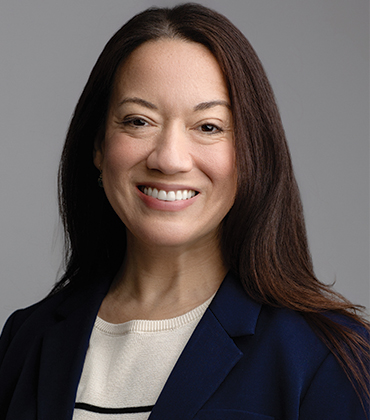
 Amparo Rinaldi, MS.Ed., Chief Executive Officer & Founder
That’s where Bilingual Special Education Services of Connecticut (BSES/CT) comes in. Founded and led by bilingual school psychologist Amparo Rinaldi, the company helps schools close a dangerous classification gap, where language access, cultural context, and clinical precision intersect. Left unaddressed, this gap can lead to misclassification, inappropriate interventions, and long-term consequences for students.
Through trauma-informed, culturally responsive evaluations, BSES/CT delivers life-changing results for bilingual learners, reshaping what equitable special education can look like. Though currently a small team of five, Rinaldi has built a reputation that far exceeds the size of her team, offering services that are expansive in reach and deeply personal in impact.
Getting It Right from the Start
BSES/CT partners with school districts across Connecticut, particularly those in under-resourced or rural areas, to provide bilingual and monolingual psycho-educational evaluations, speech and language assessments, consultation, and document translation/interpretation services.
Its core strength lies in assessing each child within their full context: language background, cultural experiences, emotional development, and home life. This level of nuance is often lost when schools rely on standard screeners or monolingual evaluators.
“It's very important for me to identify what are a child’s unique challenges and how they can be supported to make optimal growth. A single approach doesn’t fit everyone and this includes children who have a disability and who are bilingual. For example, a high functioning student who has Autism and is Spanish dominant can be easily missed by an evaluator who doesn’t have the necessary dual language skills,” says Rinaldi.
-
Many schools are doing their best—but they simply don’t have bilingual psychologists on staff. That’s where we come in—to ensure evaluations are done right the first time and that no child slips through the cracks.
By conducting emotionally attuned, culturally aware, and linguistically accurate evaluations, BSES/CT helps schools uncover root causes, rather than misreading symptoms.
Filling a Critical Gap
 Bilingual specialists are rare for many districts, especially those facing staffing shortages. BSES/CT offers a cost-effective, flexible alternative to hiring full-time staff—delivering responsive, high-quality evaluations without long delays or administrative burden.
Districts gain a single, trusted point of contact for comprehensive evaluations, consultations, and culturally aligned support. Unlike generalized contracting agencies, BSES/CT’s lean model allows it to serve multiple schools efficiently, adjusting to demand while maintaining diagnostic integrity.
“Many schools are doing their best, but simply don’t have bilingual psychologists. That’s where we come in—to ensure evaluations are done right the first time and that no child slips through the cracks,” explains Rinaldi.
In addition to Spanish-English assessments, BSES/CT adapts to less common language needs. In one case, the firm facilitated virtual support from a Mandarin-speaking speech and language pathologist, demonstrating its commitment to customized, student-centered solutions.
The Difference a Diagnosis Can Make
One powerful example of BSES/CT’s impact involves a second-grade boy who had been institutionalized for aggressive behavior. When Rinaldi conducted a culturally informed reassessment, the real story emerged: a history of trauma linked to domestic violence—and an undiagnosed case of autism. “This case involves a very different approach than if he is classified with emotional disturbance,” Rinaldi.
With this in mind, the school has more specific information available to revise its approach on behavior management along with Autism support.
 “An accurate classification is critical because when an individualized education plan (IEP) is created it is meant to focus on the specific areas of need for that child. Two classifications, such as Emotional Disturbance and Autism, are addressed very differently. The long-term trajectory for a misclassified student can have a significant lifelong impact on that child,” says Rinaldi.
Empowering Families, Not Just Schools
Beyond accurate evaluations, BSES/CT is committed to bridging the gap between home and school. Families often feel excluded from the special education process, especially when language barriers or unfamiliar terminology are involved. BSES/CT translates findings into practical, accessible strategies parents can apply at home.
“Parents are our primary ally in supporting their children. When parents are well informed and understand how they can help their children at home, it can be a game changer,” says Rinaldi.
Growing with Purpose While BSES/CT has grown mainly through word of mouth, its reputation for trust and quality continues to attract districts seeking more than just compliance checks. As demand rises, Rinaldi envisions expanding—but only with professionals who share the firm’s core values: integrity, cultural humility, and a student-first mindset.
 “We’re not just filling gaps—we’re reimagining what equitable special education can look like in bilingual communities. Every evaluation we do is an opportunity to change a child’s life,” she says.
In a national climate increasingly focused on equity, inclusion, and disproportionality in special education, BSES/CT offers a compelling model for how small, mission-driven providers can drive systemic change. With every evaluation, the company helps schools move beyond compliance and toward compassion, precision, and justice.
By ensuring that language is never a barrier to understanding, BSES/CT is helping unlock student potential, prevent long-term misplacement, and fulfill the true promise of public education: that every child deserves to be seen for who they are and supported accordingly.

