


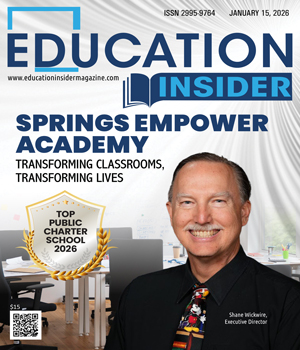
In the heart of Smyrna, Tennessee, a quiet revolution in public education is taking root. Springs Empower Academy, part of the Springs Charter Schools network, has become a haven for students who never quite fit the traditional schooling mold. With its student-centered philosophy, flexible learning environments, and a deeply involved community, the Academy represents a model for what modern education can achieve when it prioritizes learners' needs first. Executive Director Shane Wickwire is intimately familiar with this vision. Having spent years within the Springs Charter Schools system in California, he brings both experience and heart to the Tennessee expansion, now entering its second year His perspective is rooted in a simple yet profound belief: that education should adapt to students, not the other way around. “Our classrooms are designed around how kids actually learn,” Wickwire explains. “Some students need to move to stay focused, others like to sit on the floor with a clipboard, and some prefer the traditional desk. We build that flexibility into every classroom, so each child can engage in the way that works best for them.” This flexibility is a purposeful strategy to serve families seeking a personalized, participatory learning approach. Springs Empower Academy appeals to those who value a strong home-school connection and collaboration. “It’s not a drop-off-and-pick-up kind of school,” Wickwire says. “Parents are active partners in their child’s education, and we encourage that every step of the way.” A School for Every Kind of Learner The Academy’s classrooms hum with movement and interaction. Desks are arranged in clusters, and beanbags rest beside standing desks; whiteboards line the walls. Students aren’t confined to one way of sitting, learning, or thinking. Instead, they are invited to explore how they learn best. This approach is especially valuable for what Wickwire calls “the active bodies in our classrooms”—students who may have struggled to sit still in more conventional schools. The school’s inclusive model embraces all learners, from general education students to those with individualized education programs (IEPs), 504 plans, and English learners. Each student is supported according to their needs, with a focus on growth rather than conformity. Springs Empower Academy is, above all, a public school serving everyone; its mission, however, reaches those who “just weren’t quite clicking at their neighborhood school.”
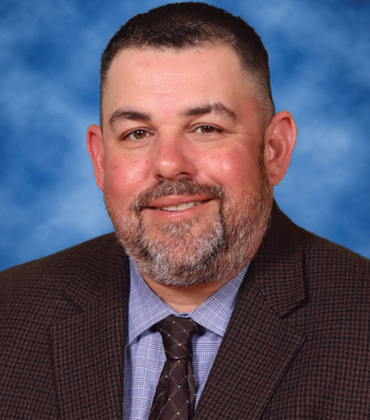
Designed for every learner, charter schools offer high-quality education options beyond traditional public classrooms. Yet in many inner-city communities, balancing academic excellence with a co-teaching structure that nurtures students’ social and emotional growth remains rare. At Robert Treat Academy Charter School (RTA), that balance becomes reality through rigorous core instruction for K to 8 students in a safe, year-round learning environment supported by charter autonomy. Located in Newark, NJ, the school serves inner-city students, predominantly Hispanic and African American, with a slight majority of girls. RTA supports these students with care and compassion, approaching every lesson as a chance to broaden each child’s sense of possibility. It remains committed to equal opportunity, welcoming students with special needs and meeting its public school obligations. Through a student-centered approach, RTA proves that fairness and opportunity can coexist. With more than 700 students across two campuses and about 120 employees, the school serves nearly 80 percent of students who qualify for free or reduced lunch. Unlike magnet schools that selectively handpick students, RTA operates through a transparent public lottery to ensure equal access for all applicants. When applications exceed available seats, names are chosen at random, and a waiting list ensures equity. “We aim to nurture each child in our care and provide them with every opportunity to succeed in high school and in life,” says Paul Parada, principal. RTA stands out for its culture rooted in community, character, and accountability, maintaining a close-knit environment where families feel supported. Its faculty builds trust with parents, enabling honest conversations that uncover true needs rather than surface-level issues. The Co-Teaching Model RTA’s co-teaching model ensures that every classroom has at least two instructors. Most pair a lead teacher with an instructional assistant, while middle school classes feature two certified educators. This structure allows academic interventions and emotional support to be delivered with patience. With two adults present, the school ensures consistent instruction without relying on substitute teachers. For children affectionately referred to as RTA Specials, who need extra encouragement without formal plans, staff provide flexible support to help them flourish. By middle school, early behavioral concerns often settle, and students become confident learners ready for the next phase of their education. They eventually progress and graduate within a vibrant community, forming lasting bonds that make the school a second home for many..
Test Prep and Tutoring Services

“Early childhood education is the key to the betterment of society.” – Maria Montessori. If early education shapes society, then the people leading it must be equipped with the strongest foundation possible. Tym The Trainer has taken up that mantle with purpose. Built on nearly four decades of lived experience of Tym Smith, owner, founder and lead trainer, the training company provides high-impact professional development, coaching, and certification programs for early childhood educators, directors, and school owners. Throughout those years, Smith has worked across every layer of early education, starting in the classroom as a pre-K teacher, stepping into leadership as a director and multi-site manager and eventually owning and operating nine programs across six campuses. That breadth of experience is the foundation of how he trains. “Every course I create is rooted in real practice, tested directly in classrooms and shaped by challenges I’ve personally navigated,” says Smith. After selling his schools in 2024, he fully shifted into training, coaching and keynote speaking, bringing with him the kind of insight that only comes from living the work. His company has become known for its ‘boots on the ground’ approach, training led by someone who has been in the shoes of teachers, directors and owners. And as the industry continues to evolve, his voice has only grown stronger, especially through national advocacy efforts like the Words Matter campaign, which champions the respect and recognition that early educators deserve. A Training Ecosystem Smith’s experience is operational capital. He has turned that capital into a whole ecosystem of training, built for early childhood professionals at every level, including teachers, directors, owners and entire childcare organizations, who seek training, coaching, professional development, operational support and leadership growth. At the center is an online library of nearly 170 training topics, consistently refreshed as Smith now dedicates his full-time to creating new content. It’s practical, current and built for people who want learning they can use the same day. To keep the momentum going, the company hosts weekly live webinars that provide educators and leaders with a steady stream of real-time guidance. For teams that prefer face-to-face energy, Smith runs mini conferences that bring focused, actionable training directly to schools. And then there’s the fan favorite: training cruises. Three times a year, professionals step on board to earn their hours, recharge and learn in an environment that feels as inspiring as it is productive, a tradition that’s been going strong for 16 years. For those stepping into leadership, Tym The Trainer’s five-day Director Credential Course remains one of the most sought-after programs in the field. Required in many states and consistently sold out, it has helped prepare new directors and owners for nearly two decades. .
Pre-Schools
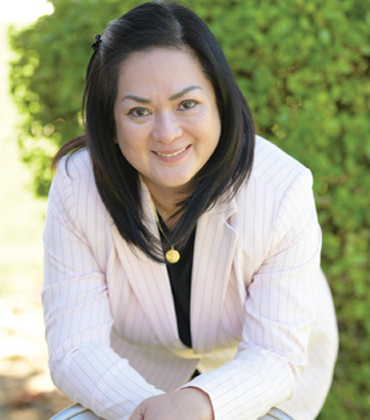
For more than half a century, Casa Montessori has stood as a quiet yet steadfast presence in California’s early childhood education landscape. Established in 1971 by Mrs. Sakura Long, the school began with a simple conviction: learning should feel natural, joyful, and deeply human. She envisioned a place where children would not merely attend classes but experience the freedom to explore, create, and discover themselves. Her belief in nurturing the child’s innate curiosity shaped the school’s philosophy and remains at the heart of Casa Montessori today. This spirit of warmth and respect continues under the leadership of Dr. Monet Montclaire, the school’s principal. She has carried forward Mrs. Long’s founding ideal by fostering an environment where students are cared for as whole individuals. Casa Montessori’s perspective on learners goes beyond academics. The staff regards each child as if they were their own, paying close attention not only to classroom behavior but also to the emotional and environmental factors that influence it. The school’s educators strive to ensure students feel understood, supported, and genuinely seen. In Dr. Montclaire’s words, “Casa Montessori is a home away from home, a place where children are free to grow into themselves with confidence and joy.” Casa Montessori’s legacy is grounded in both tradition and intention. With more than fifty years of service, the school has remained committed to delivering authentic Montessori education while upholding a sterling reputation for quality. Its location in a peaceful, green environment serves as a natural extension of its philosophy. Classrooms receive abundant natural light, outdoor spaces encourage uninhibited play, and every area is thoughtfully prepared to invite independence. The school’s facilities create a calm, inviting atmosphere that reflects the Montessori emphasis on order, beauty, and purposeful movement..
Christian Schools

Every lasting legacy begins with faith. This one began with hope. In 1987, a small group of parents came together with a simple yet powerful prayer for a place where their children could learn, grow, and walk in their faith. That vision took root and grew into Mariners Christian School (MCS), a Christ-centered community school founded on the belief that faith and learning belongs together. From the very beginning, it has remained a distinctly Christian school, guided by the conviction that education should nurture both mind and spirit. Nearly forty years later, that commitment remains unchanged, and the school has flourished under a mission that has guided every decision since the beginning. In describing that mission, the leadership and community often use the phrase ‘uncompromising to faith and truth.’ In a world where truth can feel subjective or influenced by culture, MCS remains anchored in Biblical truth and encourages students to understand and live it with confidence and grace. “We believe that students can grow academically and spiritually at the highest level, and our commitment to strengthen both continues to shape our mission,” says Heather Harrison, head of school. This focus begins with alignment. Every staff member is mission driven, united in purpose, and committed to living out the values of the school. As a covenant school, MCS serves families who seek an education rooted in faith, and share the beliefs and values of the community. The admissions process ensures this placement, strengthening the partnership between home and school. The unity helps protect the Biblical foundation on which MCS was built and supports the shared responsibility of nurturing students with a kingdom purpose..
Charter Schools

Leading Education Forward
Craig Anderson, Executive Director, Office of Teaching and Learning, Saint Paul Public Schools
Charter Schools

Driving Excellence in Modern Education
Chad Lewis, Superintendent, Sycamore Community Schools
Test Prep and Tutoring Services
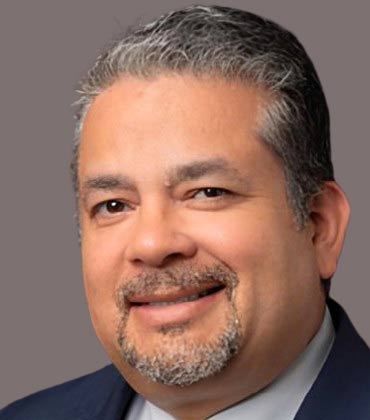
Innovation That Starts With Equity and Ends with Opportunity
Erwin Garcia, Superintendent, Billings Public Schools
High Schools
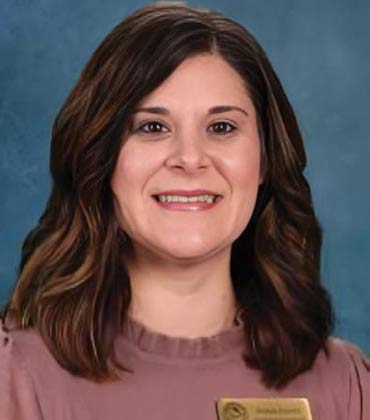
Faith-Based Counseling Supporting Holistic Student Growth
Raina Foote, Director of Counseling, Rejoice Christian School
School Services
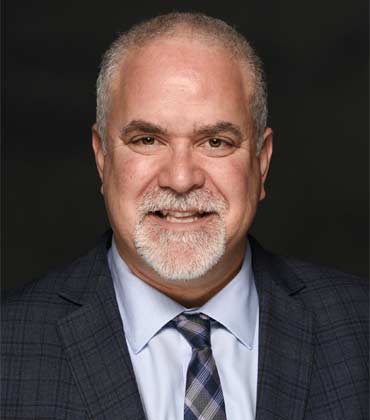
Leading Schools Through Change by Staying Unfinished
Dr. Michael Lubelfeld, Superintendent of Schools, North Shore School District 112

IN MY OPINION
Art and Design Colleges
Serving Up Change: The Evolution of a School Nutrition Leader
Darcy Stueber, Director of Nutrition Services, Mankato Area Public Schools

LAST WORD
Christian Colleges
Elevating Community Voice through Educational Advocacy
Micheal Bray, Director of External Affairs, Rocketship Public Schools
IN FOCUS
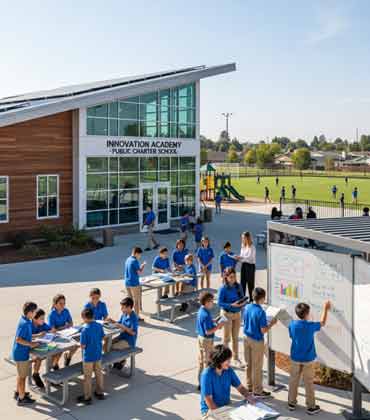
Public Charter Schools as Engines of College and Career Readiness
Charter schools are redefining college and career readiness by integrating industry-aligned academics, technical skills, social-emotional learning, and personalized pathways to prepare students for lifelong success.
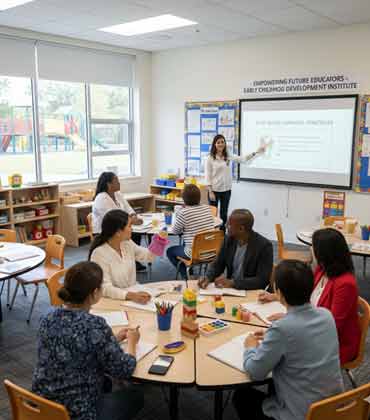
Early Childhood Education as the Foundation of Global Learning and Economic Growth
Early Childhood Education is now viewed as the most critical learning stage, driven by neuroscience, innovation, and economic strategy—shaping lifelong success and global economies through science-based, holistic programs.
EDITORIAL
Learning Environments Built Around the Student
The most visible shift is the rise of genuinely learner centred models. The old one size fits all classroom is giving way to flexible spaces, smaller learning communities and integrated wellbeing support. Adaptive platforms now help students move at a pace that matches their readiness, not the timetable. The goal is simple yet ambitious: to make learning feel purposeful, achievable and anchored in each child’s lived reality.
Professional development has evolved, too. Educators and caregivers are being trained to prioritise developmental readiness, emotional safety and consistent frameworks that reduce friction for learners. When early experiences are intentionally designed—supported by data insights and evidence-based practice—they lay the groundwork for curiosity, confidence and long-term attainment.
With these shifts accelerating, the global K–12 market is projected to reach USD 3.44 trillion by 2030. The message is clear: the future of education belongs to systems that treat personalisation not as a luxury, but as the baseline expectation.
This edition of Education Insider highlights how schools and education providers are creating learning environments that respond to the needs of today’s students and families. It features a thought-provoking article by Craig Anderson, Executive Director of the Office of Teaching and Learning and Raina Foote, Director of Counseling at Rejoice Christian Schools.
We also bring you the stories of leading institutions advancing inclusive learning, student development and community-centred education. A noteworthy feature is that of Springs Empower Academy, which is recognised for its commitment to creating purpose-driven learning environments that balance academic growth with values-based development.
In this edition, highlighting the approaches that will influence education in 2026, we hope you gain valuable insights into building systems that support meaningful learning, strong values and long-term success.

Get the best of Education Insider delivered directly to you.
