

North Shore School District 112
Leading Schools Through Change by Staying Unfinished
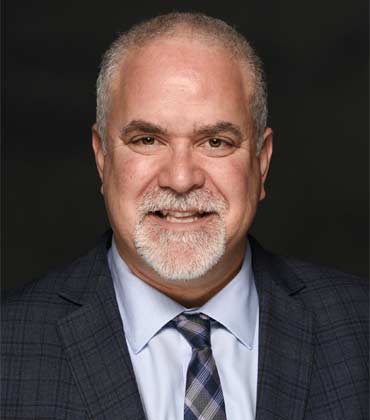
Dr. Michael Lubelfeld
Dr. Michael Lubelfeld is Superintendent of Schools at North Shore School District 112 in Illinois, where he has led public school systems since 2010. A nationally recognized education leader, author and speaker, he focuses on leadership development, student voice and systemwide innovation. Lubelfeld has authored multiple books on educational leadership and has been recognized with numerous state and national honors for his impact on public education.
In our new book, Leading for Tomorrow’s Schools Today, I share the C.H.A.N.G.E. Leadership Framework (Challenge the Process, Have Open Conversations, Adapt and Be Flexible, Navigate Obstacles, Generate a Shared Vision and Enjoy the Journey). This framework has served me through complex challenges, including school safety, pandemic recovery, facilities modernization, demographic shifts and now AI. Leadership is less about having the answer and more about creating conditions where students, staff and families can think, speak and act honestly together.
AI in the Classroom: Opportunity With Responsibility
AI is already reshaping what is possible in classrooms, and when done well, it can give teachers time back and give students voice and agency. For educators, AI can streamline routine tasks, support planning and differentiation and identify patterns in student learning that allow us to intervene more effectively and precisely. For students, AI can expand access to tutoring, multilingual support and creative tools, provided we pair these tools with explicit instruction on digital citizenship and critical thinking.
The real risk is not the technology itself, but the temptation to move fast without guardrails. In my national fellowship work with Generation AI and the Google GSV community, the throughline is clear: districts must establish robust practices around data privacy, transparency, bias, academic integrity and voice in governance. AI should augment human judgment, not replace it, and students and educators must be co-designers in how these systems are piloted, evaluated and adjusted over time.
Making Student Voice Systemwide
Student voice is not an event; it is a system. In North Shore 112, this means building structures such as student advisory groups, design teams, surveys with visible follow-up and listening sessions in multiple languages, where young people can see that their input shapes how school looks and feels. From a superintendent’s chair, the work is to model listening, protect psychological safety and insist that major decisions include student input, whether the topic is bell schedules, facilities, technology or school climate.
“Leadership is less about having the answer and more about creating conditions where people can think, speak and act honestly together.”
The culture shifts when students see adults respond without defensiveness or theatrics. When we change a practice, adjust a plan or abandon an idea because students surfaced an unintended consequence—and we say that out loud—“it’s safe to speak up” stops being a slogan and becomes a lived reality.
Unlearning and Unfinished Leadership
The core idea across The Unlearning Leader, Student Voice, The Unfinished Leader, The Unfinished Teacher and Leading for Tomorrow’s Schools Today is simple: in a rapidly changing world, experience is an asset only if we are willing to question it. Seeing myself as an “unfinished” leader keeps me in a posture of curiosity rather than certainty, asking, “What assumptions no longer serve our students? Who has insight I’m missing? What needs to be unlearned so something better can emerge?”
In daily practice, this shows up in small behaviors, such as inviting critique of district initiatives, treating pilots as learning labs and being willing to say, “We tried this; here is what we learned; here is how we are adjusting.” Leaders who stay relevant learn in public, welcome challenge and balance innovation with evidence and equity.
Trust and Steadiness Under Pressure
Trust is built less by big speeches and more by thousands of small, aligned actions. Whether navigating curriculum debates, safety concerns or innovation initiatives, I return to a few anchors: lead with clearly articulated values, communicate early and often and be transparent about both the “why” and the trade-offs. Shared purpose emerges when people recognize that even in disagreement, students’ well-being and learning are non-negotiable.
Leading a diverse suburban district through school closures, reopening and recovery—while reimagining learning environments and integrating new technologies—reinforced that strength is not stoicism. It is the ability to remain human and present under strain. People do not look to leaders for perfection, but for steadiness, honesty and hope backed by visible action.

Get the best of Education Insider delivered directly to you.
