
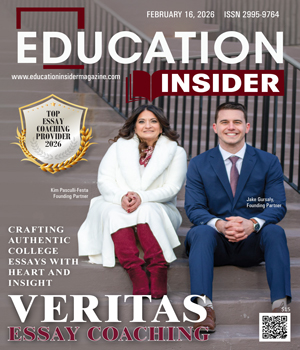
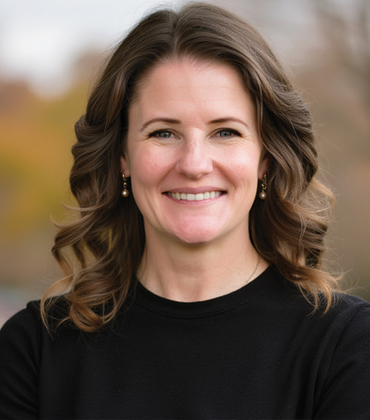
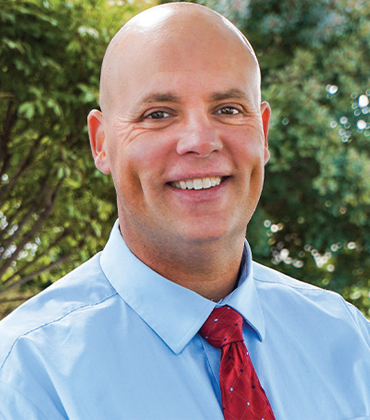
The college admissions process is an overwhelming journey, fraught with anxiety, confusion, and uncertainty. One of the most critical components of that journey is the college essay, which can often feel like the most daunting hurdle of all. Students frequently arrive overwhelmed by conflicting advice and convinced that their lives are too ordinary to stand out. They have stories, but struggle to articulate how those experiences shaped who they are and how they see the world. At Veritas Essay Coaching, founding partners Kim Pasculli-Festa and Jake Gursaly help students approach the college essay in new ways. Their guiding belief is simple: the essay is the only part of the application where a student’s humanity can truly shine. They do not aim to manufacture stories, but instead help students uncover what already lies beneath the surface. What sets Veritas apart is its two-coach model, which PasculliFesta and Gursaly describe as “alchemy.” Their dynamic partnership is built on complementary backgrounds that come together to create a coaching experience focused on authenticity, empathy, and personal connection. Pasculli-Festa, with a strong foundation in writing and education, guides students through the art of storytelling. Her background in journalism and writing from Boston University and Harvard University helps students find their authentic voice and craft compelling essays. Gursaly, with his expertise in special education and coaching, brings a deep understanding of reluctant writers and students who struggle with self-expression. His empathetic approach ensures that students feel seen and heard throughout the process, helping them overcome doubts and discover their own strengths. Together, they create a coaching experience that is both structured and supportive. In their first session, they help students uncover unique, personal stories that go beyond overused topics such as sports or family struggles. Their “alchemy” lies in blending their individual strengths, Pasculli-Festa’s writing expertise and Gursaly’s coaching sensitivity, to support a wide range of students, from reluctant writers to high-achieving applicants, creating a balance of structure and empathy that challenges students to reflect deeply and honestly.
Catholic Schools
Rosarian Academy
Nurturing Minds through Holistic Catholic Education
Virginia Devine, Head of School
Education, at its best, extends beyond intellectual nurturing. It shapes students’ character, emotional intelligence, creativity and social awareness for a well-rounded development. How does Rosarian Academy approach education beyond academics to support character development and personal growth? For a century, Rosarian Academy has carried this belief forward through its Dominican pillars of prayer, study, community and service. These values define its culture and shape how learning and daily interactions occur. “We deliver a comprehensive academic program while also guiding students in ways that advance their intellectual development and personal values,” says Virginia Devine, head of school. What educational model allows Rosarian Academy to foster independence, purpose and holistic student development? Rosarian Academy stands out for its exceptional educational model. Children learn in an environment designed to foster independence and purpose. It combines core academic subjects with enrichment programs, including arts, physical development and community engagement. Its dedicated Montessori program defines early childhood foundation, setting the tone for students’ growth. Classrooms often run with quiet independence, where students move confidently between learning stations that build early literacy and numeracy. Teachers guide them through hands-on learning that builds confidence, enhances problem-solving abilities and supports the development of clear communication. Children exercise independence in selecting activities and collaborating with peers, building responsibility and purposeful engagement. It also promotes social and emotional development by encouraging respectful interaction with others. By the time they enter kindergarten, students carry a level of readiness that strengthens their overall experience. The curriculum in lower school includes core subjects like math, science, arts, social studies, foreign languages and religion. Many alumni credit their success to the strong foundation established during their time at the academy. .
Elementary Schools
As one walks the corridors of Veazie Community School (VCS), the first thing that stands out is the movement of people who genuinely know one another. Students and teachers walk together, greeting one another by name and exchanging small check-ins that feel anything but small. The warmth feels effortless, yet it reflects a community built with care and consistency. Here, relationships are not just a feel-good sentiment. They are “learning relationships,” with intentional and purposeful connections that serve as the foundation for academic and personal growth. VCS is a close-knit Pre-K–8 district built on the promise of “Small School, Big Heart.” It offers a wide academic and co-curricular landscape that includes accelerated pathways in math and ELA, STEM, arts, robotics, FLEX Fridays, and numerous athletic programs. Intervention strategies are equally broad, ranging from RTI blocks, special education, and speech and language services to ESOL, SEL supports, Title I, and more. Yet what truly defines the school is not the menu of programs, but how those programs are carried out with fidelity and a deep commitment to each child’s growth. “Our success stems from staying clear and focused on what matters most. We have students with high aspirations, and we have staff who remain steadfast in taking them as far as they absolutely can from an academic standpoint,” says Timothy Tweedie, superintendent and principal. His confidence is grounded in results. In state assessments, VCS students outperform Maine averages across reading, math, and science, sometimes nearly doubling state benchmarks. Graduation rates for students who began their education at the school exceed 98 percent, compared to the state’s 87 percent. Veazie Community School (VCS) consistently exceeds Maine’s state averages in reading, math, and science. In the spring 2025 Maine ThroughYear Assessment, 79 percent of VCS students met or exceeded expectations in reading, compared to 63.8 percent statewide. In math, 74 percent of VCS students reached the benchmark, while only 49.4 percent statewide did. Similarly, 77 percent of VCS fifth- and eighth-graders met expectations in the Maine State Science Assessment, compared to 36.2 percent statewide. These outcomes reflect a system that quickly identifies gaps and provides targeted support..
Charter Schools
New Vision Charter School marks two decades of success through a school community that consistently supports academic rigor, character development and real-world learning for every student. Founded by parents seeking a more robust and relevant academic experience for their children, the school operates around a model of shared responsibility. Students, families, educators, leadership and governance collaborate closely to remain steady in purpose while refining practice as student needs evolve. “Our community is reflective, not reactive, which allows us to focus on what is working, refine it, and understand the why behind what we do,” says Marian Hejl, executive director. As Loveland’s oldest charter school, New Vision’s longevity reflects sustained family choice. As a 100 percent choice school, families enroll with a clear understanding of academic standards and behavioral expectations, establishing alignment from the outset. Instruction follows the Core Knowledge framework, a K–8 curriculum that intentionally sequences content across grade levels, allowing concepts to be revisited, deepened and connected over time..
Christian Schools
‘Train up a child in the way he should go and when he is old, he will not depart from it.’ At FreedomProject Academy (FPA), this verse from Proverbs 22:6 is the lens through which the school thinks about learning, childhood and responsibility. The belief is that teaching a child to see the world through God’s truth and to think rather than just memorize shapes the choices they make long after the lessons end. What educational philosophy guides FreedomProject Academy’s approach to learning, responsibility and faith formation? FPA is a fully accredited, online, private school that offers a Judeo-Christian classical education from pre-K through high school. Teachers pay close attention to how individual students think, respond and grow. They guide each child in ways that fit their God-given strengths. Because Scripture anchors the school’s worldview, subjects such as history, literature, science and mathematics are woven together to show students the world God created. This helps them study the ideas that shaped Western civilization and test arguments against both evidence and biblical views. The goal is to train students to recognize what is sound and to question what is not. “We want our students to grow into young adults who can reason well, discern wisely and stand firm in truth,” says Principal Dave Harper. “Academic success matters, but the shaping of character is our greater responsibility. The classical model gives us a way to pursue both with intention and humility.” That clarity of purpose is what led to FPA’s honor as the Christian School of the Year 2026—a recognition rooted in its unwavering commitment to guiding students to live what they learn..
Test Prep and Tutoring Services
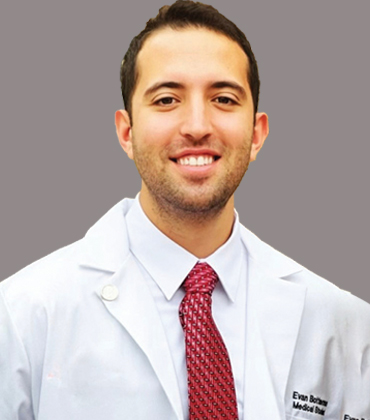
Every year, thousands of capable premedical students start preparing for the Medical College Admissions Test (MCAT) thinking the hardest part will be memorizing biochemistry pathways or beating the clock. It isn’t. Most premeds hit their first wall long before test day: no clear plan, no way to tell which tutors are legitimate, and a prep market full of overpriced, low-value promises. The result is isolation, overwhelm, and a feeling that MCAT prep is a high-stakes gamble they are expected to figure out alone. PreMedley was built to call that out directly and to prove that MCAT prep does not need to be confusing or financially draining. Founder and CEO of PreMedley, Evan Botterman knows that frustration firsthand. After several years in the corporate world following college, he decided to pursue medicine as a nontraditional applicant. But when he began preparing for the MCAT, he was overwhelmed by an industry that suggested success meant paying $5,000 or more for limited tutoring support. "I raised my MCAT score by 23 points, from a 494 [a 28th percentile score] to a 517 [a 94th percentile score]. I know what it takes for other students to do the same," says Evan..
Test Prep and Tutoring Services
Advancing Higher Education through Data-Driven Innovation and Generative AI
Jean Mandernach, Executive Director, Center for Innovation in Research and Teaching, Grand Canyon University
Healthcare and Allied Health Training
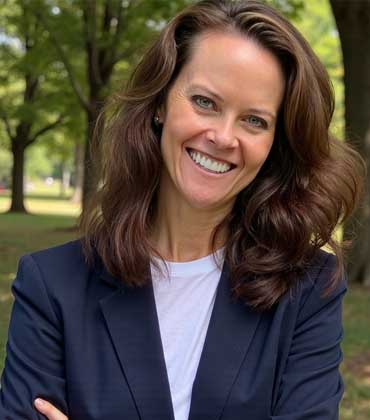
Adapting to Thrive: A Scientific Imperative for Evolving Education
Dr. Kelli McCall Smith, Ed.D., Director of Health, Wellness, and Prevention, Douglas County School District
School Services
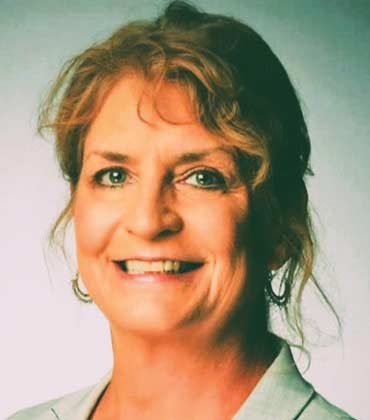
21st century K-12 School Food Services
Marianne Romsek, Food Service Director, Bloomfield Hills Schools
Student Loan

Heart Work on Every School Cafeteria Tray
Casey Dickinson, Assistant Director of Food and Nutrition Services, Chesterfield County Public Schools
School Services

Human-Centered Tutoring in the Age of AI
Greg Garcia, Program Director of Tutoring Services, San José State University
School Services
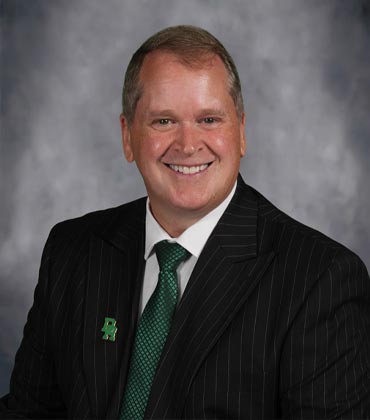
Redefining Educational Leadership Through Connection
Bill Runey, Superintendent, Dighton-Rehoboth Regional School District
School Services

Rethinking Public Education through Continuous Improvement
Dr. Mario J. Andrade, Ed.D, Superintendent, Nashua School District

IN MY OPINION
Private Colleges and Universities
Navigating the Future of Education: A Comprehensive Overview of Trends, Challenges, and Best Practices
Dr. Claude Toland, Director of Education, Universal Technical Institute
LAST WORD
Programs and Curriculum
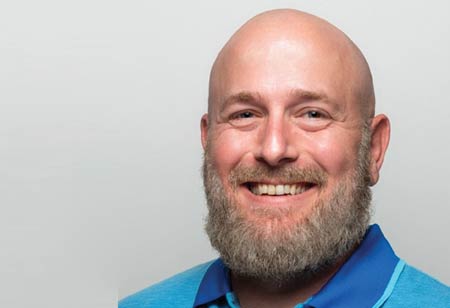
The Importance of Course Purge Policies in Higher Education
Tony Sovak, Ph.D., Director LMS & eLearning Quality, Pima Community College
IN FOCUS

Preparing Purposeful Lives: The Mission of Christian Schools in Today's Society
Christian schools cultivate leadership, empathy, character, and social responsibility through service, outreach, and faith-centered education, preparing students for purposeful lives.

Empowering Writers: The Essential Role of Coaching in Communication
Essay coaching providers bridge gaps in academic and professional writing, enhancing clarity, critical thinking, and communication through personalized, technology-driven, skill-focused programs.
EDITORIAL
Defining Quality in a Changing Education System
Central to our coverage is Veritas Essay Coaching, honored as the Top Essay Coaching Provider for 2026. Founded by Kim Pasculli-Festa and Jake Gursaly, Veritas transforms the college essay from a mere performance into a profound journey of self-discovery. Its innovative two-coach model pairs technical writing excellence with empathetic mentorship, enabling students to articulate meaningful life experiences with clarity, structure, and confidence.
Our recognition extends to several other institutions reshaping education. FreedomProject Academy, named Christian School of the Year 2026, offers a fully accredited Judeo-Christian classical curriculum online, from pre-K to high school. Here, Scripture infuses every subject, fostering clear thinking, careful reasoning, and character development.
Additional honorees underscore the impact of innovative education. New Vision Charter School, Top Charter School 2026, excels through shared accountability, and robust community ties, nurturing both academic rigor and moral growth. Rosarian Academy, acclaimed as Top Private Catholic School 2026, draws on Dominican traditions, Montessori principles, and a holistic blend of academics, arts, STEM, and service to cultivate well-rounded individuals. Veazie Community School, Top Public Elementary and Middle School 2026, distinguishes itself with consistent discipline, deep relational learning, and outcomes surpassing state standards.
Grounding these stories are insights from leaders. Andre Samuels, Adjunct Professor of Education Policy at American University, advocates for principal development centered on adult learning, professional identity, and intentional evolution. Dr. Mario J. Andrade, Ed.D., Superintendent of Nashua School District, champions continuous improvement, data-driven strategies, and judicious innovation as pillars of public education's future.
Together, these narratives affirm that enduring educational advancement springs from leadership that profoundly invests in human potential. We invite you to delve into the full features, reflect on these transformative ideas, and join the dialogue forging resilient, student-centered systems for tomorrow.

Get the best of Education Insider delivered directly to you.
