

Preparing students for the future begins with recognizing that the world they are entering is fundamentally different from the one previous generations were prepared to navigate. Students today encounter ideas, opinions and claims from multiple directions at an early age, often without clear boundaries between fact, interpretation and persuasion. Academic preparation alone is no longer sufficient. Effective education must also help students learn how to evaluate what they encounter and develop clarity about what is true. At Alta Loma Christian School, future readiness is understood as inseparable from faith formation. Academic rigor, technological fluency and forward-looking skills are developed alongside spiritual formation, grounded in the belief that students need both intellectual preparation and moral clarity to navigate what lies ahead. That balance is captured in the school’s guiding tagline, “21st Century Skills, 1st Century Faith.” “Students need access to learning experiences that equip and empower them for their future in real ways,” says Dr. Vance Nichols, head of school. “That means creating opportunities they may not find elsewhere, grounded in a biblical worldview and a school culture where students know they are loved, they belong and they are enough. When students feel safe and accepted, their capacity to learn expands dramatically.”
Public Schools
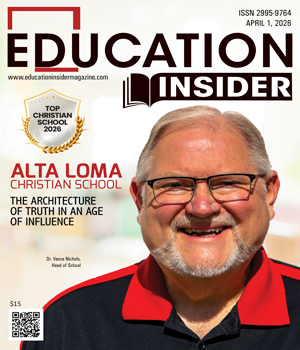
Legion Collegiate Academy approaches education with the clear premise that readiness must be built into the school's structure. Serving a tri-county region in South Carolina, the public charter high school prioritizes depth over scale, aligning academic sequencing, student independence, and long-term direction within a deliberately designed framework. How does Legion Collegiate Academy approach designing college readiness for its students? “When you’re dealing with people, you have to lead with the heart, but you also have to design systems that support that belief,” says Dr. Julie G. Marshall, Principal. That belief is reflected in how the school is structured, with rigorous academics, transferable dual enrollment and athletics combined within a small learning community designed to build independence and guide students toward their next step. What is the role of the small learning community at Legion Collegiate Academy? Academic Design with Real-World Impact The combination of structured academics, early college access, and a flexible school day translates into opportunities that would normally come much later for students..

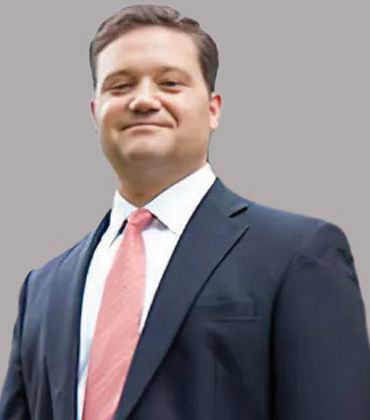
What defines The Linsly School’s intentionally small community model and its impact on students? When a school intentionally remains small, it delivers a level of personal investment that creates the space for students to develop confidence, character and leadership organically. The Linsly School stands as a compelling example of that philosophy in action. It is a private, independent day and boarding school for grades 5–12, where small is not a limitation but a deliberate strategy, serving approximately 400 students from 23 countries and seven U.S. states. Nearly half of the faculty lives on campus, and every student is paired with a dedicated advisor. In this close-knit community, teachers know their students well, and students are expected to show up fully. As Head of School, Justin Zimmerman puts it: “All true learning starts with a bond at our school. That belief is operationalized through constant face-to-face interaction inside classrooms, in dormitories, and across campus throughout the day.”.
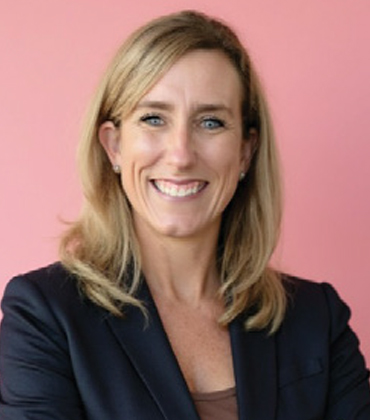
What defines SDCCS’s developmental cooperative education model in daily operations? San Diego Cooperative Charter School (SDCCS) is built around a developmental, progressive education model that nurtures the whole child. A public TK–8 cooperative charter, it operates as a learning community where families, educators and students work together to support academic, social and emotional growth. Creative, physical and social-emotional learning are intentionally integrated with academics to help children develop the skills and resilience necessary to grow into well-rounded individuals. The school’s TK–8 structure reinforces this community-based approach. Younger students benefit from mentorship and guidance from older peers, while older students gain responsibility and perspective by supporting younger children. Over time, these daily interactions create a culture of belonging that extends beyond classrooms and into the broader school community. The curriculum is designed to meet the needs of each student, but the true engine driving its effectiveness is the faculty. Educators build deep relationships with each child, understanding them academically and emotionally. This foundation allows instruction to be thoughtfully adapted. Many teachers and leaders have dedicated decades to SDCCS, offering continuity and insight into what fosters long-term student development. “We treat students with respect every day, in and out of the classroom,” says Sarah Saluta, executive director. “Everything we do begins with what’s best for kids, and you can see and feel it on campus.” Saluta has been part of the school for 21 years, growing alongside the community she serves. Her long-standing leadership reflects a deep commitment to cooperative, research-informed, child-centered education..
STEM Schools
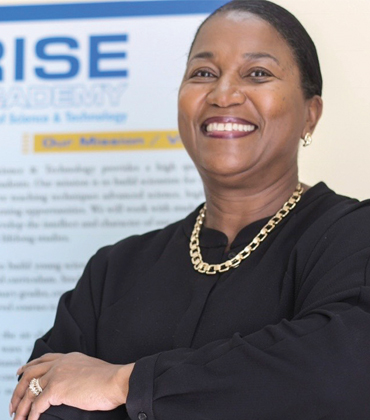
How does early STEM exposure shape academic identity for students at RISE Academy? Founded in 2007, RISE Academy School of Science & Technology operates as a K–8 school built around early exposure to science, technology, and applied learning, reflecting the belief that academic identity forms long before high school. With STEM certification and Cognia accreditation the school has built a cohesive learning experience that blends academics, creativity, and equity. Small in size yet ambitious in scope, it serves roughly 345 students and delivers outcomes that far exceed expectations. From the first years of school, students step into environments that treat curiosity as a responsibility and are immersed in learning that feels purposeful and alive. Early immersion shapes confidence, builds academic identity, and sets expectations that students carry forward as they progress through their education. How do hands-on investigations build confidence and readiness for advanced scientific study? Each program at RISE Academy reinforces the same developmental arc, where confidence supports risk-taking and readiness emerges through consistent practice. Hands-on experimentation beings with students conducting real investigations and gradually progressing to advanced laboratory experiences by middle school. Through applied learning, students build confidence alongside content knowledge, developing the habits of inquiry that form the foundation for advanced study. “Our goal is to make sure students embrace science and technology at an early age and feel prepared to accept the challenge,” says Dr. Carmella Morton, founder and executive director..
Top Esports Curriculum & Competition Platform 2026
How can esports be structured to support academic growth? Esports has become one of the fastest-growing youth activities in the country. The United States Academic Esports League (USAEL) is redefining what it means for schools — transforming competition into a structured pathway for academic growth, leadership development, and career readiness. Founded by Adam Rosen, a pioneer in collegiate esports, the USAEL was built on a clear principle: if esports is to create lasting value in schools, it must be grounded in academic structure. Rosen began organizing collegiate esports in 2010, later founding Tespa, which grew into a national league spanning more than 1,200 colleges and universities before its acquisition by Blizzard Entertainment, where he led esports initiatives for several years. That experience shaped a belief that esports could extend beyond elite competition to become an educational infrastructure. What distinguishes USAEL’s curriculum-driven esports model in K–12 schools? The USAEL embeds esports within a curriculum-driven framework designed for K–12 environments. Rather than treating gaming as an extracurricular activity, the league integrates it into the school day through adoptable coursework in esports careers, broadcasting, marketing, and game development. Students gain technical knowledge alongside collaboration, communication, and leadership skills — competencies aligned with college and workforce expectations.

Essay Coaching
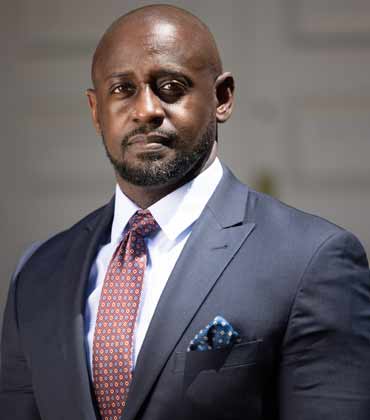
Coaching, Not Compliance: The Future of Principal Support
Andre Samuels, Executive Leadership Coach, Apogee Executive Coaching
Charter Schools

Message Sent Message Received: Why Leaders Must Think Like Designers
Tamara Rose, Director of Professional Learning and Development, River Springs Charter School
Catholic Schools

Cybersecurity: Prioritizing What Matters for Ed Tech Leaders
Don Ringelestein, Executive Director of Technology, Yorkville CUSD #115
Catholic Schools

A Roadmap for Sustaining and Scaling Innovation
Michelle Bourgeois, Chief Technology Officer, St. Vrain Valley Schools
Catholic Schools
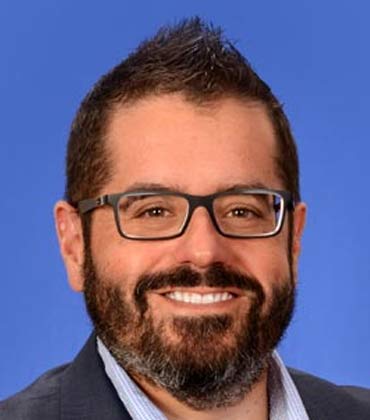
Striving for Impactful and Sustainable Professional Learning
Anthony Dougherty, Director of Professional Development, the School District of Palm Beach County
Charter Schools

Future-Ready Classrooms: Tech, STEAM and Career Pathways
David Jarboe, Director of Instructional Technology, D2 Harrison Schools in Colorado Springs
Catholic Schools
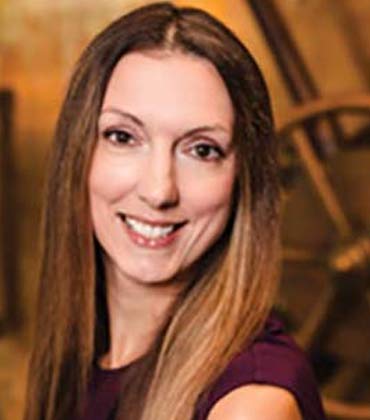
Beyond Theory and Into Monday Morning: Enhancing Graduate Programs for Teachers
Dr. Kathryn "Annie" Arnone, Department Head of Advanced Graduate Programs in Curriculum and Instruction, Lindenwood University

IN MY OPINION
Nursing Colleges
Process Improvements in University Admissions Offices
Monterey Sims, Director of Admissions and Evaluation, University of Phoenix

LAST WORD
Hospitality and Service Industry Training
Maximizing Mobile Ordering
Rich Perna, Associate Vice President of Hospitality Services, College of the Holy Cross
IN FOCUS

Student Development: Transforming the Modern High School Experience
High schools integrate academic learning, personal development, leadership opportunities, and technology to prepare students for higher education, careers, and responsible citizenship.
Christian Education Systems: Faith Integration and Academic Excellence
Christian schools combine academic rigor with faith-based values, emphasizing character development, community engagement, modern learning approaches, and leadership growth.
EDITORIAL
Designing Educational Systems for Measurable Outcomes
At the center of this edition is Alta Loma Christian School, recognized as the Top Christian School 2026, which integrates faith formation with academic and technological rigor. Its structured emphasis on discernment, combined with early STEM exposure and a progressive apologetics curriculum, positions students to navigate complexity with clarity. Student achievements, including international competition wins and real-world aerospace collaborations, reflect a system in which outcomes flow from intentional formation rather than standalone initiatives.
Legion Collegiate Academy, recognized as the Top High School 2026, demonstrates how structured academic sequencing and dual enrollment can operationalize college readiness within high school. Its capped scale reinforces execution quality and student independence. RISE Academy School of Science & Technology, recognized as the Top STEAM School 2026, advances early academic identity through immersive, applied STEM learning, supported by global exposure and creative integration.
Extending this approach, San Diego Cooperative Charter School, recognized as the Top TK–8 Public Charter School 2026, reinforces whole-child development through a cooperative model that embeds family engagement and social-emotional learning into daily practice. The Linsly School, recognized as the Top Private Independent Day and Boarding School 2026, highlights the impact of small, intentionally designed communities, where leadership practice and performance-based learning translate into sustained student confidence and readiness.
Beyond institutional models, leadership perspectives further reinforce this shift. Don Ringelestein, Executive Director of Technology at Yorkville CUSD #115, highlights risk prioritization in edtech investments, advocating for decisions grounded in mission-critical needs rather than blanket protection strategies. Tamara Rose, Director of Professional Learning and Development at River Springs Charter School, reframes leadership communication as a design function, emphasizing that impact depends on whether messages are received, not merely delivered.
This edition reinforces a clear mandate: effective education systems are built through disciplined design and aligned execution. We invite readers to explore these models and engage with the practices shaping the next generation of schools.

