


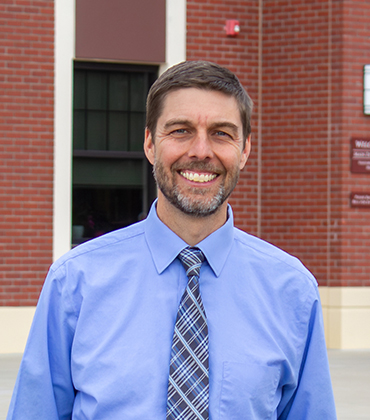
 Dr. Ian Stout, Executive Director
Loveland Classical Schools, a tuition-free K–12 public charter school in Colorado, has spent more than a decade proving this integration works.
Grounded in the Core Knowledge curriculum and classical methodologies, the school delivers a rigorous liberal arts education where history, literature, mathematics and science function as interconnected disciplines that foster critical thinking and virtuous living. Parental partnership and an emphasis on civic responsibility extend this work beyond campus, equipping graduates to contribute thoughtfully to their communities.
“Knowledge, thoughtfulness and virtue guide everything we do,” says Dr. Ian Stout, executive director. “When students learn to ask better questions, see connections between ideas and responsibilities and ground their choices in character, they become the kind of leaders every community depends on.”
The school organizes this vision around three developmental outcomes, depth of content, critical thinking, and virtuous character, that build across grade levels and shape both curriculum and culture.
In elementary grades, the foundation takes shape through specificity. Content-specific teachers begin in first grade, delivering focused instruction across disciplines rather than relying on generalist classroom teachers. Great Works, primary sources and structured lessons build strong knowledge bases, while character instruction introduces core virtues through example and daily practice.
-
Knowledge, thoughtfulness and virtue guide everything we do. When students learn to ask better questions, see connections between ideas and responsibilities and ground their choices in character, they become the kind of leaders every community depends on.
Middle school shifts toward synthesis. Socratic seminars and primary documents replace rote instruction, while the trivium framework teaches how to connect ideas across subjects. The house system creates opportunities for demonstrating leadership and character. Study hall includes explicit virtue lessons that name expectations, model behavior and encourage reflection.
By high school, the classical model reaches full expression. Advanced Socratic discussions demand precision; complex texts require close analysis; grammar, logic and rhetoric become tools for articulating understanding with clarity. Literature and history no longer present settled answers but moral dilemmas that require weighing competing virtues and ethical claims.
The approach yields measurable outcomes. LCS has earned School of Distinction recognition for two consecutive years based on state testing performance, while its high school posts the highest average SAT scores in the local area. Academic rigor translates to college readiness without displacing character formation.
Character development happens through daily routines and peer culture. Older students mentor younger ones during house competitions. Faculty recognize acts of service rather than compliance. Assemblies celebrate students who choose difficulty over convenience or support classmates without prompting.
Athletic teams reach state competitions, including a girls' soccer team that won a state championship. Music and performing arts programs build discipline and creative expression.
Faculty join LCS because the model lets them teach substantive content rather than teaching to assessments. Many upper-grade instructors hold advanced degrees and could teach at universities, yet they prefer the seminar-based setting where Socratic discussion replaces lecture and students arrive prepared to engage ideas.
This culture becomes self-reinforcing. Older students stay enrolled despite open-enrollment alternatives because they value intellectual challenge and purposeful work. Their presence raises expectations for younger students.
Rising enrollment across northern Colorado shows strong demand for the model. LCS recently completed a wing expansion at its Academy Campus and prepares to break ground on a new auditorium. A steady waitlist signals interest exceeding current capacity. Consideration of a possible third campus reflects the school’s commitment to serving more families across the region.
The classical model succeeds by balancing competing priorities and insisting they're inseparable. Intellectual rigor without ethical formation produces clever cynics. Character education without academic challenge produces well-meaning incompetence. LCS demonstrates that when knowledge, thought, and virtue develop together, students gain the capacity to understand problems and the conviction to address them responsibly.

