
Charter schools in Colorado are evolving from innovation centers to essential community anchors. This change reflects a more integrated relationship between schools and their neighborhoods. With charter schools now serving about 15 percent of Colorado’s public school students, their mission has broadened beyond academic excellence to include becoming the physical and social center of the community.
Top Public Charter Schools 2026
Public charter schools provide publicly funded education through independently managed school models and mission-specific learning approaches. With a focus on curriculum flexibility, accountability standards, student support and community access, they support broader school choice and stronger educational opportunity.
Solutions
Loveland Classical Schools
Where Academic Rigor Meets Character and Purpose
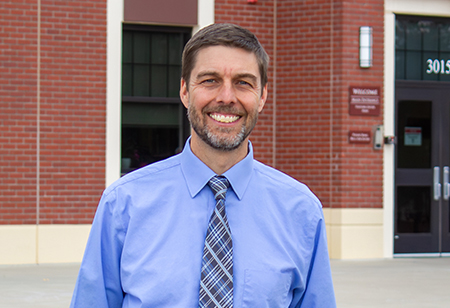
Dr. Ian Stout, Executive Director
Parents increasingly seek schools centered on meaning, purpose and character—institutions that cultivate not just knowledge but the ethical foundation to apply it thoughtfully. Yet schools that fulfill this vision remain rare. Many prioritize test scores at the expense of character, while others stress values without the intellectual rigor to sustain them. Few manage both, building the depth of understanding and moral purpose that allows young people to contribute with conviction.
State of Industry
Leadership Perspective

Avenues The World School
Cultivating Global Citizens through Community Engagement
Morgan Jones, Director of Community Engagement
Before joining Avenues, I served in the NYC Mayor's Office and across city government, including the Community Affairs Unit, the Housing Recovery Office, which supported Hurricane Sandy recovery, and the Economic Development Corporation, where I managed Manhattan's government and community relations. I also served as COO at the US-China Strong Foundation in Washington, D.C., a nonprofit organization dedicated to expanding Mandarin language learning in U.S. K–12 schools and inspiring students to study abroad in China. Mandarin is my second language, and I lived in China for six years. These roles taught me how to build trust across diverse communities, navigate complex systems, and champion global perspectives. They align closely with Avenues' mission: fostering language fluency, global citizenship, and meaningful local engagement. Each milestone reinforced my belief that education thrives when schools and communities collaborate to prepare students as world-wise leaders.
Solutions

Cherokee Charter Academy (CCA)
Shaping Future Citizens through Holistic Education
Brad Teague, School Director
It’s a regular school day in Cherokee Charter Academy (CCA). Students in uniform are making their way into classrooms, ready to learn with focus. Their day is punctuated with physical activities that keep both body and mind energized.
State of Industry
The Impact of Charter Schools on South Carolina's Educational Future
South Carolina’s public charter school sector is recognized for its innovation and flexibility, fueled by rising enrollment and a legislative framework that promotes institutional excellence. With more than 100 charter schools operating statewide, charter schools have become a central part of South Carolina’s public education system. This growth reflects a shift toward more personalized, specialized, and community-focused learning that meets the demands of a modern economy.
Leadership Perspective

Stanford Law School
Navigating the Challenges in Higher Education Facility Management
Jason Estacio, Director of Facilities and Operations
Jason Estacio is the Director of Facilities and Operations at Stanford Law School. He has managed the complexities of higher education facilities and operations for 21 years. Jason’s experience and early background have significantly contributed to his development as an effective leader.
Solutions

Springs Empower Academy
Transforming Classrooms, Transforming Lives
Shane Wickwire, Executive Director
In the heart of Smyrna, Tennessee, a quiet revolution in public education is taking root.
State of Industry
Public Charter Schools as Engines of College and Career Readiness
The mission of the public school system has evolved from basic literacy to the broader goal of College and Career Readiness (CCR). Public charter schools are leading this shift, serving as specialized platforms for lifelong learning. By leveraging their distinct institutional models, these schools are redefining readiness amid rapid technological and economic change.
Leadership Perspective

Saint Paul Public Schools
Leading Education Forward
Craig Anderson, Executive Director, Office of Teaching and Learning
Craig Anderson is a seasoned educator with over 30 years of experience in Saint Paul Public Schools. Throughout his career, he has worn many hats—from teacher to curriculum coordinator, assistant principal, principal, and now Executive Director of the Office of Teaching and Learning. His deep commitment to the development of teachers and students is evident in every role he has held. Anderson is particularly passionate about the relationship between teachers and students, recognizing that fostering this connection whether in physical or virtual spaces are the cornerstone of successful education.
Public Charter Schools Info
Q1
What Does a Top Public Charter School Do for Students and Families?
A Top Public Charter School provides tuition-free public education with more flexibility than many traditional district models. Public charter schools still answer to academic, financial and governance standards, but they often have more room to shape curriculum, school culture, schedules and teaching methods. For families, the appeal is choice. A school may offer smaller learning environments, distinctive instructional models or a stronger fit for a child who needs a different classroom rhythm.
Q2
What Programs Are Commonly Included in Public Charter Education?
Programs vary, but a Top Public Charter School usually combines core academics with student support, enrichment and measurable learning goals. Charter school programs may include literacy and math intervention, project-based learning, arts, athletics, counseling, special education services, English learner support and college or career preparation. The stronger models make these services easy for families to understand, rather than scattering information across separate forms, meetings and policy documents.
Q3
Why Is Demand Growing for Public Charter Schools?
Many parents weigh academics, safety, commute time, classroom culture and how well teachers know their child when comparing schools. This mix of factors has raised interest in public charter schools, especially for families who want public access but need a different kind of educational setting. A Top Public Charter School can offer both accountability and choice, without requiring a move to a new district or the cost of private school tuition.
Q4
How Are Top Public Charter Schools Selected?
Evaluation should go beyond enrollment numbers or a polished mission statement. Families and education leaders should look at student progress, teacher quality, governance, financial health, parent communication, support for students with different needs and whether the school delivers what it promises. When reviewing a Top Public Charter School, families can ask how a struggling student is identified, supported and followed up on after the first intervention.
Q5
How Do Public Charter Schools Create Value for Communities?
A well-run charter school can open up access to specialized learning options and still remain part of the public education system. The value is practical. Students might get closer academic support, families may have clearer choices and communities can see new approaches tested on a smaller scale. A Top Public Charter School also needs to manage public funds carefully, since weak oversight can create confusion for parents and cause disruption for students.
Q6
What Role Do Innovation and Educator Expertise Play in Charter Schools?
Innovation is useful when it helps teaching, not when it turns into another experiment that families have to figure out. A Top Public Charter School might use technology, flexible grouping, progress tracking based on competency or hands-on learning, but educator judgment is still at the center. Teachers need time, training and clear systems to decide when a student needs more challenge, extra support or a different explanation. Good charter school technology should make learning easier to understand, not take the place of the human relationship that supports it.

Get the best of Education Insider delivered directly to you.
