

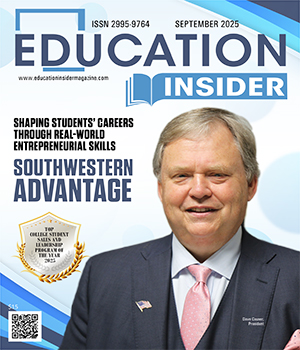
When looking for an award-winning internship in the USA, one needs to look no further than the entrepreneurship program offered by Southwestern Advantage. Whether it is Bruce Henderson, founder of the Boston Consulting Group, Kevin Stitt, founder of Gateway Mortgage, or one of the thousands of other business leaders around the world who began to form their leadership skills in the Southwestern program, it is hard to find a summer program with such an impressive track record. For nearly 160 years—making it the oldest internship program in the U.S.—generations of college students have accepted the challenge of joining the Southwestern Advantage program, learning not just how to sell, but how to lead, adapt, and succeed under real-world circumstances. In addition to the many business leaders who started in Southwestern Advantage’s entrepreneurship program, many participants are greatly influenced by their culture of public service. A couple of examples would be Millard Fuller, founder of Habitat for Humanity and Morris Dees, founder of the Southern Poverty Law Center. Both are world changing organizations that were fostered in Southwestern Advantage’s culture of serving others and giving back. Other distinguished alumni in public service include four Governors, two U.S. Senators, and the current Speaker of the House of Representatives. Unlike traditional roles where students shadow professionals or complete predefined tasks, this program places them at the helm of their own enterprise. Students lead every part of the process, selling educational and leadership materials door-to-door through a structured system of referrals and in-home consultations with families. Looking for a Challenge? “Our goal is to impart the interns with more than just exceptional sales skills,” says Dave Causer, President. “Our program is a full immersion into the mindset of an entrepreneur, where students walk away with the critical thinking skills, confidence, problem-solving abilities, discipline and exceptional communication skills to confidently build their own futures.” High-performing students are often invited to pursue full-time careers within the broader Southwestern Family of Companies, with positions available in sales, consulting, travel, executive coaching, insurance, real estate and international exchanges.
Top Christian University 2025
Young adults entering college today are seeking more than a degree. They crave direction, a deeper sense of purpose, and a place where they can belong. Amid rising uncertainty and pressure to define success narrowly, many students are asking deeper questions about identity, meaning, and impact. What if college could be more than just job preparation? What if it could help shape them into the leaders God created them to be? That is exactly what Malone University offers through a Christian mission that nurtures the heart, mind, and future with equal care and attention. “We know that deepening of faith and persistence in faith through your college years is greatly increased when you have a connection to a local church. We want to bridge the gap between our campus community and the local church community so that our students will flourish in their walks with Christ,” says Gregory J. Miller, president. Rooted in Legacy, Growing Through Innovation The university’s story began in 1892 when Quaker leaders J. Walter and Emma Malone founded the Christian Workers’ Training School in Cleveland, Ohio. With just six students, the school was created to prepare young people for urban ministry. It later became Cleveland Bible College and continued to grow steadily over the years. In 1957, the institution relocated to Canton due to highway construction, expanded its academic offerings, and was renamed Malone College. With the introduction of graduate programs and a broader liberal arts focus, it became Malone University in 2008. Throughout its history, Malone has remained grounded in its Christian foundation and Quaker heritage, which emphasize humility, listening, and service. Today, the university offers more than 50 undergraduate majors and several graduate programs, continuing to equip students for both professional success and meaningful lives of purpose. Building on that foundation, Malone became one of the founding members of the Christian College Consortium (CCC), a group of 13 institutions that emerged in the 1970s as a unified voice for Christian higher education. The CCC not only fostered collaboration among like-minded colleges but also helped shape the national conversation around faith-based learning—a legacy that Malone continues to honor. Malone pairs this foundation with professional excellence. Its nursing program has achieved a 100 percent NCLEX pass rate for two consecutive years. The graduate clinical mental health counseling program is one of the region’s largest, and undergraduate majors such as social work, education, and psychology consistently attract students who want to serve their communities.
Medical School
Global healthcare depends on physicians who can adapt across systems, connect across cultures and care for communities that have long been underserved. For many international students, the path to becoming that kind of doctor begins far from home with unfamiliar systems, new expectations and the challenge of building resilience in real time. St. Martinus University (SMU) exists to guide students through this transformation, making them feel at home. Located in Curaçao, SMU prepares international medical graduates to succeed across borders. Its model blends academic rigor with personalized support, helping students grow into confident, compassionate professionals who bring both skill and empathy to the healthcare systems they serve. “Our mission extends far beyond the classroom,” says Danna Soria, MD, MSc, university vice chancellor and faculty of medicine. “What our students value most is the personal approach we take in supporting them as they develop not just as professionals, but as as purpose-driven individuals.” Personal Mentorship Meets Real-World Preparation SMU engages students through structured clinical observation, simulation-based learning and interaction with practicing physicians. These experiences build confidence and connect theory to practice, which are key to succeeding in clinical rotations and board exams like the United States Medical Licensing Examination (USMLE). It’s why most SMU students often pass the USMLE on their first try, prepared by the program's hands-on, focused approach. At the same time, students are immersed in a culturally diverse environment. Global rotations and international cohorts expose them to various health challenges, encouraging adaptability, cross-cultural awareness and a strong sense of social responsibility. This strengthens students' ability to serve multicultural and underserved communities with empathy and insight. Throughout this journey, faculty play an active, personal role. Many have walked similar paths as international graduates themselves. This shared experience fosters a trust culture and understanding. Faculty mentor students one-on-one, providing consistent academic counseling and reinforcing skills like time management, professionalism and emotional resilience, which are essential for long-term medical success.
Top Independent School in Colorado 2025
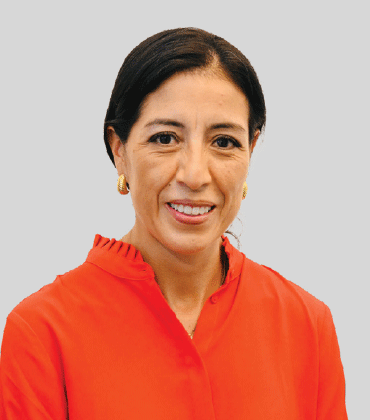
At Evergreen Country Day School (ECDS), learning isn’t just something students do. It’s something they feel a part of. With hands-on academics, a culture of belonging and experiences that spark confidence, ECDS is where kids discover who they are and how to lead. Serving students from 18 months through 8th grade just outside Denver, ECDS has become one of Colorado’s fastest-growing independent schools—a transformation fueled by a bold vision and a belief in every child’s potential. With small class sizes averaging 14 students and a 6:1 student-teacher ratio, ECDS creates space for students to love learning again. From a play-based, sensory-rich early childhood program to a rigorous, project-driven middle school experience, academics meet students where they are and help them grow. “We’re not focused on test scores, even though ours are high,” says Kabe ErkenBrack, head of school. “What sets us apart is the belief that kids need both future-ready intelligence and tech fluency (AIQ), emotional intelligence (EQ), and human connection. That balance is what we build here.” An Upward Trajectory Since 2020, ECDS has grown enrollment by over 50 percent, doubled revenue, and achieved faculty retention above 95 percent. The bigger shift has been cultural. Students consistently outperform national and local MAP benchmarks, scoring well above other independent schools and more than 20 points higher than local public schools. But test scores are not the headline. “We focus on leadership, character, and professional skills,” says ErkenBrack. “When kids love school, feel safe being themselves and are challenged to stretch, that’s when real learning happens.”
Top Charter School 2025
Charter schools were created to be flexible, able to adapt, innovate, and respond to local needs. Few have embraced that mission as fully as Miami Community Charter Schools (MCCS) in Florida. A public K–12 charter school, MCCS blends academic excellence with cultural relevance and strong human connection. It prepares students to succeed not just academically, but also socially and professionally in a global world. What sets MCCS apart is its ability to balance academic standards with community identity. It meets all state and district requirements, ensuring a rigorous, well-rounded education. But that is just the starting point. The school has created an environment shaped by the values, experiences, and voices of the community it serves. This level of cultural alignment is uncommon in today’s charter landscape. This alignment is possible because of MCCS’s structure. Unlike many charter schools run by outside operators, MCCS is governed and led by local community members, including its board. This rooted leadership has helped the school stay focused and true to its founding vision. From the beginning, MCCS has intentionally remained small. This is not due to a lack of ambition, but to protect what it values most: relationships. Whether among students, between teachers and families, or staff and the broader community, the school believes that connection drives real learning. That belief has sustained MCCS since its founding in 2004. It has grown into a trusted institution, with former students returning as parents, enrolling their children, and continuing a cycle of care and community investment. “Our mission to turn obstacles into opportunities isn’t tucked away in a binder or on a website. It’s something we live every day. Whether it’s our teachers, students, parents, or leadership, everyone shares the same purpose: to grow, uplift, and succeed together,” says Jila Rezaie, executive director. This mindset shapes every part of student life. MCCS combines innovation and ambition to deliver an academic experience that extends beyond standard coursework. Career academies give students access to fields often out of reach in similar communities, including digital design, gaming, fashion, entrepreneurship, and certifications from Microsoft and Adobe. The school recently added academies in AutoCAD and environmental studies. In the class of 2024–25, 86 percent of students earned at least one career certification, and 10 percent earned associate degrees. These results reflect both academic rigor and expanded opportunity.
Top Community College 2025
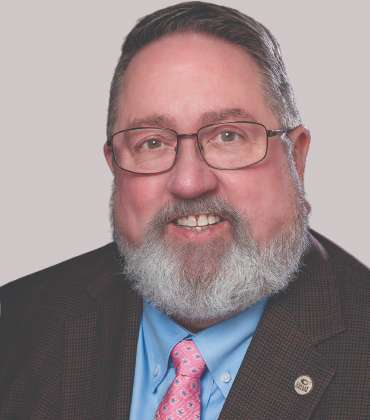
Collin College, a powerhouse public community college district located in Collin County, Texas, provides a pathway from dreams to degrees. That path may lead to a career, a university transfer, or credentials to strengthen a resume. The college's strong commitment to access and affordability places quality, higher education within reach. Collin College helps students transform challenges into opportunities and ambitions into achievements. Academic programs and student services are continuously updated to reflect the ambitions of its more than 60,000 students and align with real-world business needs. The college also works to remove barriers by streamlining processes, improving access to resources, and delivering a high-tech experience through state-of-the-art facilities. “We understand students arrive with goals of their own,” said Dr. Neil Matkin, Collin College district president. “Our responsibility is to clear the way by removing barriers, delivering relevant education, and surrounding them with exceptional faculty so they can move forward with purpose and confidence.” This philosophy is reflected in action. Thanks in large part to a visionary Board of Trustees, Collin College offers the lowest tuition of all 50 Texas community colleges. Students can choose from hands-on technical certifications such as pharmacy technician and biotechnology, associate degrees, or university transfer options. The college is also among a select group of community colleges in Texas that offer baccalaureate degrees. It currently offers five baccalaureate degree programs, including a new one in software development which launches in Fall 2025. The college also maintains strong partnerships. In Fall 2024, the Texas A&M Engineering Academy at Collin College enrolled one of the largest inaugural cohorts in the academy program’s history. Another initiative, the Collin College Academic Alliance, joins Collin College, Texas State University, and The University of Texas at Dallas in a partnership granting co-enrollment so students can earn an associate degree while seamlessly earning a bachelor’s degree. The college also partners with more than 20 high schools to offer dual credit classes, allowing students to earn high school and college credit simultaneously.
Top Catholic High School 2025
Walk through the halls of St. Brendan High School in Miami-Dade County, and the tone is immediately clear. This is a place where excellence and humility meet. Students are immersed in discussions about global markets, designing robotics, or rehearsing for stage productions. Between academic rigor and creative exploration, they gather for morning prayer, celebrate Mass, organize service projects, and connect closely with faculty who guide them with intention. Saint Brendan High School approaches education not as a checklist, but as a calling. Its goal extends beyond college placement to graduate students who lead with conviction, think with clarity, and act with compassion. “We don’t believe students should have to choose between tradition and innovation. Our approach brings the two together, faith forms the foundation, and from there, we build toward the future,” says Arlenee P. Suarez, enrollment and activities coordinator. Every decision—whether in curriculum, culture, or partnerships—is designed to form ethical, prepared, and reflective leaders. That purpose is evident in programs and also in the way students carry themselves: confident, engaged, and ready to contribute. Faith-Focused, Future-Ready Catholic identity at Saint Brendan High School is is practiced as a way of life. Morning prayer, liturgical celebrations, and theology coursework are part of the rhythm, but so are empathy, reflection, and thoughtful decision-making. Students are invited to live their values, not just memorize them. The academic structure is equally strong. Saint Brendan High School offers 28 Advanced Placement courses, more than 50 honors classes, and over 100 dual enrollment credits through Miami Dade College and St. Thomas University. Its graduates leave with academic confidence and early momentum toward higher education. The school also operates four distinct academies—Law & Global Business, Medical Sciences, STEM, and Visual & Performing Arts—designed to give students deeper, hands-on learning in their areas of interest. These academies serve as bridges between classroom theory and real-world application, helping students connect their passion to purpose.
Top Teacher Transition Services 2025
Teachers bring a powerful blend of leadership, creativity, and heart to their work. But for many, there comes a time when they begin to consider a new direction and future opportunities. Whether driven by changing goals, burnout, or a desire for growth, some educators decide to step beyond the classroom. The hard part? Translating years of teaching experience into roles where their skills will be recognized and valued. Job titles don’t always match up. Applications can feel like they disappear into a black hole. And confidence can take a hit when it seems like classroom strengths don’t fit neatly into corporate checklists. Ali Parrish knows that journey firsthand. After navigating her own career change from her classroom to working at education companies and more, she founded Teacher Transition, a company built by teachers, for teachers, to help them explore new professional paths, gain in-demand skills, and move forward with clarity and confidence. What started as a passion project has since grown into a full-fledged organization offering training, support mentorship, and practical tools for career pivots. “We’re not just helping teachers write resumes,” says Ali. “We’re also helping them discover what they truly enjoy, build the skills employers are looking for, and connecting with real opportunities. Everything we offer is built for teachers, by teachers who’ve walked the path and now work in the roles teachers want next. We’ve been where they are and we know how to get to where they want to go next. We’ve trained for, hired and recruited for these roles for years, and we know how to help teachers land them.” HELPING TEACHERS MAKE THEIR SKILLS STICK At the heart of Teacher Transition is the ABC Framework: • Awareness of personal strengths and goals, and jobs aligned with those • Building the skills companies need them to have • Connecting with companies successfully to get hired The process starts with helping teachers see where their talents align with in-demand roles. From there, they participate in targeted, hands-on training and receive support through every step of the job search—from networking to interviewing. Graduates have landed roles as curriculum developers, instructional designers, educational consultants, corporate trainers, customer success managers and professional learning specialists. The goal isn’t just a new job—it’s meaningful work that fits, inspires, and allows them to build a life they love!
Top Christ-Centered Education 2025
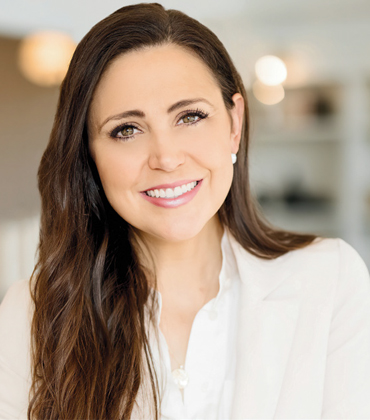
Home education offers greater freedom to students, yet it can be overwhelming for parents who take on the role of educator. Many begin with passion but soon find themselves navigating a maze of disjointed curricula, inconsistent tools, and the constant pressure to “get it right.” The same challenge is often seen in Christian schools and hybrid learning models, where teachers and facilitators can feel under-equipped, under-supported, and stretched thin across scattered resources. Portals Education changes that. In fact, Portals may well change education itself. Portals is a state-of-the-art digital platform that makes Christ-centered education easier, smarter, and more sustainable—without abandoning face-to-face teacher–student relationships. It supports learning at home, in micro-schools, and in church-based educational communities by removing lesson prep from the workload. The platform unites everything in one place: a complete K–12 curriculum, intuitive lesson plans, engaging projects, and on-demand support from real educators—all rooted in biblical truth. Now, the hesitant parent becomes a confident mentor, the unsure student finds joy in discovery, and the overwhelmed teacher becomes an intentional guide in a thriving learning community. We believe that when families are empowered to lead, learners thrive. And when home becomes a place of purpose, education becomes a shared calling,” says Seann Dikkers, Executive Director. “We don’t tell people how to drive learning—we just provide the car.” Portals integrates everything a family or school needs into one seamless experience where technology lifts the burden instead of adding to it. Each course is designed to represent a full class, with engaging resources backed by live, nine-to-five hub support. It feels like having a mentor or teacher’s aide just a message away. Its proven pedagogical approach—moving from literature to project-based learning—has driven remarkable outcomes in both homeschool and hybrid education settings. For example, a pilot study revealed that both seasoned homeschoolers and first-time teachers achieved success using Portals’ well-organized lesson plans. Some even gained the confidence to launch micro-schools within a year. In classrooms and co-ops, the platform has simplified planning and revitalized instruction, offering clear guidance without sacrificing flexibility. Beyond its effectiveness, this personalized, high-quality education is remarkably affordable. At a time when curriculum costs are climbing, Portals takes the opposite approach: for $250 per year per family (not per child), it provides full access to K–12 content, saving families and schools thousands of dollars over time. Parents and teachers can supplement with local library books, used resources, or even invite grandparents to help—an earmark of traditional home education that saves even more.
Programs and Curriculum

Relevance of Fostering a Positive Adoption of AI in Higher Education
Peter Shea, Assistant Dean for AI Integration, Middlesex Community College
Private Colleges and Universities

Navigating the Future of Education: A Comprehensive Overview of Trends, Challenges, and Best Practices
Dr. Claude Toland, Director of Education, Universal Technical Institute
Programs and Curriculum

Leading the Nation With Skills For Success
Brandi Merrill, Director of Curriculum Design, Alabama Community College System, Houston Blackwood, Workforce Director- Innovation Center, Alabama Community College System
Charter Schools

Leading Education Forward
Craig Anderson, Executive Director, Office of Teaching and Learning, Saint Paul Public Schools
Hospitality and Service Industry Training
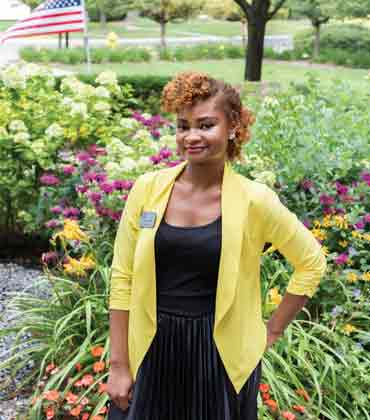
The Power of Nutrition: Are we Doing Enough?
Karrah Cullers, Director of Nutrition and Wellness, Acero Schools
Healthcare and Allied Health Training

Navigating the Digital Shift with Data-Driven Strategies
Brian Rabuffetti, Director of Program Marketing, Harvard Medical School
Private Colleges and Universities
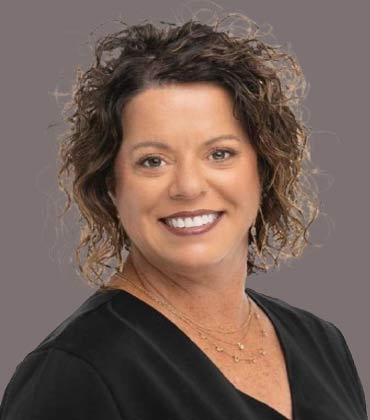
How Christian Universities Can Lead In the Age of Artificial Intelligence
Jean Mandernach, Executive Director, Center for Innovation in Research and Teaching, Grand Canyon University
Programs and Curriculum
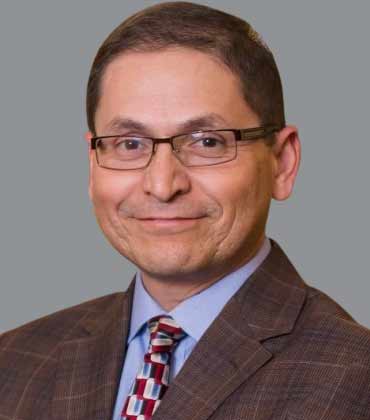
Advancing Institutional Goals with Planning and Trust
Jesus H. Campos, EdD, JD, Interim VP of Information Services, Planning, Performance, & Strategic Initiatives, South Texas College
Community Colleges
Methods to Integrate Diversity and Flexibility in Modern Educational Leadership
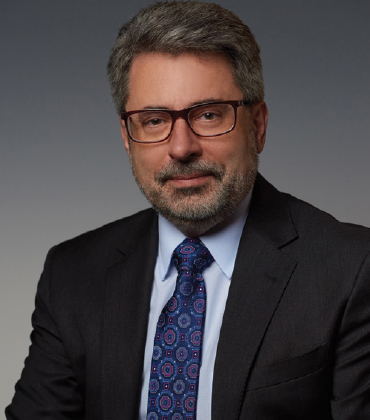
Amber Pleasant, Program Director - Adult Education and English Language Learning, Aims Community College
Programs and Curriculum
Social-Emotional Learning: The Frame That Holds the Portrait of a Graduate
Statia Paschel, Director of Social Emotional Learning and Cultural Proficiency & Inclusiveness, Austin Independent School District
Programs and Curriculum
Amplifying the Teacher-Learner Relation through E-Learning
Kenny Ward, Executive Director of Special Education, Oklahoma City Public Schools
IN MY OPINION
Programs and Curriculum
Rethinking Teaching through an Anthropologist's Lens
Abby Wightman, Director, Center for Teaching and Learning, Mary Baldwin University
LAST WORD
Programs and Curriculum
The Importance of Course Purge Policies in Higher Education
Tony Sovak, Ph.D., Director LMS & eLearning Quality, Pima Community College
IN FOCUS

Gamification and AI in Student Sales Development
A shift in professional development towards gamified simulations and AI coaching enhances engagement and skill mastery through experiential learning and immersive technologies.

Colorado's Independent Schools in a Choice-Driven Ecosystem
Colorado's independent schools exemplify educational choice, thriving on autonomy and minimal regulation, fostering diverse learning environments driven by unique missions and market accountability.
EDITORIAL
Inspiring Students to Step Forward with Purpose
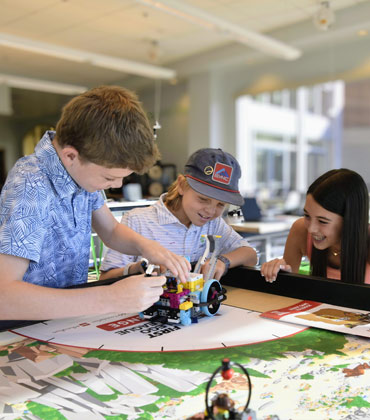
The key trends shaping this transformation include faith-informed curriculum design, leadership-focused student development and digital learning integration. Faith-informed curriculum design is focusing on moral and spiritual growth alongside academic excellence. Leadership programs are equipping students with skills in communication, responsibility and entrepreneurship. Digital integration is ensuring a wider access to advanced learning platforms, expanding opportunities for personalized education across universities, charter schools and independent high schools.
This edition of Education Insider explores how these trends are reshaping schools and universities across North America. It highlights Christ-centered curriculum innovation, leadership programs for college students and the integration of digital tools in classrooms.
It features thought leadership from academic professionals and education leaders. Amber Pleasant, Program Director - Adult Education and English Language Learning at Aims Community College, highlights adaptability and lifelong learning as essential traits for career growth and effective leadership in school management. Kenny Ward, Executive Director of Special Education at Oklahoma City Public Schools, underscores that lasting success depends less on technology or teaching models and more on the strength of the teacher–student relationship.
The edition also spotlights Southwestern Advantage’s award-wining sales and leadership internship program, which transforms a summer break into a launchpad for real-world entrepreneurship, personal development and authentic leadership.
We hope this edition helps you gain deeper insight into how education is evolving to prepare students for purposeful leadership and meaningful impact.

