
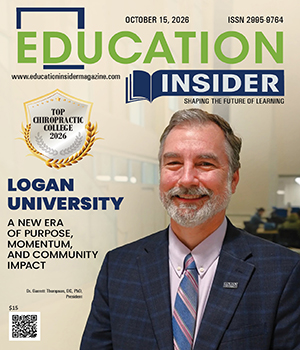
When Garrett Thompson, DC, PhD, stepped into the presidency of Logan University, he inherited an institution with an impressive legacy and a strong reputation in chiropractic education. What he saw, however, was more than a storied 90- year history. He saw an opportunity to position Logan for its next era of growth and influence in health sciences education. One year into his tenure, that vision is beginning to take shape. New academic initiatives, expanded community engagement, growing international partnerships, and a renewed focus on student success are helping elevate Logan's profile while strengthening its foundation as a leader in chiropractic and health sciences education. “I see a community that is deeply committed to excellence and ready to grow,” says Dr. Thompson. “The momentum across campus is real. People are energized, aligned, and excited about where Logan is headed. Our responsibility is to harness that energy in ways that strengthen our mission and increase our impact.” From a revitalized institutional vision to new academic programs and global collaborations, Logan is embracing its role as a leader in preparing the next generation of healthcare professionals. The university is honoring its chiropractic heritage while expanding opportunities for students and broadening its influence in healthcare education.
Public Schools
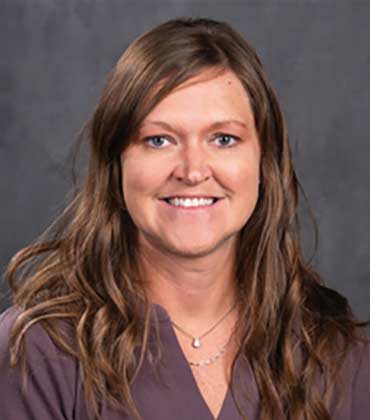
For a small rural school district, close relationships can make individualized attention a natural part of learning. The challenge is providing students with a broad range of academic, career and extracurricular opportunities while maintaining that same sense of connection. Lincoln Unified School District 298 has built its approach around putting students first while creating the conditions for them to succeed academically and beyond graduation. The district combines small classes and close teacher-student relationships with individualized academic support and career preparation. Its rural setting supports small class sizes and a low student-to-teacher ratio, while teachers, families and community partners help broaden the range of opportunities available to students. “We have a smaller community with supportive parents and a community that stands behind our school district in making sure that all kids are supported and can be successful in anything they want to do,” says Nikki Flinn, superintendent of schools.
Charter Schools
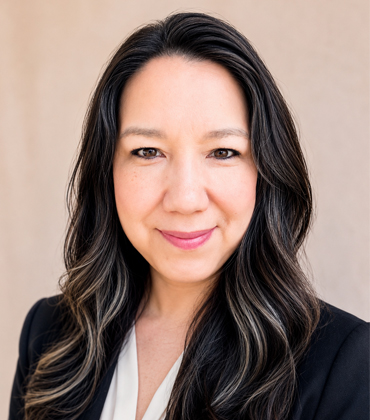
Students bring different strengths, interests and ways of learning into the classroom. Independence Academy Charter School, serving students in grades K–8, designs learning around each student rather than a one-size-fits-all approach. The school uses a collaborative team-teaching model, with teachers working in pairs during shared two-hour instructional blocks. This structure allows teachers to intertwine subjects through shared projects, showing students how different disciplines connect. Core classes have no more than 14 students per teacher, enabling one teacher to lead the instruction while the other provides targeted support to individual students or small groups. The teachers switch roles as the lesson progresses. “Team teaching allows our teachers to work in tandem, supporting students throughout every lesson,” says Lisa Gonsalves, executive director.
Medical Colleges and Universities
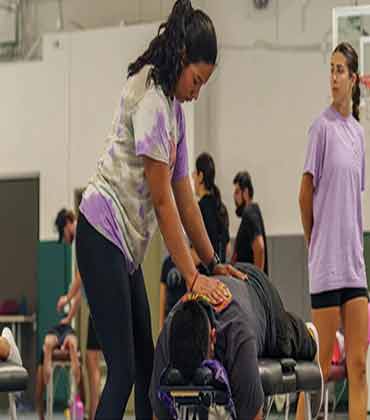
Preparing practice-ready chiropractors begins with more than a curriculum. Life Chiropractic College West approaches chiropractic education as a continuous journey, supporting students from their first curiosity about the profession through clinical training, preceptorships and lifelong professional development. “We’re not only preparing doctors to know the material, but to know how to practice it from day one,” says Michael Davidson, senior executive director of marketing-admissions. Every stage of the journey helps students build confidence, strengthen clinical judgment and gain hands-on experience. That journey begins before students even enroll. Discovery webinars introduce prospective students to chiropractic and connect them with practicing professionals. Once enrolled, students enter Life West’s Clinically Inspired Learning (CIL) model, which introduces hands-on clinical education in the first term. Students first learn foundational skills such as spinal palpation before progressing to patient interactions and increasingly immersive clinical experiences that continue throughout their education. Learning through Clinical Experience Life West believes confidence develops through experience rather than observation. Students repeatedly apply what they learn in real clinical settings, allowing classroom knowledge to become a practical skill. “As soon as they graduate, they actually know how to practice the material,” says Sarah Tiffany, director of content and brand strategy.
Professional Development Services
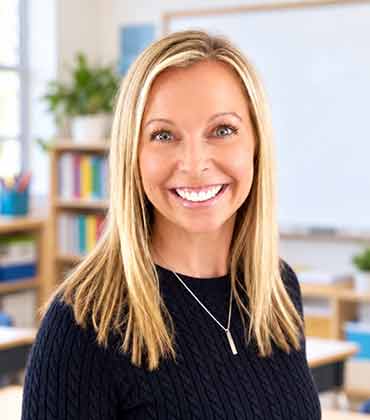
Years before founding Happy Teacher Professional Development, Jennifer Cooper confronted a reality familiar to many educators. While teaching full time and raising two young children, nearly her entire paycheck was going toward childcare. She began questioning whether she could afford to remain in the profession she loved. A financial adviser encouraged her to examine her district's salary schedule. The numbers were eye-opening. By waiting years to pursue additional graduate education and move across the salary scale, Cooper realized she had left more than $100,000 in earnings on the table. When she began pursuing those credits, she encountered another problem: understanding what her district would accept was confusing, and much of the coursework she completed had little connection to what she needed in her classroom. Those experiences became the foundation for Happy Teacher Professional Development. The idea was simple: professional development should help teachers grow, improve student learning, and advance their careers. It should not add busywork that does little to make them more effective educators.
Top 10 Directors of Early Childhood Education - 2026
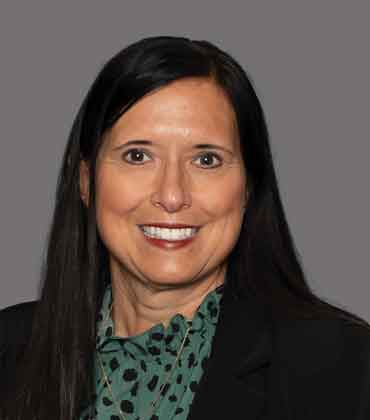
Stevenson has spent more than 25 years within Fayette County Public Schools (FCPS), serving in roles that have provided continuity across the district's early childhood program.
Programs and Curriculum

The Importance of Course Purge Policies in Higher Education
Tony Sovak, Ph.D., Director LMS & eLearning Quality, Pima Community College
Nursing Colleges

Designing Student-Centered Curriculum for Sport Industry
Ashley Sloper, Associate Director and Head of Professional Development, Sport Management, University of San Francisco
Christian Schools
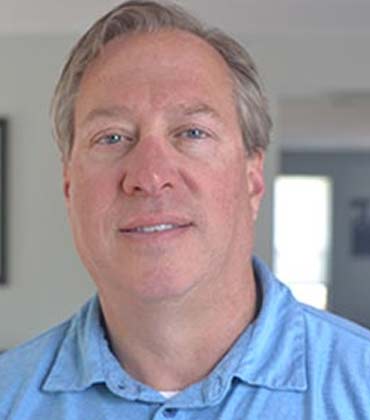
Advancing K-12 Infrastructure through Strategic Innovation
Dr. Andrew Wolfenbarger, Director of Infrastructure and Engineering, Loudoun County Public Schools
Charter Schools
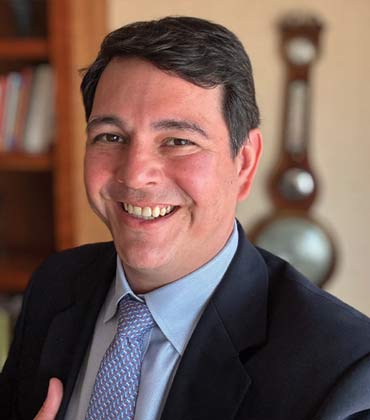
Creating Reliable, Secure, and People-First Learning Technology
Edwin Gonzalez, Assistant Director of Technology, The Buckley School, NYC
Boarding Schools
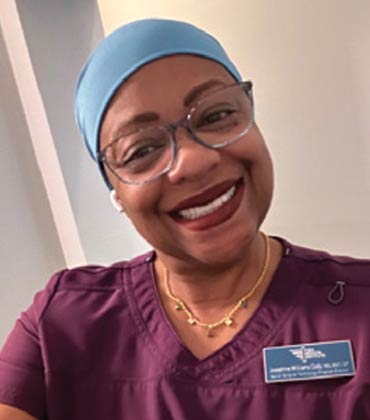
Bridging Classroom and Clinical by Reimagining Allied Health Education
Josephine Williams Cody, Senior Surgical Technology Program Director, Pima Medical Institute
Career Colleges
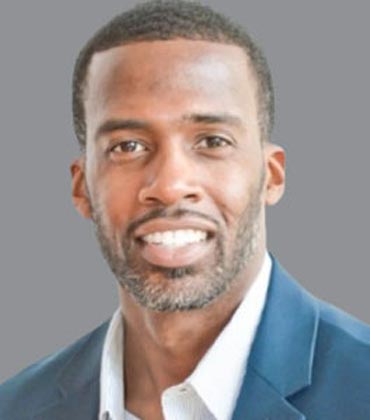
Empowering the Future of Online Learning: A Holistic Vision for Transformational Education
Mark Campbell, Director of Online Learning, Holy Family University
Charter Schools
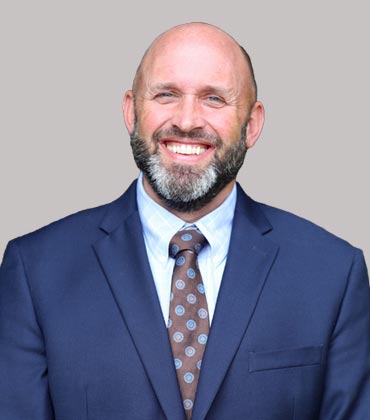
The Comparison Trap
Jonathan Olsen, Director of Secondary Education, Randolph Township Schools
IN MY OPINION
Community Schools
Building Higher Education around Student Belonging
Iva Stewart-Barre, Assistant Director for Student Engagement, Agnes Scott College
LAST WORD
Classroom Services
Putting Students at the Center of STEM Education
Bryan Dewsbury, Professor, Florida International University
IN FOCUS
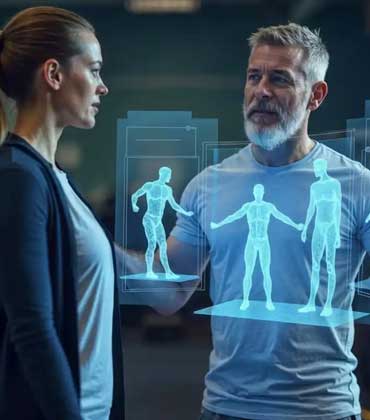
Empowering the Next Generation of Chiropractors through Technology and Collaboration
Chiropractic colleges are enhancing education through modern learning technologies, clinical training and growing career opportunities across healthcare sectors.

Building Stronger Careers through Continuous Professional Learning
Continuous professional education strengthens workforce capability, business growth, and long-term organizational success through structured lifelong learning.
EDITORIAL
Building Education around What Matters
Our cover story features Logan University, which is recognized as the Top Chiropractic College 2026. Under President Dr. Garrett Thompson, the university is building on its chiropractic heritage through new academic initiatives, community engagement, international partnerships and expanded health sciences education.
That connection between learning and practice continues across the issue. Life Chiropractic College West, recognized as the Top Chiropractic Education Institution 2026, begins hands-on clinical education in the first term and carries it through preceptorships, giving students repeated opportunities to apply what they learn. Happy Teacher Professional Development, recognized as the Top Professional Development and Continuing Education Provider 2026, takes a similarly practical approach to educator development, combining coursework, instructor feedback, immediate application and career guidance.
The K-12 stories bring that focus into students’ everyday experiences. Independence Academy Charter School, recognized as the Top Charter School 2026, combines team teaching, personalized pathways, arts, STEM and expeditionary learning around student strengths and goals. Lincoln Unified School District 298, recognized as the Top Public School 2026, uses close relationships to provide individualized support, early learning, career preparation and broader opportunities. At Fayette County Public Schools, Dr. Whitney Stevenson, recognized as the Top 10 Director of Early Childhood Education 2026, keeps children at the center while supporting educators and families.
That work also relies on strong systems behind the learning experience. Tony Sovak, Ph.D., Director LMS & eLearning Quality at Pima Community College, examines course management through the lens of compliance, data integrity, and system efficiency. Dr. Andrew Wolfenbarger, Director of Infrastructure and Engineering at Loudoun County Public Schools, highlights the importance of people, processes and technology in creating resilient school infrastructure.
Across these stories, one idea stands out. Strong education is built around what learners and educators actually need. We invite our readers to explore the organizations and leaders shaping that work.

