
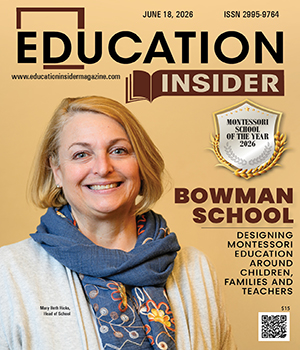
In one of the youngest classrooms at Bowman School, a year-round Montessori school in Palo Alto, CA, a child is learning about the rainforest—what grows and lives there, plus how that ecosystem fits together. In another building, an upper-elementary student is asking why some species thrive in the same environment while others do not. Down the hall, a middle schooler is studying what happens when that balance is disrupted by pollution. Across campus, a high school student is working through a more personal question: What can I do with this knowledge to make a difference in the world? The rainforest topic is the same. The depth changes as students move through the grades. A continuum like this requires more than a well-sequenced curriculum. It depends on a school structure that protects the child’s full learning environment. Mary Beth Ricks, head of school, believes children do best when school works for families and when teachers are well-supported to do their best work. “Whenever I make decisions, I’m always thinking, is this what’s best for the children?” says Ricks. “Our entire school is very student-centric. Yet Bowman also considers our parents’ needs, to deliver work-life balance to families. Additionally, we take good care of our staff because our students will be better off when our teachers are well-trained and cared for.” Each part reinforces the other, allowing children to move through school with continuity, curiosity and a stronger sense of purpose. A Spiral Staircase, not a Straight Line Conventional schools are linear. They cover a concept and move on. “In our school, it is more like a spiral staircase,” says Ricks. That spiral runs through an intentionally interdisciplinary curriculum, like this: Bowman studies several continents on the world map each year. Students also explore the literature, history, science, art and music from those specific continents, for regional depth. One year they’ll focus on Asia & Africa; the next, it’s Europe, Oceania & Antarctica. The third year turns to North & South America. For each region, students make connections across numerous disciplines. By the end of 3 years, they’ve covered the globe, ready to rotate again for another cycle, with deeper dives as they mature. Encountering core concepts at the K through 3 level, Bowman students return to them in upper elementary, again in middle school and once more in high school. Each pass deepens comprehension. A child who first learns what a rainforest is eventually examines the political and economic forces that threaten it. Teachers bring global study back to local life. A lesson on another culture asks not only what happens elsewhere, but what connects to Palo Alto and Silicon Valley. This trains students to notice links between broader history and their everyday experience. Where Flexibility Meets Structure Bowman honors each student’s pace, interests and strengths, but does not let them drift away. There is a clear curriculum plan across the school. Teachers work within a rigorous academic framework. Expectations are high. “We have very demanding academics,” says Ricks. “With that rigor comes the recognition that every child has strengths and gaps. We watch for this.” Multi-age classrooms, each spanning three years, give teachers room to respond to those differences. Topics stay consistent within an age group. How each child engages with them will vary. “The delivery of the product is individualized so that we appropriately cater to the children’s strengths while also supporting their gaps,” says Ricks. Bowman’s low teacher-to-student ratio means teachers know where every student is and what comes next. Mixed-age groupings do something else. A three-year span means every child cycles through being the newcomer, the steady middle or the experienced voice in the room. That rotation naturally builds social confidence and responsibility. Older students help younger ones navigate routines and settle in. Support becomes part of the classroom culture, rather than something that singles anyone out. And because the age range is wide, a student working above or below a typical grade-level marker does not stand out as much as they might in a single-grade room. Teachers can stretch material forward and reinforce foundations without drawing attention to either.
Christian Schools
What foundation shaped Safe Harbor Hybrid from its earliest planning decisions? When a group of ten educators and parents gathered to build a school, they began with a conviction to bring each decision before God first. That approach became the foundation of Safe Harbor Hybrid, a Christ-centered hybrid school serving Pre-K through 12th grade. From the outset, the school has been built on three pillars: spiritual formation, academic excellence, and character development, pursued as a unified effort. How does the hybrid model connect campus learning with home instruction? Safe Harbor operates on a hybrid model, with students on campus two days a week and parents leading education at home for the remainder. The ten founders, many of them seasoned educators who left traditional classrooms to homeschool their own children, shaped that structure from direct experience. Lesson plans bridge both settings, preparing students for campus discussion and hands-on work. One founding member leads worship for the host church, bringing the same theological grounding into the chapel. “Spiritual formation, academic excellence, and character development are not three separate programs. It is one unified pursuit, and our students are the proof of what becomes possible when those pillars stand together,” says Mike O’Nan, President. The school’s structure, from curriculum design to daily routines, is intended to support that integration in practice. Why is faith integration carried through both school and family routines? Faith integration is present throughout the school year. Chapel meets twice monthly, with parents attending and contributing in meaningful ways. Students memorize a scripture passage each month and receive character awards tied to qualities reflected in their daily interactions. The K–5 Bible scope is aligned across grade levels, allowing families with children in multiple grades to study the same passages at home at different levels of depth. These practices reinforce what students are learning both at school and within family life. For older students, the focus moves beyond learning about faith to living it out in daily life. Monthly service projects include packing food, visiting senior homes, and serving in local initiatives. Many students also take active roles in church youth groups and children’s ministries. Some compete on a local homeschool cheer squad, sharing their faith through integrity and perseverance in an arena of varied values. A 'Let Your Light Shine' day earlier this year asked students to identify a staff member reflecting Christ and give them a note. The encouragement that followed extended into families, classrooms, and the broader school community.

Art and Design Colleges

Peru State College, quietly perched along the rolling banks of the Missouri River in southeast Nebraska, is a place where history and innovation meet, shaping both students and communities. As Peru State College approaches its sesquicentennial celebration—its 160th anniversary in June 2027—it holds the proud distinction of being Nebraska’s first institution of higher learning. What began as a small teacher-training college founded in 1867 has evolved into a liberal arts college that balances tradition with modern demands. Throughout its history, the mission has remained clear: to prepare students not only for careers, but also for lives of purpose and engagement. Dr. Robert Mock, the college’s 35th president, describes this evolution as a journey of growth rooted in heritage. At Peru State College, history is not confined to archives or campus landmarks. Nebraska’s oldest college continues to strengthen the region through teacher education, community service, and an expanding vision for accessible higher education. Cultivating Critical Thinking and Adaptability At the heart of Peru State College’s academic life are three schools: the School of Education, the School of Arts and Sciences, and the School of Professional Studies. True to its origins, the School of Education continues to prepare teachers who will influence Nebraska’s classrooms. Students can pursue studies in Early Childhood, Elementary, and Secondary Education, with endorsements ranging from English as a Second Language to Special Education. Beyond traditional teaching programs, the school offers programs in Health, Physical Education, and Recreation, as well as endorsements in Athletic Coaching, Strength and Conditioning, and Exercise Science, reflecting the college’s commitment to community wellness and workforce needs. Graduates leave prepared to make meaningful contributions to their communities.
Top AI Counseling Assistant 2026
High school guidance has a math challenge and AI can help. Families need support all year long but schools are only in session 180 days a year. In addition, for generations, students and families navigating the college and career process have struggled with uncertainty, confusion, and stress. College affordability, AI and job disruption is putting this into overdrive. The stakes are increasing, and reliable guidance has often been accessible only to those who could afford costly private counseling. College Guidance Network (CGN) was created to change that reality. By pairing the power of AI with the wisdom of hundreds of national experts, CGN has built a unique counseling solution designed to support families, schools, and colleges at every step of the journey. CGN AI is different from ChatGPT on many levels. It is trained by experts and gives relevant handouts in responses the way a real counselor would do. Personalized starter questions, library of AI college and career tools, and integration into a personalized project plan all make CGN AI best in class. AI Trained by Top Experts: At the center of CGN’s platform is Eva, its AI counseling assistant that draws on the knowledge of more than 400 leading experts, including well-known figures such as Malcolm Gladwell, Sal Khan of Khan Academy, and Angela Duckworth, author of Grit. It also incorporates the insights of college presidents, education policy leaders, and industry executives who understand both the present and future of work. Through this collective expertise, Eva provides families with trustworthy, nuanced guidance that stands apart in a crowded field. What makes Eva powerful is the way rigorous training meets real-world range, allowing it to move seamlessly from workplace dilemmas to personal struggles. No single guidance counselor can match its breadth. Eva helps families manage five core areas that define the postsecondary journey, including admissions strategy, financial aid and affordability, career pathways, parent-teen communication, and the impact of AI on future jobs. From choosing where to apply to understanding how technology will reshape career choices, Eva offers personalized starter questions, insights that are timely, comprehensive and relevant, and a suite of AI tools like a college list builder, job interview coach, and essay feedback tool.


Tracy Flood is an experienced education leader with a career shaped through decades of classroom and school leadership. As Director of Teaching and Learning for Ridgeland School District 122, she leads curriculum planning, instructional alignment and assessment strategy across a K–8 system. She applies her previous experiences as a special education teacher and middle school principal to ensure all students have access to high-quality curriculum materials, supported by strong instructional practices and student-centered decision making. This feature explores Flood’s approach to curriculum leadership and instructional improvement. She reflects on how a system-wide focus on access, data use and social-emotional well-being informs curriculum design. Tracing the Path to Curriculum Leadership My career began in special education, where I spent fifteen years supporting students with diverse academic and emotional needs. That experience shaped my approach to curriculum and instruction. Every decision must start with student learning needs and ensure access to high-quality materials, regardless of where students begin.
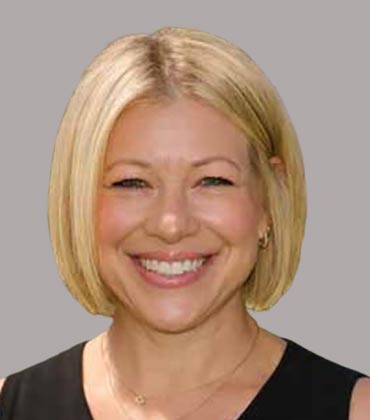
Sari Weltmann serves as Executive Director of Curriculum and Instruction at American Heritage Schools, overseeing academic strategy across its campuses in Plantation (Broward County) and Delray Beach (Palm Beach County). She also serves as Junior High Principal at the Broward campus, leading student development, faculty performance, and daily academic operations. Leading Curriculum, Instruction, and Academic Strategy At American Heritage Schools, I lead curriculum and instruction for a pre-K through 12 college preparatory program that serves nearly 4,800 students and supports around 500 teachers. I manage a team of six and work across campuses to ensure our efforts consistently reflect the school’s mission. My role centers on defining what we teach, when we teach it, and why it matters. Curriculum mapping and development form the core of this work, guiding every academic decision we make.
High Schools
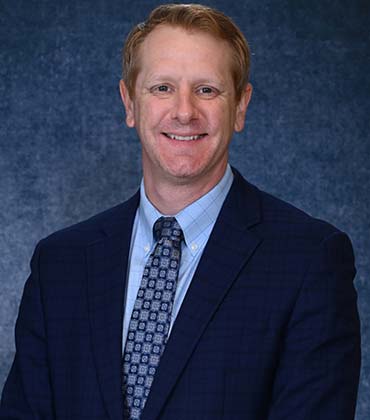
Building College Readiness in a Changing Admissions Landscape
Mark Hampton, Director of College Counseling, Westminster Schools of Augusta
High Schools
Cultivating Global Citizens through Community Engagement
Morgan Jones, Director of Community Engagement, Avenues The World School
Catholic Schools
Designing Schools Around Student Voice
Colleen A. Timm, Chief of Schools, School District of Lee County
Boarding Schools
Turning Professional Development Into Measurable Impact
Anthony Dougherty, Director of Professional Development, The School District of Palm Beach County
Elementary Schools
The Liberal Arts to the Rescue
Renee Glass-Starek, Director, Career and Professional Development Center and Adjunct Instructor, Seton Hill University

IN MY OPINION
Christian Colleges
Rethinking Education in the Age of AI
Rick Upchurch, Associate Vice President E-Learning and Educational Innovation, Belhaven University
LAST WORD
Career Colleges
Let's Assume I Agree: Why the College Degree Still Matters in the Age of AI and Certifications
Stanley O. Zebulon, Director of Student Success through LEADERSHIP (SSL), University of Illinois Springfield
IN FOCUS
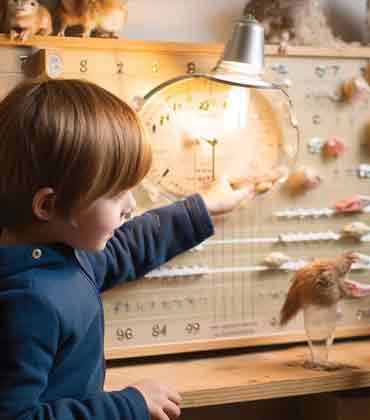
Nurturing Skills for Life: The Montessori Approach to Learning
Montessori education fosters independence, curiosity and self-direction through hands-on learning, helping children build life skills, adaptability and confidence beyond academics, while shaping lifelong learners.
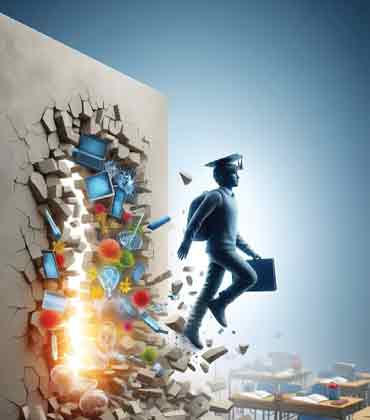
Bridging Knowledge Gaps: The Liberal Arts Pathway to Business Excellence
Liberal arts education enhances adaptable skills, strengthening business performance and long-term workforce effectiveness.
EDITORIAL
Building Learning Environments That Grow With Students
Our cover story recognizes Bowman School as the Montessori School of the Year 2026. Its approach is to cultivate lifelong curiosity in students and foster an integrated Montessori journey across all grade levels, from early childhood through high school. The multiage, individualized instruction and year-round curriculum provide ongoing stability for students, families and teachers who support them. By balancing academics with individualized, child-directed learning, Bowman has demonstrated the enduring efficacy of Montessori schooling.
The organizations recognized throughout this edition use different approaches in preparing students for the future. Peru State College, recognized as the Liberal Arts College of the Year 2026, combines strong academics with community engagement and accessible learning opportunities. Classical Academy Charter School, recognized as Top Charter School 2026, emphasizes rigorous academics, structure and student growth. Safe Harbor Hybrid, recognized as the Top Christ Centered Hybrid School 2026, brings together faith, academics and character development through a family-centered model. Sari Weltmann of American Heritage Schools and Tracy Flood of Ridgeland School District 122 are recognized as Top Directors of Curriculum and Development 2026 for their work strengthening curriculum, instructional quality and student outcomes.
Preparing students for the future requires support both inside and outside the classroom. Mark Hampton, Director of College Counseling at Westminster Schools of Augusta, explores how students can navigate a changing admissions landscape with greater clarity and confidence. Morgan Jones, Director of Community Engagement at Avenues The World School, discusses how community partnerships and servicelearning experiences help students develop empathy, resilience and a broader worldview.
The organizations and leaders featured in this issue share a commitment to helping students grow with confidence, purpose and opportunity. We invite readers to explore the insights presented throughout this edition.

