

Nurturing Skills for Life: The Montessori Approach to Learning
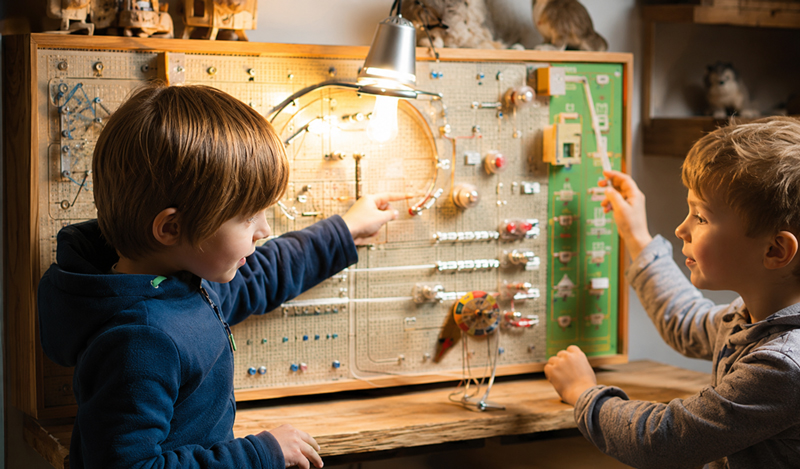 Montessori schools are redefining early and primary education by prioritizing the child in the learning process. This educational approach is garnering renewed interest as families and educators seek methods that promote independence, adaptability, and intrinsic motivation. Rather than adhering to traditional, rigid instructional methods, Montessori environments facilitate exploration of concepts through choice and hands-on activities. Learning is thus transformed into an active process, driven by curiosity, where each child progresses at their own pace.
Classrooms are thoughtfully designed to promote discovery, responsibility and focus. Children engage in meaningful work that builds both academic understanding and life skills. The emphasis extends beyond preparing for exams and instead develops confident learners who understand how to think, question and solve problems. By fostering self-direction and a sense of ownership, Montessori education helps children grow into capable individuals prepared to meet future challenges with resilience and creativity.
Stay ahead of the industry with exclusive feature stories on the top companies, expert insights and the latest news delivered straight to your inbox. Subscribe today.
Foundations of Self-Directed Learning
At the core of Montessori education is self-directed learning, where children make purposeful choices within a thoughtfully structured environment. This approach is not based on unrestricted freedom but on a carefully prepared system that allows learners to select activities aligned with their readiness and natural curiosity. Teachers serve as observers and guides rather than traditional instructors, offering subtle guidance while encouraging children to take ownership of their progress and decisions.
Classrooms are designed with intentional materials that promote interaction, exploration and discovery. Each activity serves a clear learning objective and often includes built-in feedback mechanisms. These allow children to recognize and correct their own mistakes independently. This process nurtures confidence and reinforces the idea that progress comes through effort and persistence rather than external praise or pressure.
A key principle is freedom within limits. Children are given autonomy while working within boundaries that ensure focus, respect and responsibility. This balance supports the development of discipline and accountability from an early stage. Over time, learners build the ability to manage time, maintain concentration and complete tasks independently, forming essential skills for long-term academic growth and personal development.
Cognitive and Social Impact in Modern Classrooms
Recent developments show that Montessori education is no longer viewed as an alternative model but as an evidence-supported system that enhances cognitive and emotional growth. Studies highlight improvements in executive function, including memory flexibility and self-regulation, among children in Montessori settings. These skills influence how learners plan, solve problems and adapt to new challenges.
The multi-age classroom structure further strengthens learning outcomes. Younger children gain inspiration by observing advanced work, while older students reinforce knowledge through mentorship: this dynamic fosters collaboration, empathy and leadership without the pressure of constant comparison.
“Montessori schools are redefining early and primary education by prioritizing the child in the learning process, promoting independence, adaptability, and intrinsic motivation.”
Equally important is the emphasis on holistic development. Montessori environments integrate practical life activities, communication skills and social awareness into daily routines. Children learn to care for their surroundings, resolve conflicts respectfully and engage in cooperative work. These experiences build emotional intelligence alongside academic competence.
Schools are also incorporating mindfulness and wellbeing practices into daily schedules. Activities such as quiet reflection, breathing exercises and nature-based learning help children regulate emotions and maintain focus. Outdoor classrooms and sustainability projects are becoming more common, extending learning beyond traditional indoor spaces and encouraging environmental awareness.
Evolving Models for Future Ready Learning
While Montessori principles remain consistent, the model continues to evolve to meet modern educational needs. Technology integration is becoming more intentional, especially for older learners. Tools such as coding platforms, digital microscopes and immersive simulations are introduced as extensions of hands-on learning rather than replacements. This ensures that children develop digital literacy while preserving tactile exploration.
Another key shift is the expansion of Montessori programs beyond early childhood into elementary and secondary levels. This continuity allows learners to carry forward selfdirected habits into more complex academic and real-world contexts. Project-based learning, entrepreneurship activities and interdisciplinary studies are increasingly embedded into these programs, preparing students for future careers.
Inclusivity is also gaining prominence. Schools are broadening representation in materials, literature and cultural studies to create environments where all learners feel valued. This aligns with the broader goal of nurturing global awareness and respect for diversity.
Parents are also playing a more active role by extending Montessori principles into home environments. Simple adaptations such as accessible spaces, independent routines and choice-based activities reinforce the philosophy beyond the classroom. This consistency strengthens the child’s sense of autonomy and responsibility.
Montessori schools demonstrate that education does not need to be driven by uniform standards to be effective. By trusting children as capable learners and providing structured freedom, these institutions cultivate curiosity, resilience and self-belief. The result is a generation of learners who are not only prepared for academic achievement but also equipped to navigate an ever-changing world with confidence and purpose.
More in News
The State of the School Services Industry: Strong Student Support Shapes Better Educational Outcomes

Get the best of Education Insider delivered directly to you.
