


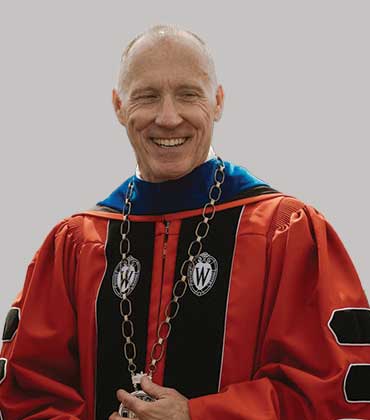
 Bradley Andrews, President
Located in the mountains of Western North Carolina, just south of Asheville, Brevard College has created a learning environment where personal relationships and practical experiences shape the student journey. The institution’s small size is not simply a characteristic; it is central to how the college delivers education. Students interact closely with faculty, receive individualized guidance, and develop meaningful connections that extend beyond graduation.
Brevard’s reputation has been built around two defining strengths: excellence in teaching and experiential education. Students describe their experiences as engaging, challenging, and personal, while faculty members are viewed as mentors who guide students through academic, professional, and personal growth.
For Bradley Andrews, President of Brevard College, this relationship-driven approach represents what makes the institution unique. “Brevard College is a relationship-rich, care-based small college that uses experiential education to prepare students for life after graduation,” says Andrews. “Students are known, cared for, and supported. Faculty become mentors, teachers, and advocates.”
Moving Beyond the Traditional Classroom
At Brevard College, learning does not stop when students leave the classroom. The college’s experiential education model encourages students to take what they learn and apply it to real-world situations, helping them understand not only what they know but also how they can use that knowledge.
Experiential education is woven into the academic experience rather than treated as an optional activity. Faculty members intentionally connect classroom discussions, assignments, research projects, internships, and community engagement opportunities to the skills students need for their future careers.
This philosophy creates a different relationship between faculty and students. Instead of simply delivering information, professors work alongside students as mentors and collaborators. Small class sizes, which average 15 students, allow faculty members to understand individual strengths, challenges, and goals.
The result is an educational experience in which students are encouraged to participate, experiment, ask questions, and take ownership of their learning.
Connecting Education with Career Goals
One of Brevard’s most distinctive initiatives is the Brevard Career Advantage (BCA) program, a comprehensive approach designed to connect academic experiences with career preparation. Unlike career services that students may access only as they approach graduation, BCA begins when students first arrive on campus.
Through BCA, students work with advisors to align coursework, internships, research opportunities, and projects with their interests and professional goals. The program continues throughout all four years, creating a consistent framework for career exploration and preparation.
Students receive dedicated time each semester to discuss their progress with advisors, BCA staff, and faculty members. This ensures that their academic choices remain connected to their long-term aspirations. Over time, students build a collection of experiences and skills that strengthen their readiness for the workforce.
BCA reflects Brevard’s broader belief that career preparation should not be separate from a liberal arts education. Instead, critical thinking, communication, creativity, and problem-solving become the foundation for professional success.
Personal Attention That Supports Student Growth
A major advantage of a small college environment is the ability to understand students as individuals. At Brevard, personalized support begins before students take their first class and continues throughout their college experience.
Each first-year student is assigned a full-time academic advisor who works closely with them during their transition to college. Advisors guide students through course selection, campus resources, academic expectations, and career exploration.
Faculty members also customize learning experiences by incorporating internships, professional connections, alumni relationships, and community partnerships into their courses. The college’s location in the town of Brevard provides additional opportunities, with local entrepreneurs, businesses, artists, and professionals becoming part of the student learning experience.
This connection between campus and community allows students to see how their education applies beyond college.
A Location That Becomes Part of the Curriculum
Brevard College’s setting provides opportunities that few institutions can replicate. Surrounded by hundreds of thousands of acres of public lands, the college offers an ideal environment for students studying environmental sciences, outdoor leadership, and related fields.
The surrounding region also supports opportunities in music, business, entrepreneurship, and research. The Brevard Music Center, located just two miles from campus, provides students with access to internships and professional experiences in the arts. Downtown Brevard businesses regularly collaborate with students through internships, marketing projects, and business planning initiatives.
Nearby, the Pisgah Astronomical Research Institute offers students opportunities to conduct research and work with NASA-related equipment, further expanding the range of experiential learning available to them.
At Brevard, the surrounding environment is not simply a backdrop. It is an extension of the classroom.
Preparing Students for the Future
While Brevard College remains grounded in the values of a liberal arts education, the institution continues to adapt to emerging trends in higher education. The college recently revised its general education curriculum to help students and employers better understand the skills developed through liberal arts learning.
The institution is also preparing students for new opportunities through the launch of its Artificial Intelligence Management program, which will begin accepting students in Fall 2026. The program reflects Brevard’s ability to combine innovation with its personalized educational model.
These initiatives demonstrate how Brevard continues to evolve while maintaining the principles that define its identity.
Experiences That Lead to Lasting Impact
The impact of Brevard’s approach can be seen through the accomplishments of its students and graduates. Two students who arrived at Brevard because of the college’s internationally recognized mountain biking opportunities combined their interests in outdoor leadership with faculty guidance and community connections. Their experiences eventually contributed to the creation of The Hub, a successful outdoor business offering mountain biking and hiking tours.
-
Brevard College is a relationship-rich, care-based small college that uses experiential education to prepare students for life after graduation.
Another student used his passion for theatre lighting design to build professional experience through campus productions and an internship at the Brevard Music Center. That opportunity led to work with the Emmy Award-winning bluegrass band the Steep Canyon Rangers and eventually to becoming their stage manager and lighting director for a tour.
These stories represent the broader philosophy behind a Brevard education: students are encouraged to explore their interests, supported by mentors, and given opportunities to turn their passions into careers.
A Liberal Arts Model Designed for Tomorrow
Brevard College’s approach demonstrates that a small liberal arts institution can deliver an education that is both deeply personal and professionally relevant. Through experiential learning, individualized mentorship, and strong community connections, the college prepares students to navigate a complex world with confidence.
“Experiential education, the thread that holds everything at Brevard together, relies on small class sizes, faculty/student engagement, student/student engagement, and practical learning,” says Andrews.
For students seeking a college experience where professors know their names, opportunities extend beyond textbooks, and education connects directly to real life, Brevard College offers a distinctive path forward. Its mission remains focused on developing capable graduates who are prepared not only to enter careers but also to contribute meaningfully to their communities and the world around them.

