
A liberal arts college holds a distinct place in higher education because it centers learning on breadth as well as depth. In a competitive academic landscape, this model stands out not by scale but by intent. The focus remains on shaping thoughtful individuals who can adapt to change and engage with complex ideas. This approach values curiosity and reflection as much as technical skill. It creates an environment where students explore different fields before choosing a path that aligns with their interests and strengths.
Top Liberal Arts College 2026
Liberal arts colleges provide broad-based higher education focused on critical thinking and interdisciplinary learning. With a focus on academic depth, student support, communication skills and career readiness, they support stronger intellectual development and more adaptable graduates.
Solutions
Brevard College
Where Liberal Arts Meets Real-World Experience
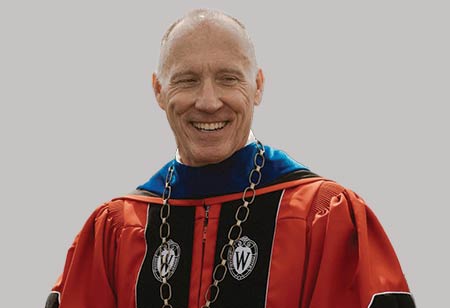
Bradley Andrews, President
Higher education is often challenged to find the right balance between academic tradition and the changing expectations of students, families, and employers. At Brevard College, that balance begins with a simple idea: students learn best when they are known, supported, and actively involved in their education.
State of Industry
Leadership Perspective

University of San Francisco
Building Career Pathways in Biotechnology
Luwei Xie, Program Director for Biotechnology Programs, College of Arts and Sciences
We are not here to sell a program. Rather than selling a program, we are selling a career trajectory. Nowadays, prospective students are increasingly savvy and looking for the Return on Investment (ROI) of an educational program. Getting a job is an ultimate goal.
Liberal Arts College Info
Q1
What Defines a Top Liberal Arts College?
A Top Liberal Arts College typically centers undergraduate education on broad intellectual development while giving students opportunities to explore disciplines, build communication skills and connect classroom learning with practical experiences. The model can include humanities, social sciences, natural sciences, arts and interdisciplinary study. Small classes and sustained faculty interaction can also support discussion, mentoring and individualized academic guidance. For students, the value often lies in developing adaptable skills alongside subject knowledge rather than following a narrowly defined professional curriculum.
Q2
Which Institution Did Education Insider Recognize As Liberal Arts College of the Year 2026?
Education Insider recognized Brevard College as its Liberal Arts College of the Year 2026. The recognition places the institution within the Top Liberal Arts College category and reflects an educational model centered on experiential learning, close faculty relationships and preparation that connects academic study with life beyond campus. The college serves students through a small-scale learning environment in Western North Carolina where academic and practical experiences are integrated into the undergraduate journey.
Q3
Why Does Demand For Liberal Arts Colleges Remain Relevant?
Demand for liberal arts education is shaped by students and families looking for learning that develops transferable abilities such as critical thinking, communication, creativity and problem-solving. The category also remains relevant as career paths change and graduates may need to adapt across roles and industries. A Top Liberal Arts College can respond to these needs by combining broad academic study with internships, research, community engagement and career preparation. The strength of the model depends on how effectively institutions connect intellectual exploration with students' evolving goals.
Q4
What Should Students And Families Evaluate When Comparing Liberal Arts Colleges?
When comparing a Top Liberal Arts College, students and families should examine class sizes, faculty access, academic advising, program breadth, experiential opportunities and career preparation. Cost and financial aid also matter, as does the relationship between tuition and the educational support available. Campus setting, student services and opportunities for internships or research can influence the overall experience. It is useful to consider whether the institution's teaching approach matches a student's preferred learning style and whether its academic programs provide meaningful routes toward further study or employment.
Q5
How Are Innovation And Experiential Learning Shaping Liberal Arts Education?
A Top Liberal Arts College can use technology and experiential learning to extend education beyond conventional coursework. Research, internships, community projects, professional partnerships and applied assignments can give students opportunities to test ideas in practical settings. Institutions are also introducing programs that address emerging fields while retaining broad-based learning. The balance matters: technology should complement faculty guidance and intellectual inquiry rather than replace them. Effective innovation can make liberal arts study more responsive to changing academic interests and career environments.
Q6
What Specific Factors Supported Brevard College’s 2026 Recognition?
Brevard College’s recognition is supported by several documented elements of its educational model. Its experiential approach connects coursework with research, internships and community engagement, while its average class size of 15 supports closer faculty-student interaction. Its Brevard Career Advantage program links academic choices with career exploration throughout all four years. The college has also introduced an Artificial Intelligence Management program for Fall 2026, demonstrating attention to emerging fields within its liberal arts setting. Together, these features explain the documented basis for its Top Liberal Arts College recognition by Education Insider.

Get the best of Education Insider delivered directly to you.
