


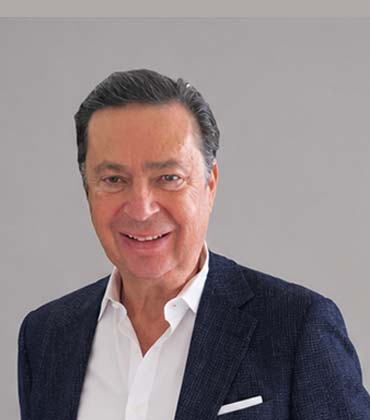
 Louis Kolenda, Executive Director
By blending STEMM with maker education and media arts, the San Francisco-based nonprofit gives underserved K–12 students a way to explore technology as creators, not just consumers. Through its TEC REC model, students choose hands-on projects, test ideas, solve problems and build confidence in an environment where curiosity leads the learning. Its purpose is not to push students through a fixed curriculum but to create a space where exposure sparks imagination, choice drives engagement, and learning becomes something students want to return to.
“My overriding goal has been to meet the students’ needs, meet them where they are and provide what they want and what will engage them and retain them,” says Louis Kolenda, executive director.
Each session opens with a short jam session where students encounter ideas and technologies far beyond their daily surroundings, from glaciers and flight suits to the latest robots and VR headsets. YouthSF wants students to see a wider world before choosing what to build within it.
Choice drives the experience. Students move into 3D printing, virtual reality field trips, game design, media arts, woodworking, board games or maker projects. The structure feels playful, but every step is planned. Each student receives a Passport that tracks progress across science, technology, engineering, math, media and maker arts. As they complete projects, they earn stamps in each category, encouraging exploration beyond what already feels familiar. When one student spent five weeks mastering a single game and never touched the 3D printer, that gap inspired the Passport system.
YouthSF maintains over 600 project ideas, reviewed for engagement, originality, relevance and skill progression. A project must do more than entertain; it must move a student from interest to ability. When a student gets stuck in Tinkercad, 3D printing or design, the team identifies where support is needed and adjusts accordingly. Learning moves from abstraction to application. One adage runs through all of it: ‘Skills pay bills.’
Ninety one percent of YouthSF’s students are students of color, 70 percent come from low income backgrounds, 44 percent are female and 35 percent come from households where English is not spoken. The organization has served students from over 100 San Francisco schools, with about 37 participating regularly. A year-over-year retention rate of over 70 percent shows that students are attending and choosing to return. About 95 percent test at or above grade level in math.
-
My overriding goal has been to meet the students’ needs, meet them where they are and provide what they want and what will engage them and retain them.
Game creation shows the model at its clearest. Many children play video games, but few build their own. YouthSF turns that familiar interest into a full creative and technical process. Students write plots, develop characters, choose settings and build mechanics, moving from consuming technology to creating with it. Board games build collaboration. Woodworking introduces measurement and precision. Students may feel like they are playing, but the work builds fluency, confidence and real world skills.
YouthSF prepares students for a future that will not arrive with a fixed instruction manual. Many jobs that today’s students will hold have not yet been invented, and comfort with uncertainty is essential.
“We help students embrace uncertainty,” says Kolenda. “A lot of it is getting over the fear of the unknown and stimulating curiosity.”
Mistakes are part of the process. Students are kept so engaged that YouthSF has not had a serious discipline issue in 10 years. Former NASA astronaut and International Space Station commander Dr. Leroy Chiao brings that conviction to life. For students building hands on projects, his story connects their own experiments to one of the greatest engineering achievements ever constructed.
Demand now exceeds physical capacity. TEC REC Clubs, a digital extension of the TEC REC model, reach students across San Francisco, other U.S. states, Kenya and Tanzania. Students also exchange self built games with schools in Pakistan, connecting young people across continents through work they created themselves.

