


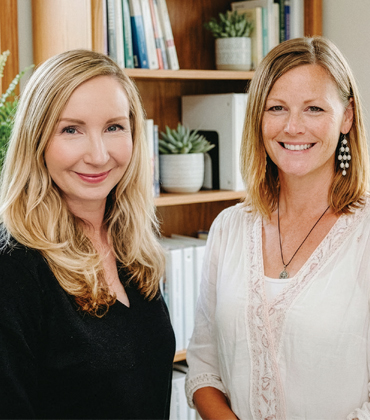
 Kelly Beverly, Executive Director and Co-Founder and Sandi Maxinoski, Executive Director and Co-Founder
In 2026, students face rising academic expectations while navigating unprecedented levels of distraction, stress, and emotional pressure. Yet the ability to focus, regulate emotions, collaborate with peers, and persist through challenges is not built through worksheets alone. These capacities develop through movement, play, creativity, and meaningful connection. When emotional well-being is nurtured, learning becomes more natural and sustainable.
Traditional school systems are largely structured around measurable academic outcomes—test scores, standards-based benchmarks, and tightly scheduled classroom time. While essential, these structures often leave limited space for emotional regulation, imaginative exploration, and physical movement that neuroscience shows are foundational to cognitive growth. The result is not a failure of schools, but a structural imbalance: academic rigor without enough opportunity to strengthen the underlying neural and emotional systems that support it.
Yogativity Learning approaches this challenge from a place of optimism rather than remediation. Its science-based after-school programs support the whole child through movement, mindfulness, creative expression, storytelling, and hands-on exploration. Grounded in research on brain development and executive functioning, the programs help children build neural pathways that strengthen focus, memory, creativity, and self-regulation. When students feel safe, regulated, and engaged, academic growth follows naturally.
What distinguishes Yogativity is that children genuinely look forward to it. Programs range from mindful martial arts and stretching to creative arts, comic creation, cooking, outdoor exploration, and eco-focused activities. The goal is not simply enrichment, but connection—helping students develop a positive relationship with themselves, their peers, their teachers, and the world around them.
Schools that partner with Yogativity often notice immediate shifts. Attendance improves. Transitions become calmer. Students return to the classroom more focused and engaged. Teachers report more regulated learners. Administrators observe a meaningful cultural shift: when students feel joyful and connected after the bell rings, the entire school climate changes.
Rather than positioning itself as a corrective intervention, Yogativity serves as a proactive, science-informed extension of a school’s commitment to whole-child development. It aligns with district priorities around student well-being and engagement while delivering professionally managed programs led by trained local instructors who integrate seamlessly into existing school communities.
Kelly Beverly, Executive Director and Co-Founder of Yogativity, puts it plainly: “Our most important focus is to convey that we are here to develop the neuroplasticity and the soft skills of the students. That is fundamentally overlooked in the U.S. education system, where there is an intense focus on academics, test scores, reading, and writing throughout the day. What truly helps bolster education are the soft skills: patience, self-control, and the ability to focus for longer than a few seconds.”
Commitment to Whole-Child Development
How do after-school programs strengthen executive functioning and emotional development in children?
At the heart of Yogativity’s programs is a commitment to whole-child development. The programs blend movement, creativity, mindfulness, storytelling, and imaginative play to create experiences children genuinely look forward to. What began as a simple idea to get kids to put down their screens and engage in physical activity evolved into something far more impactful.
-
We started with a simple goal to help children move, play, and connect with each other. But we quickly saw that by integrating emotional regulation and creativity into our programs, we were helping students develop skills that would last a lifetime.
Today, Yogativity offers a wide range of programs, including creative arts and cooking classes, mindful martial arts, outdoor exploration, and environmental initiatives. Each program is designed to foster emotional growth while helping children develop essential life skills such as empathy, focus, patience, and problem-solving. This holistic approach has proven transformative for participating students.
Why do schools expand partnerships after observing behavioral and emotional improvements?
The success of Yogativity’s programs has fueled growth largely through word of mouth. The organization initially offered mindful movement classes, but as schools observed positive behavioral and emotional changes in students, they requested expanded offerings. Yogativity responded by introducing creative arts, comic book creation, pottery, and additional movement-based activities. Districts that adopted the programs soon requested more options, and principals, teachers, and parents began to see tangible benefits, including improved attendance, calmer classrooms, and more engaged learners.
Providing Schools with a Reliable, Evidence-Based Solution
How do structured SEL programs improve classroom engagement and long-term learning outcomes?
Kelly recalls the organization’s early momentum and the response from schools: “We started with a simple goal to help children move, play, and connect with one another. We quickly realized that by integrating emotional regulation and creativity, we were helping students develop skills that would last a lifetime. Schools kept coming back because they could see the difference.”
A key reason schools continue to partner with Yogativity is its reputation for professionalism and program quality. Teachers and administrators consistently praise the organization for its well-run programs and the dedication of its instructors. Students eagerly anticipate each session, and instructors create positive, supportive environments that have earned strong loyalty. Many schools report that students are more engaged, focused, and emotionally regulated after participating, with benefits extending beyond after-school hours.
This impact is especially meaningful in today’s educational climate, where schools increasingly recognize the importance of social-emotional learning. Historically, academic performance was prioritized with little attention to emotional development. As research continues to highlight the link between emotional well-being and learning outcomes, schools are seeking ways to integrate SEL into their curricula. Yogativity fills this need by providing a reliable, evidence-based solution that supports the whole child.
Prioritizing Quality Over Quantity
For Kelly Beverly and Sandi Maxinoski, Yogativity’s mission extends beyond academic achievement. Their focus is on creating environments where children can thrive emotionally and socially, equipping them with skills that support lifelong success. This philosophy guides both the organization’s programming and its growth strategy.
Rather than pursuing rapid expansion, Yogativity prioritizes thoughtful growth to ensure every new program and partnership maintains the high standards that have driven its success.
Yogativity plans to expand offerings in STEAM education, career exploration, and environmental learning. Innovation labs are in development to provide hands-on experiences that foster creativity and problem-solving, while expanded outdoor education programs will deepen students’ connection with nature and practical life skills.
Yogativity is also equally committed to accessibility and inclusion. The organization works to ensure its programs are available to students of all backgrounds and abilities. Through district partnerships and scholarship opportunities, Yogativity strives to reach as many students as possible and create environments where every child feels valued and supported.
Ultimately, Yogativity measures success not by the number of programs offered, but by the transformation students experience. For Kelly and Sandi, the greatest reward comes when a child recognizes their own growth—whether discovering confidence as an artist or realizing they can complete challenges once thought impossible.
As Kelly shares, “When a child says, ‘I didn’t think I could do this, but look at me now,’ that’s when we know we’re doing something right.”

