


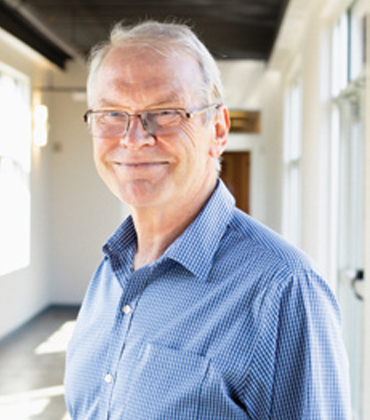
 Dr. Paul R. Alexander, President
Trinity Bible College & Graduate School operates with a clarity of mission that has shaped its steady growth and institutional health. As a small, faith-based institution in a rural town, it has chosen focus over expansion and conviction over trend.
Located in Ellendale, North Dakota, Trinity exists to form resilient, mission-driven leaders who understand their calling and are prepared to live it out. Academic rigor, intentional spiritual formation and hands-on experience are treated as inseparable rather than competing priorities.
“Trinity prepares leaders shaped by character, clarity and purpose. Our growth, even as a small institution in a small town, reflects a commitment to staying focused on who we are and executing that mission consistently,” says Dr. Paul R. Alexander, president.
A Counterintuitive Model of Institutional Health
Why has Trinity chosen focused identity rather than expanding to mirror market expectations?
Trinity's leadership explains its momentum through clarity of mission and disciplined execution rather than through scale or location. As that clarity of mission deepened, enrollment and retention strengthened.
That alignment begins with a conviction that remaining a Bible college was not a branding choice but an existential one. Rather than broadening identity to mirror market expectations, Trinity sharpened it, articulating a mission that unites educating and training, pairs theological reflection with missional passion and keeps its objective clear so that people and communities hear the good news of Jesus and see His love demonstrated. That mission has remained stable for more than a decade, revisited consistently and made visible across campus life.
-
Trinity prepares leaders shaped by character, clarity and purpose. Our growth, even as a small institution in a small town, reflects a commitment to staying focused on who we are and executing that mission consistently.
Results followed. Student retention has remained near 90 percent across semesters. Graduation rates have climbed steadily. Last year, Trinity began a significant growth cycle at the undergraduate level that shows no sign of slowing, growth shaped by fit rather than volume, as students self-select into the institution because they recognize themselves in its purpose.
Financial Discipline as Strategic Freedom
How did financial discipline and donor relationships reshape Trinity’s balance sheet and strategy?
Fourteen years ago, Trinity faced severe financial pressure. New leadership quickly reframed the presidency's role as ambassadorial rather than managerial, focused on relationship-building and trust. Early efforts were modest, meals hosted by local pastors and informal introductions. Over time, those contacts became a substantial development operation built on long-term donor relationships.
The discipline reshaped the balance sheet. Trinity eliminated all institutional debt over ten years and expanded scholarships through sustained donor engagement. That financial freedom became operational freedom: decisions made without the drag of loan servicing or deferring priorities.
Graduate education became a complementary growth engine. Launched eleven years ago, the graduate school scaled through a lean delivery model and access to highly qualified adjunct faculty, culminating in the conferral of the first PhD in theology in North Dakota and in achieving ATS accreditation. Five master's degrees, a Doctor of Contextual Leadership and a research-based PhD now anchor its graduate offerings.
Student Formation Beyond the Classroom
How does Trinity integrate missions, chapel, and formation into the academic experience?
Trinity invests in student life with the same seriousness as academics. Counseling and pastoral support are integral. Chapel meets four days a week. And every student, every year, participates in a required missions experience. Classes pause each spring as faculty-led teams serve locally, regionally and internationally, with five or six international teams traveling this year alone. That pause in the academic calendar is intentional. Ministry is not an extracurricular activity. It is embedded in the structure of formation.
At the entry point, an unconventional pre-college program called Pack Your Bags functions as a gap year with a light academic load, built around life skills, team development, poverty simulation and international travel, concluding with a trip to Israel or another Bible land. Students commit for one year. Many stay longer. The program carries no cost to the institution and functions as its single biggest recruitment tool.
Campus Renewal and What Comes Next
Nearly $30 million in phased facilities renewal, including a centrally located prayer chapel, refurbished academic blocks, modernized athletics, upgraded dormitories and the conversion of a 19th-century armory into a student union, has been completed without a single mortgage or loan. Each project was donor-financed and executed conservatively, strengthening campus life while remaining secondary to the institution’s core mission.
Near-term priorities include micro-credentialing, a summer term and new programs such as a church technology minor and expansion into audio and video production, each a compatible discipline that extends rather than redefines Trinity's mission. A three-year leadership transition, targeting a new president by 2028, is already underway, guided by wide consultation and a commitment to transparency.

