


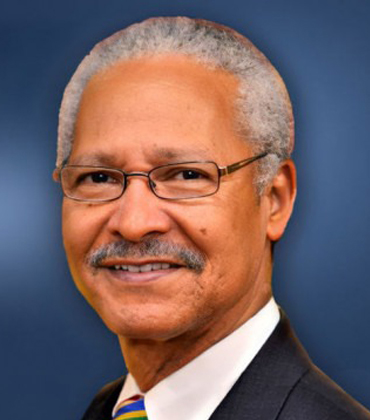
 Pastor P.M. Smith, Founder
A classroom is often measured by what students achieve—grades, test scores, and visible progress. However, for many families, the deeper question goes beyond outcomes: it is about what kind of person a child is becoming through that journey.
At HOPE Academy, education begins with a clear belief: what a child learns matters, but who they become matters more. The school operates as a Christ-centered learning community where faith, behavior, and academics are developed together through daily practice.
“We focus on the whole child, where the spiritual aspect is just as important as the academic,” says Mrs. Elena Simmons, principal.
At the helm of it all is Pastor P. M. Smith who envisions Hope Academy as a place where education goes beyond academics to nurture the whole child. Here, students are not defined by their circumstances but empowered to rise through faith, discipline, and opportunity. Hope Academy provides a safe, structured, and spiritually grounded environment where every child is seen, valued, and challenged to grow intellectually, emotionally, and morally. His vision unites educators and families in equipping students not only for academic success, but for lives of purpose, resilience, and service.
That environment is built through consistency. Each day begins in the chapel, where students gather as a community. They recite Isaiah 40:31, reflect on scripture, and start what the school calls its “morning vitamin.” Parents and grandparents often attend, reinforcing a sense of shared responsibility and connection.
Faith is not limited to a single part of the day. It shows up in how students speak, behave, and interact. From the earliest years, students are taught to address adults with “yes ma’am” and “no ma’am.” Over time, these habits become natural. Behavior is not enforced through correction alone, but developed through repetition and expectation.
-
We focus on the whole child, where the spiritual aspect is just as important as the academic.
HOPE Academy places strong emphasis on alignment between school, home, and faith. The school’s symbol, the eagle, reflects a shared standard. Students, families, and teachers are expected to meet clear expectations, creating consistency across environments. This alignment allows students to grow with confidence, knowing what is expected of them and how to meet it.
How do structured classroom environments support individualized learning and stronger student engagement in schools?
Inside the classroom, this structure creates space for more effective teaching. With small class sizes, teachers can focus on individual students and adapt their approach. Many educators at HOPE Academy come from larger systems where behavior management limited instruction. Here, they can focus on teaching, bringing creativity and energy back into the classroom. That shift is visible in how students respond and engage.
The school also prepares students for a broader world. Students are encouraged to understand that their competition is not limited to classmates, but extends globally. Through spelling bees, geography competitions, STEM fairs, and independent challenges, they are given opportunities to grow beyond the classroom and build confidence in their abilities.
Why does long-term community involvement strengthen continuity and trust within educational learning environments today?
That growth is supported by a strong sense of community. HOPE Academy has built what many families describe as a close-knit, family-like environment. As the school approaches its 30-year milestone, it is now seeing second-generation students return—families who experienced the school themselves and are choosing it again for their children. Relationships formed here continue well beyond elementary school, often lasting through later education and into adulthood.
In what way can technology integration complement strong academic and behavioral educational foundations today?
At the same time, the school continues to evolve. Technology is fully integrated, with each student working on their own device. Plans to expand into engineering-based learning, including 3D printing and structured STEM programs, reflect both student interest and future needs. A recently introduced engineering club has already seen strong engagement. Further, due to the support of the members of Huber Memorial Church, HOPE Academy has reduced tuition to approximately half or more of what other private schools cost.
Alongside this, HOPE Academy remains committed to strong fundamentals. The introduction of a math specialist has led to clear improvements in student performance, with levels rising in advanced proficiency. Writing is also a priority, including a continued emphasis on cursive handwriting by third grade—an intentional choice that reflects the school’s focus on long-term skill development.
The goal remains consistent. HOPE Academy is focused on developing students who are confident, respectful, and prepared for what lies ahead. As Mrs. Simmons mentions, it is about building the kind of foundation that students carry with them—how they think, behave and show up in the world.

