


That difference is what the Green Inspiration Academy (GIA) brings as a public charter school.
Serving students from across Greater Cleveland, this K–8 public charter school in Warrensville Heights, Ohio, structures its environment around stability and belonging rather than instructional pace, allowing academic progress to develop with consistency over time. Learning takes hold when students feel protected, supported and understood.
“We become that in-between space where students can reset, rebuild confidence and start thriving again,” says April Hart, executive director.
Teaching Students to Speak Up for One Another
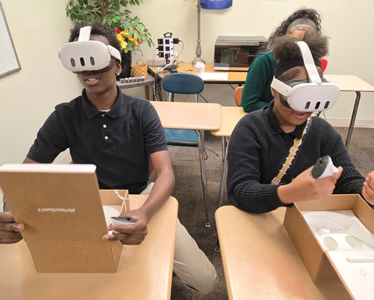 Students learn that safety is a shared responsibility. They are taught early what exclusion feels like and why it cannot be ignored. New classmates are welcomed intentionally. Children are encouraged to look out for one another and speak up when something feels wrong.
Over time, those expectations become habits. Peer support replaces silence. Confidence grows as students recognize they will be noticed and protected. A sense of belonging and assurance gives students the confidence to participate more willingly, ask questions and engage in learning. This approach has earned GIA its reputation as a bully-free environment, where students protect one another, and safety is sustained through behavior, not slogans.
Adapting Instruction to How Students Actually Learn
GIA follows Ohio’s learning standards and uses state-approved curriculum from major publishers. What distinguishes the school is the autonomy given to educators to adapt instruction based on observation, experience and students' real-time responses. The goal is not to replace the curriculum, but to make it work for students with different learning speeds, gaps and strengths.
-
We become that in-between space where students can reset, rebuild confidence and start thriving again.
“Our teachers are not confined to the textbook,” says Tracy Adams, principal. “They draw on past experience, proven strategies and outside materials to shape instruction while still meeting standards and supporting each child’s strengths.”
Technology plays a key role, too. Digital platforms such as IXL and i-Ready help teachers assess and identify learning gaps early, enabling them to provide timely support rather than reactive responses. The best part is the academy’s small size, which allows educators to know students beyond grades and test scores, recognizing who needs encouragement, who benefits from structure and who needs patience before progress takes hold.
Where Whole-Child Support Changes Academic Trajectories
Education is understood as a whole-child responsibility at GIA. Academic learning is inseparable from social, emotional and physical well-being. Staff regularly support families with food, clothing or other essentials, recognizing that stability outside the classroom shapes what is possible inside it.
Ms. Adams recalls one success story. A student arrived at GIA carrying anger and frustration from previous school experiences. The student was placed on an individualized education plan to address behavioral challenges. In a smaller, consistent environment, teachers worked with the student patiently and without judgment. As trust replaced defensiveness, behavior stabilized. Confidence returned. Academic progress followed. Over time, the student no longer required an IEP.
Today, this student is thriving in high school. The family later enrolled a younger sibling at GIA, a pattern the school sees often when trust has been rebuilt.
Stability for Educators, Continuity for Students
GIA also invests heavily in its teachers through training, leadership support and professional trust. When educators feel respected and secure, calmness naturally carries into the classroom, creating the stability students rely on.
Within a public education system often shaped by scale and standardization, The Green Inspiration Academy has chosen a different path. It rebuilds belonging first, restores confidence next and allows academic growth to follow with durability. That progression explains why the school’s recognition as Top Public Charter School 2026 feels earned, not as an accolade alone, but as an affirmation of a model that gives students the chance to begin again.

