


In many classrooms, science concepts are introduced through text reinforced with worksheets, and assessed through recall. While this approach can efficiently deliver content, it often leaves limited room for students to actively explore, test, and experience scientific ideas for themselves.
Without hands-on opportunities intentionally and consistently embedded in the curriculum, students may understand concepts at a surface level but struggle to develop deeper sensemaking, curiosity, and lasting engagement.
For STEMTaught founders Beth and Jake Hunter, this gap became clear during volunteer work in local elementary classrooms, where they noticed the need for more robust hands-on learning in teaching science concepts.
STEMTaught lessons are designed to address this directly—placing hands-on exploration at the heart of learning to guide student exploration, discovery, retention and enthusiasm.
“Our curriculum must be rigorous and aligned to be adopted by public schools,” they explain. “We meet all required standards. The real challenge is making the material engaging and accessible—while still meeting the expectations of the NGSS framework.”
Built in Classrooms, Not in Conference Rooms
How does classroom-based development improve the effectiveness of science education programs over time?
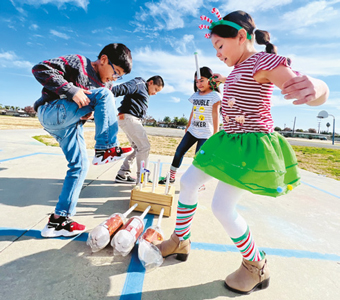 STEMTaught integrates classroom testing from the very start—building, teaching, and adapting lessons in real classrooms as they are created. Labs are tested, refined, and shaped through hands-on learning with real students, teachers as development partners, and everyday constraints that are the ground realities of the classrooms. They and their team have volunteered in thousands of classrooms over their 10 years of development.
Before education, Beth and Jake spent over a decade in scientific and engineering roles at Chevron—Beth as a geologist, Jake as a mechanical engineer. They solved complex problems and contributed to research, including the discovery of a new mineral.
But STEMTaught did not start with strategy or theory alone. It started with a hands-on lesson in their child’s classroom.
The response was immediate. Students engaged differently, and teachers noticed. What began as a one-time session grew into visits across classrooms and districts.
The difference was not just the activity, but the way it was created in a classroom-aware context, with a goal to get students excited about STEM.
-
If you can spark interest, that’s when they really start to learn.
That process continues across diverse schools—from high-performing to under-resourced, including remote locations with limited technology. Each setting brings different constraints that shape the approach.
A System, Not Just a Philosophy
Why is balancing engagement, usability, and standards alignment important in lesson design?
At the core of STEMTaught is a clearly defined design system. Every lesson must satisfy three conditions:
• It must be engaging for students.
• It must be easy for teachers to implement.
• It must be technically relevant and standards-aligned.
Most educational tools succeed in one or two of these areas. Few consistently achieve all three.
 STEMTaught’s process balances this triad through constant iteration. Lessons are tested—often through five to ten versions—before finalization. Each cycle uses classroom feedback to identify drops in engagement, added complexity, or missed alignment.
This is not a theory. It is operational testing.
“If you can spark interest, that’s when they really start to learn,” says Beth Hunter.
Designed for the Reality Teachers Face
In what way does practical classroom design improve teacher adoption and student outcomes?
One challenge in education is not what to teach, but what is possible to teach.
In elementary classrooms, a single teacher often manages 30 or more students while covering multiple subjects within a limited timeframe. Even highly engaging activities become unsustainable if they require excessive preparation or complex execution.
STEMTaught recognizes this challenge directly.
Each lesson is designed with teacher usability as a primary constraint. Activities are conducted in actual classroom conditions, using available materials and often relying on place based labs with clear steps.
This eliminates the perceived trade-off between engagement and practical delivery.
Instead of hours preparing a lesson, teachers implement student lead discoveries followed by discussions, illustrated stories and engaging content that relates to the students lab. The result is not just better engagement, but more teacher confidence.
The goal: make teachers feel like “rockstars”—not by adding work, but by reducing friction.
“When students are interested, that’s when they begin to improve and grow,” says Jake Hunter.
When Engagement Drives Measurable Change
This approach’s impact extends beyond lessons.
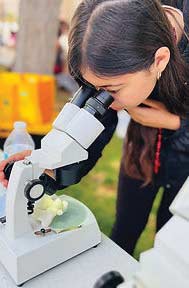 In one district, a school that had historically underperformed saw a significant rise in test scores after introducing STEMTaught’s hands-on model. There were no major staffing changes or curriculum overhauls. The difference came from how students interacted with learning.
As engagement grew, performance improved—not just in science but also in reading and math.
This pattern illustrates a core idea: actively involved students learn more efficiently and transfer their learning more effectively.
On a personal level, the change can be powerful. One student, initially uninterested in microscopes, became engaged when the activity connected to her clothing. That moment shifted her perspective. Over time, her interest in science deepened, ultimately leading her to choose Biology as her field of study in college.
These outcomes result from a system designed to create moments of connection and discovery.
Making Science Accessible through Design
STEMTaught’s approach extends beyond lesson structure into the tools themselves.
One example is Meeka Microscope. To counter intimidating equipment, the company developed a classroom-friendly microscope. Unlike traditional models, it lets students view objects in three dimensions without prepared slides, making exploration immediate and intuitive.
This design lowers barriers and expands possibilities. Students can easily examine everyday objects—rocks, leaves, fabrics—reinforcing that science is in their environment, not just in textbooks.
The curriculum replaces static textbooks with interactive journals for writing, drawing, and direct engagement. Storytelling and narratives create an approachable yet rigorous experience.
A Collaborative Model Built on Expertise
STEMTaught’s curriculum is not developed in isolation. It is the product of a multi-layered collaboration between scientists, educators, and academic institutions.
The founding team’s scientific backgrounds, combined with teacher input, keep every lesson practical and relevant.
Partnerships with universities bring over 80 contributing authors from more than 25 institutions. Graduate students and researchers help shape content aligned with current science and classroom needs.
This combination—scientists, teachers, and academic contributors—creates a system that is both credible and functional.
STEMTaught doesn’t compete with other providers, but joins a shared effort to improve education.
Starting Early, Building Long-Term Impact
The STEMTaught journal focuses on preschool through sixth grade, recognizing that early experiences shape learners’ approaches to STEM. The STEM-ELOP, meanwhile, facilitates students from pre-school to Grade 8.
Hands-on learning early reinforces curiosity rather than diminishing it.
“These young students are already great science thinkers because they love to question and observe the world around them. We are simply trying to foster their natural abilities and give them real tools and opportunities to explore their world,” says Beth Hunter. Students begin to see learning as something they do, not just watch. That shift shapes how they engage with education long after they leave.
A Practical Evolution of Learning
STEMTaught doesn’t redefine education by theory. It improves what happens in the classroom or outdoors—where meaningful learning occurs.
By developing curriculum in real settings, balancing engagement with usability, and grounding decisions in practical limits, STEMTaught offers a scalable, sustainable model.
In these classrooms, change is visible. Students engage more. Teachers are more confident. Science is tangible— something students can explore, question, and understand.
It’s not a reinvention, but a refinement of education’s key element: experience.

