

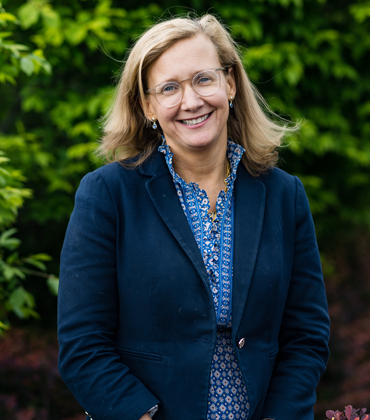
 Kirsten Prettyman Adams, Head of School
SSSAS is an Episcopal school in Alexandria, Virginia, serving students from age three through grade 12 across three campuses. Rigorous academics sit alongside advisory, service, respectful discourse, arts and athletics. Thoughtful choices about when technology adds value help keep that experience balanced. Its guiding idea, pursuing knowledge and goodness together, shapes everything from morning meetings to eighth-grade capstones.
“What we really care about is that they’re good people who recognize that they’re part of a much bigger community in the world,” says Kirsten Prettyman Adams, head of school.
For its blend of academic challenge, Episcopal values and whole-student development, SSSAS was named Top College Preparatory Episcopal Church School 2026 by EducationInsider.
Community as Curriculum
Lower School students open and close each day with a Responsive Classroom meeting, learning how to listen, disagree well and work through conflict. A weekly exercise called Weekly Wonderings uses a single photograph to prompt observation and conversation about the wider world. Fourth graders take on a service project built around a novel about homelessness, then raise money on their own to support a local organization serving unhoused people. The academic work and the moral work happen in the same assignment.
Middle School carries the thread forward through the Saints Advisory Program and eighth graders spend a full year on a capstone tied to their religion class, identifying a problem they care about and building a real solution around it. In Upper School, forums bring students together around difficult, even controversial topics, using the same respectful discourse they have practiced since Lower School.
-
What we really care about is that they’re good people who recognize that they’re part of a much bigger community in the world.
None of this comes at the expense of academics. Students elsewhere sometimes reach college burned out, having spent years on coursework alone with little room left to discover what excites them. SSSAS asks its students to work hard and expects them to show up fully elsewhere too, in athletics, the arts, robotics or whatever draws them. The goal isn’t balance for its own sake. It’s making sure students leave with something to run toward.
Teachers Who Know Their Students
SSSAS wants subject experts, but it wants teachers who love their students more than their subject even more. Knowing a student well means understanding what excites them, where they may be struggling and what is or isn’t working for them in the community, not simply how they perform in chemistry.
The school checks that this actually happens. Each year, teachers flag the students they believe would come to them with a personal issue and students are asked directly whether they have that adult in their life. Where a gap shows up on either side, staff close it. Surveys of families, students, faculty and staff track belonging across the community and the feedback helps identify where more attention is needed.
Technology on the School’s Terms
Lower School teachers ask one question before using a new tool: Does it help students do something better than they could without it?
Older students encounter AI in the classroom while examining its biases, ethical implications and risk of doing too much of their thinking for them. The aim is not to keep technology out, but to prepare students to use changing tools without surrendering judgment or integrity.
This culture doesn’t belong to students alone. Coaches, teachers and staff model the same goodness SSSAS wants students to carry into the world. Adams sees that example as one of the community’s defining qualities.
It is why something as simple as a phone-free lunch matters. Students are practicing, in small ways every day, how to be present with other people, how to belong to a community and eventually how to contribute to one beyond school. Knowledge prepares them for what comes next. Goodness helps determine what they do when they get there.

