


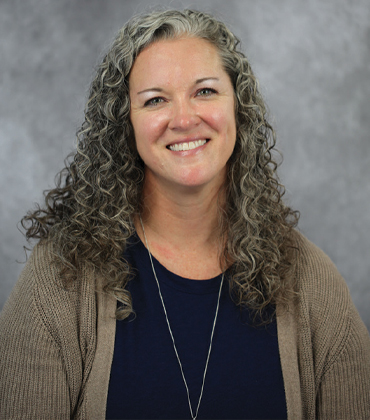
 Jennifer Harrell, Principal
Students arrive at SCCA with widely varying academic readiness, learning styles and personal circumstances. Teachers are responsible not only for delivering curriculum, but for recognizing where each student is starting from and adapting instruction accordingly.
Some need focused academic reinforcement to strengthen foundational skills, while others are ready for challenges beyond grade-level expectations. Many also carry challenges that affect how they show up in the classroom, including anxiety or unmet needs such as food security. Rather than treating these realities as limitations, SCCA sees them as a responsibility.
This whole-student model recognizes growth as personal and developmental. Guided by the principle of doing all work “as unto the Lord” (Colossians 3:23), educators approach their role with integrity, accountability and compassion, creating an environment where progress is intentional and supported.
“Our role as educators is to understand what each student needs and adjust how we teach so they can succeed,” says Jennifer Harrell, principal.
Transforming Potential into Proven Progress
Instruction begins with relationships. Teachers invest time in getting to know students as individuals, including their academic strengths, emotional needs, interests and personal context. This understanding shapes how instruction is delivered, allowing educators to respond with intention rather than uniformity.
The commitment to individual growth is supported by a structured and academically rigorous framework. The academy uses the Abeka curriculum, recognized by the Florida Department of Education, to ensure instruction remains aligned with state expectations while maintaining clarity and consistency. In areas such as science, civics and social studies, students are encouraged to think critically, apply logic and engage with ideas through a biblical worldview, examining perspectives thoughtfully even when they differ from faith-based views.
Our role as educators is to understand what each student needs and adjust how we teach so they can succeed.
Classroom structure balances shared learning with targeted support. Whole-group instruction establishes common understanding, while small-group settings allow teachers to reinforce skills, address gaps or extend learning where appropriate. This flexibility ensures students are guided by their readiness rather than a uniform pace.
Progress is recognized through observable change rather than comparison. Growth may appear when a hesitant student begins to participate, a reader gains fluency through sustained effort, a limited-verbal learner communicates more confidently, or a student reaches an academic milestone once thought out of reach. These moments signal that learning is taking hold and that confidence is beginning to build.
Faith-Guided Learning Anchored in Belonging and Care
Faith at SCCA is expressed through daily modeling, instruction and care, reflecting the school’s commitment to living out Christian values in the classroom.
Students are not required to be Christian to attend. Instead, the school’s Christ-centered mission is expressed through how educators teach, care for students and engage with families. This posture shapes classroom culture, where expectations are clear, relationships are prioritized, and students feel supported as individuals. Character development is reinforced alongside academic growth, creating a sense of belonging that strengthens both confidence and readiness to learn.
This consistent, student-centered approach has earned positive recognition within the local community for its commitment to student development.
St. Cloud Christian Academy remains focused on deepening its whole-child, growth-centered model, building a future where every child is empowered to become the person they were created to be.

