


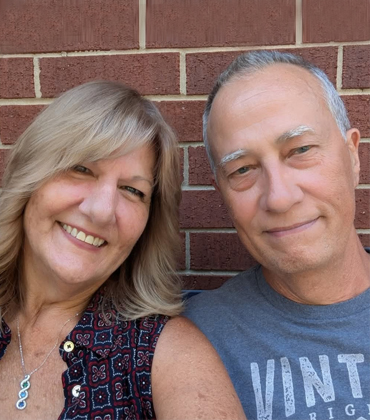
 David Ouellette, President
RLS3d helps K–12 schools turn 3D printers into practical classroom tools that support sustained STEM learning experience. The educational technology company supplies printers alongside installation, hands-on teacher training, maintenance and repair support. Its focus is on helping educators use and maintain the equipment with confidence so students can benefit from hands-on experience.
“We don’t just provide 3D printer to schools. We educate them on transforming every 3D printer they operate into a practical classroom tool for learning,” says David Ouellette, President.
The Roots of Training-Led 3D Printing Services
David established Robotic Learning Systems, now RLS3d, in 2016 to supply robotics kits and train educators in coding and STEM skills. Its kits paired 3D-printed parts with electronics and coding instruction so students could explore mechanical systems through practical projects.
One early success came at Venus Independent School District in Texas, where it helped establish a robotics and coding program. David trained one teacher in the first year, supported the subsequent launch of a new STEM lab with 100 workstations and trained a second teacher in coding, robotics and circuit building. His goal was to make the school self-sufficient in terms of STEM lab operations and troubleshooting within three years, and achieved that in two.
When COVID-19 disrupted collaborative robotics activities and changed school funding priorities, RLS3d shifted toward 3D printers and related services. Yet training always remained central to its work.
Training That Begins in the Classroom
RLS3d supports training for both printers it supplies and equipment schools already own. It trains teachers in their own classrooms using their computers, printers and software. When teachers practice in a familiar environment, they master the technology faster.
We give educators a lifeline even after we leave. They know they can reach out to someone who understands their equipment and can help them work through problems.
Classroom training can reveal problems beyond the printer itself. Some machines remain disconnected from school networks, and teachers may be unable to update software without IT approval. RLS3d ensures teachers learn how to setup and configure the system.
Technical support, maintenance agreements and refresher training reduce the time teachers spend troubleshooting, while moving student projects forward. Schools that purchase printers receive installation and two training sessions per machine. They can use the second session to train a new teacher or refresh skills learned earlier.
A printer failure during the school year can interrupt projects, particularly when teachers lack time to arrange repairs or must wait for funding approval. When problems arise, teachers can call or email RLS3d for help.
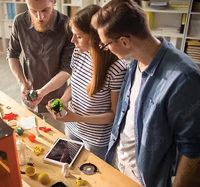 The team diagnoses problems remotely and makes on-site repairs under maintenance agreements. If a repair cannot be completed, RLS3d provides a temporary replacement printer so classes can continue.
The same attention is applied to answering an IT team’s questions about printer connections and network requirements. For instance, some teachers transfer files on USB drives because their printers are not networked. RLS3d guides IT teams in implementing the network settings that allow teachers to prepare and send files to printers without physically moving between devices.
Once a school approves network access, students can also submit designs digitally for teacher review. Ease of file transfer makes feedback and design iterations easier.
Turning Technical Skills Into Student Learning
A functioning printer is only the starting point. Its educational value depends on what students learn to create with it.
RLS3d uses its robotics and coding experience to suggest classroom projects for different skill levels. The projects combine 3D printing with equipment schools already own, such as laser engravers or 3D scanners.
In one beginner exercise, students design and print a box to specified dimensions, create a lid that fits and then personalize the finished object with artwork or lettering.
-
We don’t just provide 3D printer to schools. We educate them on transforming every 3D printer they operate into a practical classroom tool for learning.
More advanced projects connect digital design with mechanical and electronic systems. A cutaway V8 engine kit, for instance, combines 3D-printed pistons, a crankshaft and an engine block with a motor and battery pack. Robotics kits let students build remotely operated machines equipped with cameras and claws to pick up and deliver objects. An ordinary, easy-to-use keyboard is provided in the kits for control, which helps keep the projects accessible.
“We try to make STEM learning easy, inexpensive and inclusive so that there's something for all kids across all types of experience levels,” says David.
Relationships Built on Practical Support
RLS3d is mindful of schools’ budget constraints. It doesn’t force schools to replace existing equipment. It assesses the printers a school already owns and determines whether repairs or training could bring them back into use.
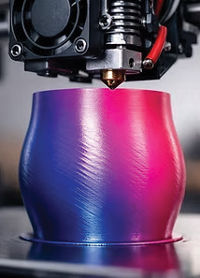 One school initially approached RLS3d to buy printers. David discovered that the school had several machines on site, but its teachers lacked the knowledge to use them. Instead of selling it new equipment, RLS3d provided training and service to get the existing printers running. A year later, the school purchased two additional printers and service contracts.
Teacher turnover can also cause problems. At another school, he noticed two older printers sitting unused alongside the equipment he had installed. The school had inherited the machines after a staffing change, and the new teacher did not know whether they worked. RLS3d assessed them and trained staff to use them. The engagement grew to include two classrooms and five printers.
“We give educators a lifeline even after we leave. They know they can reach out to someone who understands their equipment and can help them work through problems,” says David.'
Harnessing the Wider Potential of 3D Printing
Beyond schools, David has applied 3D printing expertise to industrial prototyping, replacement parts and maintenance.
He draws on a decade of industry experience to help businesses recreate broken or obsolete components. 3D scanning, CAD modeling and printing are used to reverse-engineer parts that are no longer available from original manufacturers.
Rapid prototyping offered by RLS3d lets manufacturers test fit and function before committing to expensive injection molds.
 In one instance, David was hired to develop a system that could detect premature wear and leakage in high-volume commercial pumps caused by cavitation. He identified that the knocking sound in the pumps were produced by cavitation-related vibration.
Accordingly, he developed a sensor-based monitoring system that adjusted pump speed to reduce vibration and automatically shut the pump down if a leak was detected. Using 3D-printed brackets, fixtures and a controller housing, he assembled and tested the system within a month. Researching, coding and testing took approximately three weeks, and producing the required components took just three days. Without 3D printing, machining those parts could have extended the process to three to six months.
David has also worked with UT Southwestern to produce anatomical models from MRI scans for surgical planning and to repair mechanical patient simulators.
Building the Next Layer of Expertise
RLS3d plans to offer longer courses of training at a dedicated Oklahoma City facility. Its proposed three-day course format would cover model creation, print preparation and printing and maintenance.
David’s stronger ambition is to create 3D-printer repair expertise within school systems. He wants schools to develop in-house troubleshooting skills so teachers can get help on-site and avoid costly outside service calls.
He also sees broader repair training as a potential career path for people interested in technical work, so repair courses to cover several mainstream printer brands and technologies are upcoming. The courses will build on RLS3d’s original mission of helping educators develop practical skills in robotics, coding and STEM.
Toward Sustainable Classroom Adoption
RLS3d’s long-term ambition extends beyond selling printers or delivering individual training sessions. It aims to build the knowledge base needed to operate, maintain and support the technology over time. Its recognition as Top 3D Printer Training Services 2026 emphasizes this focus.
Ultimately, success in STEM learning is not measured by how many 3D printers a school owns, but by how consistently students use them to turn ideas into working designs. RLS3d supports that journey at every stage, equipping educators with the skills and knowledge to maintain their equipment and the ongoing support to keep learning in motion.

