

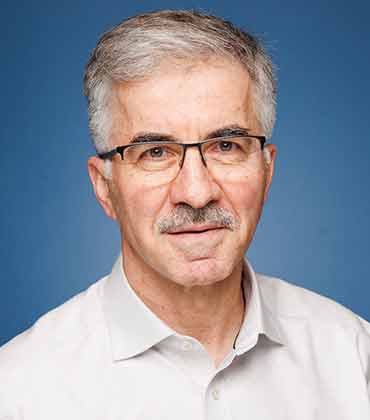
 Riza Gurcanli, Lead Person
What has emerged over time is not just a K–12 charter school, but a system that tries to balance rigor with accessibility, structure with flexibility, and academic ambition with deep community responsibility. The school’s identity is closely tied to Paterson itself—its families, its diversity, and its long-standing need for pathways that connect high school learning to college and careers.
This philosophy is reflected in both its internal practices and its external recognition, including statewide honors that have placed PCSST among a small group of New Jersey schools identified for measurable progress in equity and access.
Leadership Perspective: Data, Responsiveness, and Daily Practice
At the center of PCSST’s academic approach is a leadership model that emphasizes responsiveness over rigidity. Instruction is not treated as static; instead, it is continuously shaped by student performance data, teacher collaboration, and instructional feedback loops that operate across grade levels.
As Lead Person Riza Gurcanli explains on instructional practice, “Our educators continuously use data to identify student strengths, address learning gaps, and tailor instruction to meet individual needs.”
This reliance on data is not abstract. It shows up in professional learning communities where teachers examine student performance trends, identify gaps in literacy or numeracy, and adjust instruction in real time. When early-grade literacy challenges are identified, for example, intervention structures expand quickly, supported by specialists and targeted instructional changes.
The school’s multi-campus structure requires even greater coordination. To maintain consistency, PCSST relies on unified curriculum planning, districtwide meetings, and instructional coaching systems. Literacy and math coaches regularly visit classrooms, offering feedback and aligning teaching practices across grade levels. The goal is not uniformity for its own sake, but coherence—so that a student in one campus receives the same academic foundation as a student in another.
Equity as Practice, Not Principle Alone
Equity at PCSST is not treated as a slogan or abstract commitment; it is operationalized through program design, access structures, and financial decisions that directly affect student participation.
One of the clearest examples is the school’s dual enrollment system. While many high school students across the country face financial barriers when accessing college-level coursework, PCSST made a deliberate decision to remove those obstacles.
As Gurcanli notes, “Our goal is to remove financial and logistical barriers so that every qualified student has access to advanced coursework and dual enrollment opportunities.”
 This approach aligns closely with the outcomes recognized by the New Jersey Department of Education’s 2025–2026 Lighthouse Award program, which honored PCSST specifically for "Increasing Equity in Dual Enrollment." Out of nearly 700 school districts and charter schools statewide, PCSST was named among a select group of nine statewide recipients, and notably, it was the only charter school included in the cohort.
The results have been measurable. Participation among Hispanic and Black students in dual enrollment programs has increased significantly over recent years, supported by intentional outreach, counseling structures, and college partnerships. The school’s approach demonstrates that equity, when operationalized, is less about intention and more about removing structural friction points that limit participation.
A Bridge between High School and College
Dual enrollment at PCSST is not a supplemental program—it is a core academic pathway that has been developing since 2012. Over time, it has expanded into a robust network of nine college partnerships across New Jersey and beyond, including Montclair State University, William Paterson University, NJIT, Seton Hall University, and Ramapo College, among others.
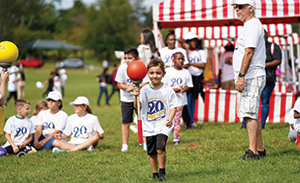 Students are introduced to these opportunities early through academic planning sessions, counseling discussions, and structured eligibility reviews. Once enrolled, they navigate a blended system where college coursework becomes part of their high school experience. Some attend classes on college campuses, others participate in virtual learning, while certain courses are taught at PCSST using college-approved curricula.
The process is highly coordinated. Counselors monitor student progress, ensure alignment with graduation requirements, and work closely with college partners to maintain academic integrity and accessibility. Students not only earn credits but, in many cases, begin building pathways toward associate degrees before graduating high school.
This is particularly significant for first-generation college-bound students, who gain early exposure to academic environments that might otherwise feel distant or inaccessible. It is also shaping career readiness in practical ways, including certifications in healthcare fields and technical programs that connect directly to workforce opportunities.
Student Voice and Academic Ownership
PCSST places strong emphasis on student agency, treating students not just as participants in education but as contributors to its design. Through advisory periods, community circles, and student-led assemblies, learners are encouraged to express preferences, reflect on goals, and shape aspects of their academic journey.
Student government plays an active role in organizing assemblies where achievements—such as college acceptances—are publicly celebrated. These moments reinforce a culture where academic progress is visible, shared, and valued across the school community.
The dual enrollment system itself is influenced by student input gathered through surveys and academic planning discussions. These insights help determine course offerings and scheduling priorities, ensuring that academic pathways reflect both student interest and future opportunity.
The result is a school environment where ownership is distributed rather than centralized, and where students gradually take responsibility for shaping their own educational trajectories.
Systems of Consistency across Multiple Campuses
Operating multiple campuses presents challenges that many schools struggle to manage, particularly when it comes to consistency in instruction and culture. PCSST addresses this through structured systems of alignment.
Districtwide academic meetings bring together principals, instructional leaders, and curriculum teams every two weeks. These sessions focus on implementation fidelity, assessment practices, and instructional planning. They ensure that decisions made at the leadership level translate into classroom practice across all campuses.
Our educators continuously use data to identify student strengths, address learning gaps, and tailor instruction to meet individual needs.
Professional learning communities further reinforce this structure at the teacher level. Educators collaborate regularly to review student data, adjust instructional strategies, and share best practices. This layered system ensures that consistency is maintained not through control, but through continuous collaboration.
Admissions and Transparency in a High-Demand Environment
As one of the longest-serving charter schools in Paterson, PCSST receives far more applications than it can accommodate. In recent cycles, the school reported approximately 1,900 applications for limited seats, with particularly high demand at entry-grade levels.
To manage this demand, PCSST uses a public lottery system conducted in a school gymnasium with notary oversight and legal verification. Families attend the process, and results are certified transparently. Sibling priority is the only preference applied.
This process is designed to reinforce fairness and public trust. It also reflects the reality of charter school demand in urban communities where access to high-quality public education options remains limited.
Community Partnerships and the Lions Hub
PCSST’s commitment to student well-being extends beyond academics. One of the most significant recent developments is its partnership with Care Plus New Jersey, a behavioral health organization that now operates directly within the school through a specialized a School-Based Access to Care (SBAC) initiative known as The Lion's HUB, which officially opened with a celebratory ribbon-cutting on March 23, 2026.
 The Lion’s Hub provides on-campus access to therapy, crisis intervention, family counseling, and care coordination services. By offering licensed clinicians who provide voluntary, confidential on-site therapy during and after school hours—including evenings—completely free of charge regardless of insurance status, the program is designed to reduce barriers that families often face when seeking external mental health support, particularly issues related to transportation, cost, or awareness of services.
By embedding these supports within the school environment, PCSST extends its definition of equity beyond academics and into holistic student care. Families, staff, and students all benefit from services that are available through The Lion's Hub during and after school hours.
Culture, Athletics, Arts, and Leadership Development
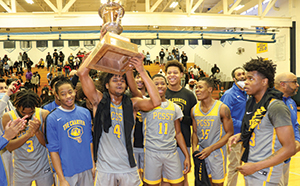
While PCSST is academically rigorous, it also places a strong emphasis on athletics, leadership development, and extracurricular engagement. In recognition of its commitment to student-athletes, PCSST was named the 2025–2026 Exemplary Athletic Program by the Directors of Athletics Association of New Jersey (DAANJ). The school fields 14 varsity sports and has achieved notable success, including county championships, multiple North 1 Group 1 State Championships, and numerous division and regional titles in Boys Varsity Basketball. Middle school programs act as feeders into high school teams, ensuring continuity in athletic development. The school also promotes inclusion and leadership through Unified Sports programs, ensuring that students of all abilities have opportunities to participate, compete, and grow as members of the school community.
-
Our goal is to remove financial and logistical barriers so that every qualified student has access to advanced coursework and dual enrollment opportunities.
The arts program is equally active. Students participate in full-scale musical productions staged in professional venues, including performances such as Annie Jr., The Little Mermaid, and Frozen Jr. These productions involve students across grade levels and provide opportunities for creative expression within a structured academic environment.
Leadership development is further strengthened through JROTC programs, which have achieved national recognition in Raider competitions. These programs emphasize discipline, teamwork, and leadership under pressure.
PCSST also supports student participation in national academic and service competitions. In one notable example, gifted and talented students developed a “Food Truck Campaign” for a nationwide challenge, raising significant funds for nonprofit organizations and earning national recognition for their work.
Outcomes, Alumni, and Long-Term Impact
One of the most telling indicators of PCSST’s long-term impact is its alumni return rate. Former students frequently return to the school as educators, staff members, or parents enrolling their own children. In one recent cycle, more than 20 alumni applied to enroll their children at PCSST, reflecting a full-circle relationship between the school and its community.
This continuity is reinforced by broader academic outcomes, including millions of dollars in scholarship offers for graduating students and increasing numbers of students completing college credits before graduation.
The school’s influence extends beyond individual achievement into generational trust, where families view PCSST not as a temporary educational stop but as a long-term community institution.
A Model Built on Access and Continuity
Paterson Charter School for Science and Technology continues to evolve within a complex educational landscape shaped by demand, diversity, and systemic inequities. Its approach combines structured academic systems with flexible pathways, ensuring that students are not only prepared for graduation but also for life beyond it.
 As Gurcanli reflects on the significance of recognition from the state, “This recognition from the State is a distinctive acknowledgment of our commitment to students and performance, and it reflects over 20 years of dedicated work.”
Looking ahead, PCSST remains focused on expanding opportunity through early college pathways, workforce certifications, student support services, and innovative partnerships. Its focus remains unchanged: preparing literate, responsible, and self-directed citizens who are ready to contribute meaningfully to their communities and the world.

