

Waukegan Public Schools
Beyond the Final Whistle: Transforming School Culture through Shared Leadership and Trust
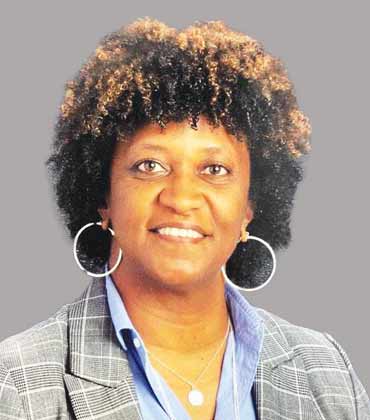
Cabrina Williams-Leneau
Leadership in Action: A Lifetime of Teamwork in Education
On a basketball court, any coach, referee, or player will tell you that a game is never won by a single individual; it is won through collective coordination, trust, and shared effort toward a common goal. Throughout my 35-year career in education—spanning roles as a teacher, assistant principal, district coordinator, and 13 years as principal of Glenwood Elementary—I have found that the exact same rule applies to effective school leadership.
My administrative journey has been deeply shaped by my life as an athlete, coach, and sports official. Whether refereeing the IHSA Girls Basketball State Finals, presiding over the Northern Officials' Association, or coaching a regional championship team, I have lived my life on a team. These roles were my training ground, cultivating the personal and social skills required to manage pressure, command respect, and navigate complex systems.
While my academic foundations at Newberry College and Clemson University prepared me for the structural demands of supervision, it took years of real-world leadership to understand how a school truly blossoms. Too often, leaders feel pressured to wear a mask of absolute certainty, hiding the insecurities that accompany the job. Yet, I have learned that the ultimate playbook for a thriving school relies on the transformative power of vulnerability, emotional regulation, and building a trusted team where every educator is empowered to make those around them better.
Authentic Leadership: Embracing Vulnerability and Modeling Self-Care
Behind the accolades, personal insecurities are a real part of our mental health. Over my decades in administration, I have learned a fundamental truth: to effectively support my staff, students, parents and community, I must first take care of myself.
"The ultimate playbook for a thriving school relies on the transformative power of vulnerability, emotional regulation, and building a trusted team where every educator is empowered to make those around them better."
True self-care extends directly into how we show up for our staff. It requires the courage to reflect on our shortcomings and actively embrace vulnerability. I am comfortable asking questions when I don't know the answer and comfortable when others know it too. Letting down my guard signals to my staff that it is safe to do the same.
In practice, I translate this into a concrete expectation during professional development. When setting expectations, asking questions when confused is an active requirement. I tell my team that if you leave with zero questions, I will assume you are choosing not to implement our goals. Framing it this way breaks the ice, encouraging everyone to speak up and embrace learning without fear of evaluation.
The Captain's Mentality: Building and Trusting Your Team
A team captain gives a hundred percent effort while working to make everyone around them better. The transition from "me" to "we" is a critical turning point for any leader. Early on, I realized I couldn't do this job alone. To help my school blossom, I had to shed professional insecurities and accept that team members might know more than me in certain areas.
Cultivating leadership at every level is essential because not every teacher feels comfortable bringing struggles directly to an evaluator. To bridge this gap, I develop strong teacher leaders throughout our building. I tell my Instructional Leadership Team, "I need you to be at least half a step ahead of your colleagues." By staying that half-step ahead, they serve as accessible, non-threatening resources for their peers.
The Art of De-escalation: Regulating Emotions to Build Trust
Of all the achievements in my career, the warm, safe culture of my school building is what I am most proud of. Achieving this required mastering emotional regulation.
As a leader, you routinely face intense emotional highs and lows, from screaming and cursing to tears born of deep frustration. Once I stopped absorbing every emotion aimed at me, my leadership transformed. Regulating my emotions provided clarity to pause, listen, and empathize before speaking. De-escalating means choosing words with care and realizing you don't have to solve every problem instantly.
When you give someone a safe space to be heard, the tension breaks. Often, people realize the root issue extends far beyond school and, given quiet space to process, they frequently reflect and solve their own problems.
Conclusion: Legacy and Paying It Forward
A leader's true legacy is not measured by titles or accolades, even honors like being named a Top Ten Principal in Illinois or African American Educator of the Year. Legacy is measured by the people you lift up and the leaders you help build along the way.
Because of this, I pride myself on mentoring aspiring leaders and serving as a principal mentor for Grand Canyon University and the American College of Education. The goal of a great captain is not merely to win the current game, but to prepare the next generation of captains to lead their own teams. When we step onto the court with vulnerability, deep trust, and emotional regulation, we write a playbook of compassion and shared leadership that will carry forward long after the final whistle.

Get the best of Education Insider delivered directly to you.
