


For 80 years, Long’s School of Dance has served dancers across the Erie area while retaining the warmth of a family-run school. Through seven studio locations, it trains nearly 500 dancers each year, balancing broad reach with the challenge of delivering the same quality of instruction, care and connection across every studio. The school serves students from age two through adulthood across styles including creative movement, ballet, pointe, jazz, contemporary, tap, acrodance, hip-hop and Irish dance. What makes Long’s distinctive is not simply its size, but the consistency it maintains as students, families and teachers move through the program.
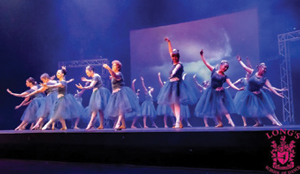 The steadiness begins with the people leading the classroom. Many instructors first came to Long’s as students, became teacher helpers and eventually returned as faculty members. One instructor, for example, started dancing at Long’s at age three, grew into a teacher-helper role, trained across every style the studio offers, competed in Irish dance and later joined the faculty.
Because they were shaped inside the program, they carry forward its values, teaching style and studio culture with consistency. Leadership reinforces that alignment through close oversight and centralized communication, helping families experience the same attentiveness wherever they join.
“We make sure that our faculty members are able to keep our family and values at heart as they move through that working position,” says Jessica Long, instructor.
Building Consistency Across Seven Locations
How does the teaching approach ensure accessibility while preserving technical dance foundations?
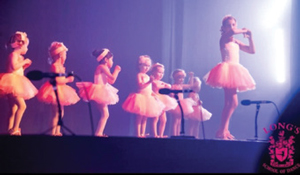 That continuity carries into Long’s approach to teaching. The school is built around the idea that dance should remain accessible without losing its technical foundation. Founder Marge Long, the principal of Dance Educators of America’s Training School for Dance Teachers, based in New York City, for 27 years, helped establish that standard, and its influence continues to shape the curriculum. Teachers work on the floor with students rather than instructing from the sidelines, which keeps learning active and engaged.
Why is progressive curriculum design important for supporting long-term dancer development?
The curriculum grows with the dancer. For younger students, instruction begins with creative movement classes that use props and constant activity to keep them engaged. As they become more comfortable learning alongside others, faculty introduces ballet, tap and tumbling in ways that match their development stage. By third grade and beyond, many are ready for hour-long classes and can begin gravitating toward the forms that suit them best.
-
We make sure that our faculty members are able to keep our family and values at heart as they move through that working position.
Students with special needs are welcomed into regular classes rather than directed into a separate track. Trained faculty and extra helpers step in when needed, supporting a broader range of learners. Inclusion is treated as part of how the studio operates.
Turning Training Into Lasting Growth
In what way do performances and communication strengthen engagement between students and families?
As dancers mature, Long’s opens the door to new challenges. One of the clearest examples is Irish dance that has become a distinctive part of the program. For students drawn to speed, precision and competition, it offers another direction for growth, building on the control, line and footwork developed in other forms.
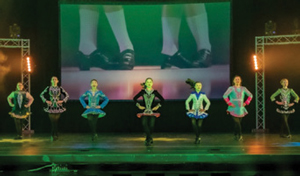 Performance then turns training into something visible and shared. Long’s presents two productions each season, the Long Family Christmas benefit concert supporting children at Shriners Hospital and its annual show at the Warner Theatre. The Warner event brings hundreds of dancers together in a full-scale performance complete with costumes, theatrical effects and a packed audience.
For families, performances can be a defining part of the experience. In a recent case, a parent who came to Long’s from another local program called it a night-and-day change because her child was able to perform in every class she took throughout the season.
The sense of connection extends beyond performance. Parents receive updates through texts, emails, phone calls, forms, practice videos and visitation opportunities that allow them to follow their child’s progress. Long’s further distinguishes itself by continuing through the summer with camps, evening classes and intensives that keep dancers connected and help them return stronger in the fall.
Long’s School of Dance reflects a dance education shaped by family ownership, thoughtful training, inclusion and performance, and carried forward across generations.

