


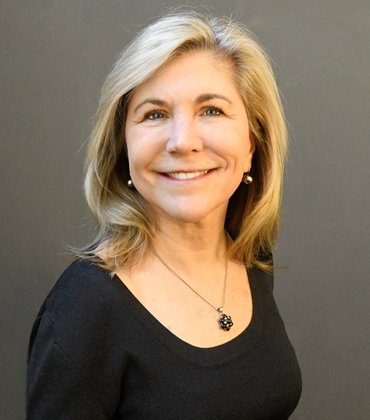
 Mary Fuller, President and Dean
 Lincoln has been making room for those future lawyers for more than a century. Founded in 1919 to provide educational opportunities for returning World War I veterans and other working adults, the school offered evening classes so students could continue earning a living while pursuing their education. Lincoln brought that model to San Jose in 1961. Today, as San Jose's only law school, its four-year evening J.D. program continues to make a legal education possible for people who cannot simply put their careers, families and other responsibilities on hold.
“Our students aren't stepping away from real life while they earn their law degree,” says Mary Fuller, President and Dean of Lincoln Law School of San Jose. “They're bringing real life into the classroom every evening.”
Experience Changes the Classroom
At Lincoln, students do not arrive as blank slates. A student who has managed employees hears an employment dispute differently from someone encountering workplace law for the first time. An entrepreneur brings a particular perspective to contracts and business organizations. Students who have worked in government, healthcare, technology, education or the courts recognize dimensions of a legal problem that may not be obvious from the casebook alone. Those perspectives become part of the education of everyone in the room.
The faculty brings another layer of experience. Lincoln students learn from judges, litigators, government attorneys and practicing lawyers who can take a discussion from what an appellate court held to what actually happens when a client walks through the door with a problem. Small classes allow students and professors to know one another well, and students progress through four years of evening study alongside classmates who understand what it takes to work all day and study law at night.
The result is a classroom in which legal theory rarely remains theoretical for long.
Learning the Law by Practicing It
That connection between the classroom and the profession is increasingly important at Lincoln. Students develop legal writing, advocacy, negotiation, client counseling and trial skills alongside their doctrinal coursework, with growing opportunities to use those skills before graduation.
Third-year student Gabriela Cabanayan recently walked into Santa Clara County Superior Court as a certified law student with the San Jose City Attorney's Office. Working under attorney supervision, she prepared the City's hearing brief and exhibits in a case involving blighted conditions at a vacant building. She then appeared in court, delivered an opening statement and conducted the direct examination of the City's witness. The judge denied the building owner's appeal.
-
Our students aren't stepping away from real life while they earn their law degree. They're bringing real life into the classroom every evening.
It was Cabanayan's first victory in court. Back at the City Attorney's Office, she received a trophy that is passed from litigator to litigator after a courtroom win. She will keep it until the next attorney earns one.
Her participation also marked something larger for Lincoln. The San Jose City Attorney's Office had previously accepted law students only from ABA-accredited schools. Cabanayan is among the first students from a California-accredited law school to be given that opportunity.
Last semester, Lincoln students were putting their developing legal skills to work in another arena. Through Lincoln's Federal Habeas Clinic Project, fourth-year student Janaya Sanchez-Trotter worked under the supervision of an attorney representing people being held in unlawful detention. Over the course of the semester, their work helped secure the release of seven people.
This semester, Lincoln is expanding its experiential opportunities again through a new collaboration with Asian Law Alliance. Students will engage with its Immigration Clinic, working alongside attorneys serving immigrants and families throughout the region.
Representing the City of San Jose in Superior Court, challenging unlawful detention and working with an immigration clinic are very different experiences. Together, they reflect what Lincoln wants its students to understand before they graduate: law is not simply a body of rules to master. Lawyers use those rules on behalf of real people, institutions and communities, and the consequences of their work matter.
San Jose's Law School
Lincoln's relationship with San Jose runs deeper than geography. It is the city's only law school and has been part of the South Bay legal community since 1961. Generations of Lincoln graduates have gone on to become lawyers, judges, elected officials, business leaders and public servants throughout the region.
Lincoln alumnus Dave Cortese represents Silicon Valley in the California State Senate. His own path reflects the model Lincoln continues to offer: Cortese attended law school part time while working full time and raising a family. Other Lincoln graduates serve their communities in ways that are less public but just as important. A graduate may open a practice, become a government lawyer, represent families and small businesses, or become the first attorney someone in a family or neighborhood personally knows.
Sometimes that connection extends from one generation to another. Gabriela Cabanayan's father, Ronald Cabanayan, is an attorney and Lincoln alumnus. When he wrote to the school about his daughter's first courtroom victory, he did so as both a proud father and a graduate watching another generation of his family enter the profession through Lincoln.
Stories like theirs are part of what it means for a law school to have roots in a community. Lincoln's students are not simply preparing to enter Silicon Valley after graduation. Many already live and work here. They know its businesses, government agencies, neighborhoods and families because those are their workplaces and communities too.
At the same time, the profession they are entering is changing quickly. Artificial intelligence is reshaping legal research, drafting and case preparation, particularly in the technology environment surrounding Lincoln. The school is incorporating AI into its curriculum so students learn how to use emerging tools while understanding their limits. Technology can assist legal work; it does not relieve a lawyer of the obligation to exercise independent judgment, ensure accuracy, act ethically and serve a client's interests.
Who Gets to Become a Lawyer?
Behind Lincoln's evening schedule and its approach to legal education is a larger question: Who gets the opportunity to become a lawyer?
The traditional three-year, full-time law school model works well for many students. It does not work for everyone with the ability to succeed in the profession. A parent supporting a family may not be able to stop working for three years. Neither may a first-generation student without a financial safety net, a mid-career professional with a mortgage, or someone who discovers at 35 or 45 that law is the work they want to do.
An evening law school does not make earning a J.D. easy. Lincoln students work during the day, attend classes at night and find time to read, prepare and study around everything else their lives require. The school expects a great deal from them. What the model provides is opportunity.
That word has particular meaning at Lincoln. The school sees itself as an opportunity law school, not because every student who enters is guaranteed to succeed, but because talent, determination and the potential to become an excellent lawyer are not confined to people who can follow a traditional path into the profession.
Two of Lincoln's core values are equally straightforward: grit and community. Both are visible in students who spend four years earning a law degree while managing jobs and families, in alumni who return to teach and mentor them, and in the judges and practicing attorneys who bring their professional experience into Lincoln's classrooms.
They are also visible in what happens afterward. A Lincoln student can go from an evening classroom to a courtroom and win her first case before she has graduated. Another can help seven people regain their freedom in the course of a semester. A graduate can build a neighborhood practice, become a judge, serve in government or be elected to the California State Senate. A Lincoln alumnus can someday watch his daughter stand in court as a Lincoln law student and begin a legal career of her own.
For more than a century, Lincoln Law School has made room in the legal profession for people whose lives do not fit neatly around law school. They bring those lives with them: their careers, families, communities and experience. Lincoln gives them the opportunity to add something else: a law degree, and a new way to put everything they already know to work.

