

The School District of Philadelphia
Leading Change across Public Education
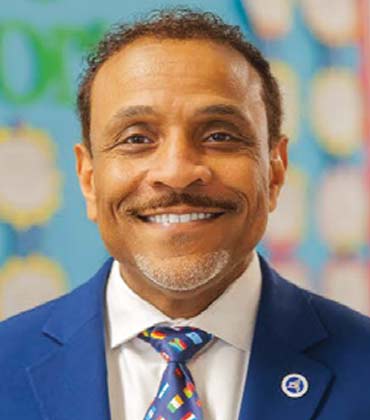
Tony B. Watlington Sr.
Tony B. Watlington Sr., Ed.D., is a collaborative, results-oriented education leader with nearly 30 years of PK–16 experience. His expertise spans strategic planning, instructional leadership and organizational development, with a focus on advancing schools and strengthening partnerships across education and the community.
From the Classroom to District Leadership
I am a first-generation college student, so education has always been important to me. I graduated from North Carolina A&T State University and later earned my master’s and doctoral degrees from The Ohio State University and the University of North Carolina.
I began my career as a high school history teacher before becoming an elementary principal and serving as a high school principal twice. Across those roles, I experienced significant improvements in attendance, graduation rates, test scores and dropout rates among students. Then I moved into central office leadership in North Carolina, serving as an executive director, regional superintendent, chief of schools and chief of strategy. I also served as superintendent of RowanSalisbury Schools before becoming superintendent of the School District of Philadelphia in 2022.
Addressing Forces Shaping Education
I see three trends having a significant impact on how we prepare young people for the future. The first is the declining teacher pipeline. Across the U.S., there has been a greater than 50 percent reduction in the number of individuals choosing traditional colleges of education. In Pennsylvania, that decline has reached 71 percent over the past decade.
“I have learned that we have got to be competitive because we have got to prepare our young people for a competitive international workplace.”
We need to think differently at the national, state and local levels about how we use our resources to rebuild the teacher pipeline. Some alternate paths into teaching are really good, but we also have to figure out how to rebuild colleges of education and increase the number of certificated teachers.
Artificial intelligence is the second major trend. We are working with the University of Pennsylvania for a generative AI 101 training because AI has huge implications for education. If we do not get ahead of this curve, we risk losing our competitive edge. I do not believe that AI will replace teachers, and it should not replace teachers. There are many implications we are still learning about, and we absolutely must pay attention to them.
The third trend is the sheer amount of information students can access through AI, cell phones and other sources. Some information is reliable, some questionable, and some is just not good content. We have to teach young people how to sift through all that noise and make sense of information in the hyper-partisan world we live in. Civics and social studies will become increasingly important because students need to evaluate information and understand the world around them.
Building Trust through Better Outcomes
One of the biggest lessons I have learned is that we have to better educate the public about the value of public education. We also have to tell the story about what is happening that is good in public schools.
Consistently improving student outcomes is essential because the data do not lie. In Philadelphia, we have worked strategically to increase academic performance and graduation rates and decrease the dropout rate by half. On average, more than 4,000 children drop out of school in the district. We have cut that in half, but where we are is absolutely not good enough.
We have to change how we do public education so more students graduate college- and career-ready, participate in the middle class, create generational wealth and contribute to society. We have to remain competitive because our responsibility is to prepare young people for a competitive international workplace.

Get the best of Education Insider delivered directly to you.
