

TREE Academy
Learning with Real-World Impact Beyond The Classroom
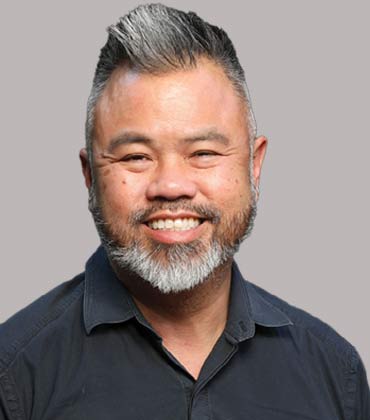
Phu Tranchi
Phu Tranchi is an experienced education leader with a career shaped through decades of classroom teaching and school leadership. As Head of School at TREE Academy, he leads a progressive, student-centered learning model grounded in experiential education, community engagement and real-world application. He draws on his prior roles as Director of Community Engagement and Experiential Learning at Oakwood School and Principal of General Studies at Shalhevet High School to advance inclusive learning environments that emphasize purpose, equity and student agency.
This feature examines Tranchi’s leadership journey and the experiences shaping his philosophy. He reflects on how teaching across diverse contexts, returning to the classroom as a learner and leading small school communities informed his commitment to experiential learning, humility and student-centered practice.
Tracing the Path to Educational Leadership
Beginning a doctoral program in educational leadership at UCLA, I went back into the classroom at Oakwood School, where I applied experiential learning principles in daily practice. That period strengthened my work in experiential learning pedagogy and leadership, translating theory into action and reinforcing my belief in learning grounded in experience, reflection and real-world engagement.
The same journey led to my current role as Head of School at TREE Academy, a small progressive independent school in West Hollywood serving grades six through twelve. With fewer than one hundred students, the school supports flexible structures and an authentic learning model aligned with my vision.
“Experiential education enables students to become change-makers, especially when educators support ambitious thinking that extends beyond traditional learning.”
Functioning as both principal and CEO of the school’s nonprofit organization, I oversee academics, student life, operations, outreach, recruitment, advancement and fundraising. The role requires continual shifts in focus across students, educators, families and leadership.
Experiential Learning as a School-Wide Approach
Experiential learning, as defined by the Independent Schools Experiential Education Network, emphasizes personal connection to deep, applied learning and growth for both students and teachers. The broader aim is to prepare active global citizens committed to a more just, equitable and sustainable world.
Far from being a standalone program, it is a school-wide approach that centers students through purposeful immersion, allowing them to shape learning while remaining grounded in a real-world context.
Effective experiential learning connects students to real problems and environments. This requires permeable school walls and treating the city as an extension of the classroom. At TREE Academy, the resources of Southern California and Los Angeles across industry, culture, nature and civic life become integral to learning. Field experiences, site visits and sustained partnerships with local, regional and national experts raise academic expectations. Partnerships with Native American advocacy groups illustrate this model, where learning extends beyond single presentations into ongoing engagement and shared inquiry.
Experiential learning also includes travel and immersion. An inaugural civil rights learning trip through Birmingham, Montgomery and Selma, in partnership with The Nobis Project, allowed students to engage directly with history. Students examined the contributions of widely recognized leaders alongside the lesser-known individuals and unsung heroes, including youth and women, whose work sustained the movement. These lived narratives deepen understanding well beyond traditional texts.
I led this approach in practice at Oakwood School, where modest ideas led to ambitious student outcomes. One initiative involved a space program in which students designed microgravity experiments in science classes. Selected projects were sent to the Space Station using the same submission process required of NASA researchers. That level of authenticity reflects meaningful learning and exceptional achievement.
In another case, students began with lunchtime club meetings about girls’ access to education. Those students went on to design and fund sanitary pad machines in Afghanistan and rural India, and their work evolved into The Pad Project, now a global NGO. These students and their English teacher produced the Academy Award-winning short documentary film “Period. End of Sentence., raising global awareness on menstrual equity. These real-world outcomes grew from trust, agency and the space to pursue real work with real impact.
The bottom line is that experiential education enables students to become change-makers, especially when educators support ambitious thinking that extends beyond traditional learning.
Building Culture through Teacher Investment
Strengthening school culture is an opportunity to enhance student growth, teacher empowerment and learning conditions, all of which are deeply connected. But true culture begins with teachers, who remain the most critical investment in any school and directly shape student outcomes.
Teachers deserve the same care, trust and support leaders expect them to provide students. When schools invest intentionally in teachers, instructional quality improves and long-term impact strengthens across the school community.
My priority is building a culture of growth through learning-centered leadership. Whether as a teacher, leader, or student, remaining a learner keeps schools responsive and adaptive. When teachers engage as learners, classrooms reflect empathy, compassion and joy. This mindset anchors experiential learning.
Balancing Technology with Experiential Learning
Going forward, education will continue moving deeper into digital learning and AI. Schools must guide the responsible use of these tools with clear attention to benefits, limitations and risks.
Preparing students for the future is less about predicting specific roles and more about building durable skills. As many future jobs remain undefined, schools should develop student perspective, adaptability and judgment so they can help shape what comes next. Grounding technology use in values such as the Sustainable Development Goals ensures innovation remains centered on people and the planet.
Experiential learning remains central through this shift. Digital tools matter, but learning cannot exist solely on screens. As an experiential learning school, we offer a strong elective program that integrates varied technologies. Music production, recording studios, DJing, podcasting and visual arts blend digital and analog tools to support applied learning.
A culinary arts program extends learning into food systems, sustainability and hands-on skill development through a working classroom kitchen. Alongside 3D printers, woodworking programs further build practical skills and creativity.
Research continues to highlight the developmental value of tactile learning. When technology supports learning without replacing connection, students benefit. That balance will shape effective education in the years ahead.
Leading Change through Teachers
One of my favorite quotes is “Leadership is not about being great. It is about enabling others to be great.”
More than a focus on making your school better, a commitment to making your teachers better should be the core driver because transformational change begins with teachers. Through daily work with students, they define the quality of learning and educational programs. This is why investing in teachers is the most impactful decision school leaders can make. Moving beyond one-size-fits-all development toward understanding teachers as individuals strengthens schools and improves outcomes.
One more important aspect is fostering strong leadership that is rooted in self-awareness. Personal experience shapes values, decisions and vision. When leaders understand this connection, alignment with the school mission becomes clearer. Helping teachers connect their personal experience that shapes their values and vision to the school’s mission builds shared purpose and long-term commitment across the community.

Get the best of Education Insider delivered directly to you.
