

Wharton County Junior College
Reimagining the Library for the Age of AI
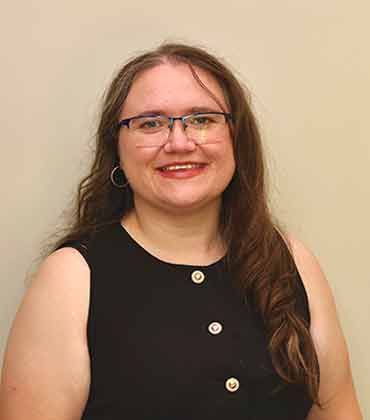
Naomi Ruby
Naomi Ruby is a library and information services leader with experience spanning K–12 education, university librarianship and higher education. At Wharton County Junior College, she advances user-centered library services, information literacy, accessibility and responsible technology use, helping students navigate increasingly complex information environments and supporting institutional learning and success.
A User-Centered Approach to Library Leadership
My approach has been shaped by working across K–12 education, university librarianship and higher education leadership. Each environment taught me that information is useful only when it can be understood by those seeking it. Access should be intuitive, minimizing unnecessary clicks and the insider knowledge required to find and use materials.
Community college students bring different levels of academic preparation, technological access, confidence and familiarity with higher education. We must actively reduce barriers, teach students how to navigate complex information environments and design services that respond to the realities of their lives.
These experiences have led me to view library leadership as user-centered systems work. Library school taught me that decisions about collections, organization and access must begin with how people will actually use them. Collections, technology, instruction, spaces, staffing and institutional partnerships must function together. The goal is not to preserve a particular model of the library, but to build an adaptable system that helps students and employees succeed.
Balancing Access, Technology and User Needs
I begin with purpose rather than technology. The question is not simply whether a tool is new or impressive, but whether it improves access, learning, or the user experience.
At Wharton County Junior College, we have worked to make library services easier to discover and use across multiple campuses. This includes improving authentication and discovery, expanding virtual assistance, strengthening instructional support and making accessibility fundamental to service design. We use feedback and service patterns to identify where people encounter barriers.
Emerging technologies, including generative AI, create both opportunities and responsibilities. Libraries should help users understand how these tools work, where they may be useful and where bias, inaccuracy, privacy concerns, or overreliance can create problems. Our responsibility is to help users navigate this changing information landscape thoughtfully and contextually.
Building Collaborative Teams and a Culture of Learning
My favorite question is “Why?” I ask it frequently within my team and across the institution. Understanding our purpose provides the foundation for effective collaboration and creates an environment in which learning and innovation are welcomed. As Simon Sinek has emphasized, knowing our “why” matters. At the library, our “why” is learning and student success. If a process or established practice creates unnecessary barriers for students, then it is not fully serving the library’s mission.
Students experience the college as a whole, not as a collection of departments. I have learned to build collaborative relationships early and to say yes to partnerships whenever they are feasible and aligned with our mission. Libraries, tutoring, instructional technology, advising and other academic and student support areas bring different expertise, but our work is strongest when those areas communicate and collaborate.
“Innovation is most sustainable when it becomes part of everyday practice rather than depending on one person or an isolated project.”
Continuous improvement also requires shared vision and values. People need room to ask questions, learn and try new approaches while understanding how decisions are made and how their work contributes to shared goals. A culture of inquiry also requires leaders to examine their own assumptions and decisions. Innovation is most sustainable when it becomes part of everyday practice rather than depending on one person or an isolated project.
Navigating AI and the Future of Information Services
The common, easy answer is artificial intelligence, but the issue goes deeper than that. The continued reduction of barriers to information has created a complicated environment for education. More information is available than ever, but increased availability does not necessarily make information easier to understand, evaluate, or use responsibly.
Libraries have spent decades proclaiming that they are more than books. While that is true, books remain central to how many people understand the library. Our greatest strength, however, has never been a particular format. It is our ability to help people find, evaluate and make sense of information.
We know that libraries provide access. That is old hat. What is the new hat? Artificial intelligence is changing how people search for, create and evaluate information. Verifying authorship, assessing authority and understanding how information was produced have become increasingly difficult. As a result, teaching information literacy will become even more essential.
Libraries will also continue moving toward integrated physical and digital services. Users do not think in terms of separate databases, buildings, platforms, or departments; they want a clear path to the information or assistance they need. Libraries must prioritize accessible design, responsible technology use, interoperability, privacy and personalized human support. As information becomes more abundant and accessible, the library’s value will increasingly lie in helping people make sense of it.
Advice for Aspiring Library Leaders
Learn to see both people and systems. Spend time experiencing services as a user and approach that experience with curiosity. Learn to love questions. Be willing to explore failed initiatives and examine processes closely until a better approach emerges.
Library leaders need technical knowledge, but they also need curiosity, empathy, sound judgment and the ability to build relationships across an institution. Hold intent loosely and pay close attention to what patrons actually experience. A service may be thoughtfully designed and still create unnecessary barriers. Let the gaps between intent and experience teach you what needs to change.

Get the best of Education Insider delivered directly to you.
