

Toronto Catholic District School Board
Building Better Schools through Shared Leadership
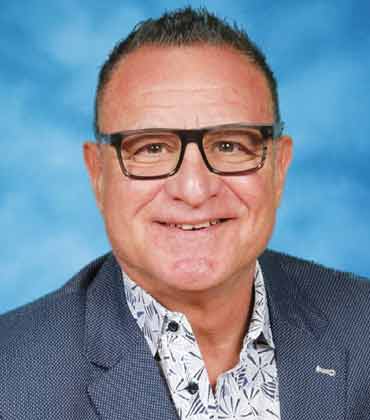
John D'Onofrio
John D'Onofrio brings 38 years of dedicated educational service, leadership and system-wide vision to his role as Principal of Father John Redmond Catholic Secondary School and Regional Arts Centre, within the Toronto Catholic District School Board (TCDSB). Beginning as a secondary English teacher at De La Salle College “Oaklands” and Dante Alighieri Academy, he later served as English Department Head, leading literacy initiatives and mentoring educators. In 2015, he transitioned into administration as Vice Principal with TCDSB. His leadership emphasizes collaboration, inclusive school cultures and student success.
An Educational Experience Leading To School Leadership
It is important to trust and support your staff. Trust and allow your veteran teachers to lead professional learning, to coach, to share best practices. Good leaders recognize excellence, distribute leadership, and build leaders.
An effective leader cannot lead in isolation. You cannot run a school from your office. The school is a shared experience that requires shared leadership. You cannot lead alone. Involve your leadership team in planning and monitoring initiatives and hold them accountable.
We live in a world of buzzwords, acronyms, top-down mandates and short-lived initiatives. Leaders must be able to filter and navigate all of these.
Protect your time and your staff’s time; ask yourself, “What will directly benefit students”? As leaders, we need to balance our professional expertise and instincts with system priorities. Implement initiatives in the context of what is best for our school. We need to ask, “How do the initiatives align with our vision and goals of the school year?
Yes, data and test scores are a part of the story. However, data may not always capture the whole story. Do not ignore the human element.
Fostering a Positive and Supportive Learning Environment
Be present and visible. Get out of the office and go for a walk in the halls, visit the classrooms, the cafeteria, watch a game or attend a performance.
Greet students as they come into the school in the morning. Have teachers greet students at the classroom door. Make sure students feel welcomed, that they matter, that we are happy to see them, and that they are in a safe place. Students will remember the teacher who made them feel seen and the administrator who knew their name.
Praise effort. Change how you deal with “mistakes.” Have school-wide celebrations of positive outcomes.
Put students above and before the curriculum. Students should be the centre of our decisions.
Get to know students’ names and how to pronounce them. Talk and listen to the students.
Have open and timely communication with families to keep them informed so they see themselves as partners in their children’s education.
Acknowledge and honour the diverse cultures and lived experiences, feelings and perspectives of students and their families.
Set high expectations. What are our school’s nonnegotiables? Be transparent.
Leadership Lessons in Working with Educators and Families
It is important to own your mistakes, learn from them and apologize when necessary. Admit you do not know everything and seek to understand before responding. Do not automatically become defensive and jump to conclusions.
Address concerns early, but understand not every situation requires immediate attention. Be sure to respond thoughtfully only after gathering information and considering the impact of your decisions.
It is important to establish trust and a feeling of mutual respect and a “we all have a stake in this’ attitude. As stakeholders, we all share a common goal.
Foster a culture of collaboration. School is a partnership, so power can be shared.
“An effective leader cannot lead in isolation. The school is a shared experience that requires shared leadership. Involve your leadership team in planning and monitoring initiatives and hold them accountable.”
It is important to support and empower teachers, honour their needs and respect and protect their time. Avoid micromanaging teachers. Encourage collaboration, offer and be receptive to constructive feedback. Give staff time to meet and collaborate.
Realize that our choices, our voice and actions shape our schools. We must believe that our leadership can positively impact students, staff and the community.
We need to balance our professional expertise and instincts with system priorities. Initiatives must be implemented, but in the context of our schools. Hold all staff and educators accountable. Do not play favourites and do not excuse poor practices. Do not allow bureaucracy to get in the way.
Every decision we make will come under scrutiny and everyone will have an opinion. Know what you stand for and what your virtues are.
Changing Student Needs Shaping School Leadership Priorities
Rising rates of mental health issues (anxiety, depression, social isolation) have forced our focus to shift. Social and emotional learning awareness (emotional intelligence) is required for academic success.
Social media, technology and the rise of AI have presented new challenges: How can we use these to enhance learning while at the same time maintaining the human element?
What about the socioeconomic technology gaps? Who has access to what, and what advantages and disadvantages do this present? Talk about equity and inclusion. How do we close the gaps? How can technology close the gaps and create more equitable learning opportunities for everyone?
Cultivating Educator Skills for Tomorrow
The role of educators is evolving at a remarkable pace. Recognize that change is inevitable but necessary for growth and survival.
Educators must know how to manage their own emotions while supporting students with mental health issues (anxiety, depression, isolation, etc.)
Know and understand the ever-changing technology and artificial intelligence, how it is impacting teaching and learning, and what is acceptable use and what is not. Teaching requires constant learning and professional development to keep pace with the changing educational landscape and changing generations. You should ask, “What do we need to know and do to continue developing independent thinkers, analytical people and collaborators?”
Be adaptable, creative and flexible. Keep exploring how we address the diverse learning needs of all students. Differentiated Instruction and Universal Design for Learning is needed now more than ever to accommodate various learning styles and student backgrounds.
Data is important, but so is feedback and observation when it comes to tracking student progress.
Continue to promote and support the Arts. Participating in the Arts boosts cognitive and social skills.
Continue to be mentors to stimulate curiosity and provoke and engage students. Maintain a positive mindset and keep expectations high.

Get the best of Education Insider delivered directly to you.
