

Notre Dame High School, San Jose
Guiding a Historic School into Its Next Chapter
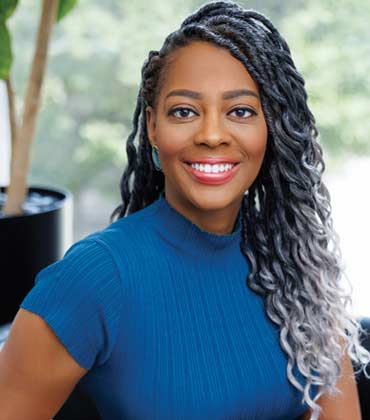
Ashley Rae Mathis
Ashley Rae Mathis brings more than 18 years of experience across classrooms, cities and continents to her role as Head of School at Notre Dame High School. From teaching kindergarten in Nevada to working in Southern California, Dallas, and South Africa, her journey reflects a deep-rooted commitment to education as both a profession and a calling.
In this feature, Mathis shares how leadership, equity and justice shape Notre Dame’s approach to education, illustrating how historic institutions can remain relevant, inclusive and future-ready while staying grounded in mission and impact.
A Career Grounded in Mission, Purpose and Legacy
My connection to education runs deep. I was raised in public school systems because my family believed strongly in the value of public education, the diverse communities served, and the access and equalizing opportunities such schools could provide. Education was not simply a career path in my household; it was a way of life. My parents, Raymond Mathis and Dr. Beverly Mathis were both educators. My family’s legacy continues to permeate the West Coast through an elementary school in Las Vegas that bears my mother’s name.
| At a Glance
✔ More than 18 years of experience in teaching and educational leadership ✔ First Head of School (of color) in Notre Dame’s 175th school history ✔ Champion of women’s education, Catholic and inclusive, equity-focused schools |
Petitioning the city of Las Vegas to name a school after an educator who started her profession desegregating schools in the South, who then committed 50 years to serving underfunded impoverished communities was a powerful reminder of how education shapes leaders and transforms communities across generations.
I began my career teaching kindergarten in Nevada and went on to serve in a variety of educational roles across Southern California, Dallas, and South Africa. Each experience broadened my perspective on how schools can serve diverse students equitably and holistically. Years of teaching in the classroom, curriculum development, recruitment, and leadership in varied school settings ultimately prepared me to step into my current position.
“The focus must shift from just grades. College placements and career titles are notable. Equally essential is who students become, what transferable skills they can apply, and how they use their influence to impact communities—right now.”
Leading the oldest high school in the state of California carries remarkable privilege and significant responsibility. Being the first appointed Head of color amplifies both and adds an invisible, often unnamed, elevated layer of expectation. On a daily basis, I take seriously my charge to lead with authenticity, to transform with intention and to model what I hope will be the blueprint for aspiring school leaders. Founded in 1851, Notre Dame High School is a Catholic, inclusive, college-preparatory school for young women who strive to be lifelong learners, spiritual seekers, justice advocates and spiritual leaders (NDSJ’s graduation outcomes).
Inspired by Saint Julie Billiart and the Sisters of Notre Dame de Namur, the mission to “teach them what they need to know for life” guides our academic priorities and our community impact. So, why Notre Dame High School and why now? Yes, representation matters. Being among the 2% of Black/African women school heads in the United States matters. And, mission alignment is a notable consideration. Notre Dame is the Center for Women’s Leadership in Silicon Valley. Our learning community is breaking historical barriers by leaning in—to create empowered women, to be Catholic and faith inclusive, and to educate for leadership and justice.
Distinctive Programming and Community Impact
Ensuring excellence across academics, co-curricular programming, SEL support, mission formation and service learning, requires a growth and sustainability mindset. It begins with people. Strong community partnerships define our identity as a school. Located in the heart of downtown San Jose, Notre Dame benefits from steadfast internal relationships (board, faculty, staff, students, parents, caregivers, alums) and local, community partnerships that actively invest in our mission and priorities.
Faculty retention is one of our greatest strengths. Many educators have served this community for decades, and that continuity strengthens both culture and outcomes. Lifelong learning is not only expected of students but modeled by faculty. Professional development is not treated as an obligation. It is an extension of our identity as a Notre Dame learning community, and that investment directly supports student growth and achievement.
This commitment is reflected in measurable academic results. Nearly all students enroll in Advanced Placement or Honors coursework, with the average student completing approximately 13 such courses. In May 2025, students completed nearly 1,000 AP exams, with most earning passing scores. College readiness is further demonstrated through standardized testing, with SAT and ACT performance exceeding both state and national benchmarks. Each year, nearly all graduates matriculate to two- or four-year colleges, with more than one-third enrolling in highly selective institutions.
National Merit recognition appears annually across graduating classes, and community impact can be measured by the number of hours students commit to service learning and advocacy work (seniors devoted over 17,000 hours to this in our Class of 2025) and distinctive student programming unique to Notre Dame: Woman’s Place Project: For more than 30 years, generations of Notre Dame students have been empowered to showcase the accomplishments of women leaders as they develop their own pathways to becoming women of impact. Inspired by artist Judy Chicago’s iconic feminist installation, The Dinner Party, featured leaders have included: Sonia Sotomayor, Michelle Obama, Fei-Fei Li, Malala Yousafzai, Marie Curie, and Ketanji Brown Jackson. In religious studies, fine arts, history, and English, students engage in research, writing, and public speaking as they explore what it means to be a woman of impact.
ND Reads: Each year, Notre Dame selects a book to read and examine as a community that deepens our school's culture of Education for Justice and Leadership. This program engages students, faculty, alums, and friends in academic scholarship and intentional dialogue that reflects our Catholic identity.
Over the past 18 years, the ND Reads program has touched on many topics. We’ve traveled to Africa to study the Rwandan genocide, experienced the oppression of the Taliban through the eyes of Afghan women, explored how government policies have perpetuated racial segregation in America, and celebrated the power of art to overcome intolerance — to name just a few.
Our most recent 2025-26 community-wide read was The Anti-Ableist Manifesto: Smashing Stereotypes, Forging Change, and Building a Disability-Inclusive World by Tiffany Yu. Inspired by her Anti-Ableism Series on TikTok, the book is a revelatory examination of disability for any ally to go beyond mere awareness to become an active anti-ableist and help form a more equitable society for all.
Race Equity Diversity and Inclusion (REDI) Programming and Initiatives:
● TASC Justice (Teaching, Advising and Serving our Community)
● First Scholars (To holistically support first-generation college students)
● Facing History
● Democracy Matters
● League of Young Women Voters
A most recent example of programming, community, and impact is: On January 30, 2026, Notre Dame’s Associated Student Body led “Standing in Solidarity with the National Shutdown,” followed by a February 3, 2026 call to action—a student-led walkout through downtown San Jose (550 students, 45 faculty and staff). Timely. Collaborative. Powerful.
Tradition, Innovation, Strategic Advancement
Balancing tradition with innovation is central to our approach. In our current climate, it’s imperative for longstanding schools to honor their origins while they work to evolve. That balance allows us to remain relevant while staying grounded in purpose. Programs such as robotics, speech and debate, and being the first school in Santa Clara County to offer girls’ flag football reflect our eagerness to expand access and innovatively lead.
Equity-driven initiatives extend beyond academics. Our first-generation scholars program supports students who will be the first in their families to attend college. Our student body reflects Silicon Valley’s cultural and socioeconomic diversity, with many students coming from multilingual households and a significant portion receiving financial assistance. Access and advocacy are inseparable, and our programming reflects that belief. Looking ahead, we are preparing for a capital campaign to expand and modernize our campus, ensuring our physical spaces evolve alongside our educational vision.
As technology continues to transform education, thoughtful integration is essential. AI and digital tools should support learning, not replace critical thinking. We emphasize writing, reasoning, and reflection, ensuring students develop skills that extend well beyond academic metrics. Flourishing in the heart of Silicon Valley presents a unique opportunity. In our immediate future, we will fully embrace STEAM education, integrating science, technology, engineering, arts, and mathematics in ways that reflect our vibrant, unique downtown environment. The city truly is our classroom offering cultural, artistic, and experiential learning that supports creativity, wellness, and interdisciplinary thinking and skill building.
This is an ongoing movement, not simply a moment. A rare opportunity for education to evolve in ways it has not for over a century. While many industries have transformed their models, classroom structures have remained largely unchanged. Emerging technologies and shifting learner needs invite us to rethink how education is designed and delivered.
The focus must shift from just grades. College placements and career titles are notable. Equally relevant and essential is who students become, what transferable skills they can apply, and how they can use their influence to impact communities—right now. Globally, society overlooks the fact that education touches every profession; industries that currently exist and those to be developed in future years. Taking this into account, education truly is power. For 175 years, Notre Dame High School has refined that distinct power to offer access, tools and pathways to young women who seek bold leadership. If any school is going to reimagine the future of education and build a blueprint for women’s leadership, it will be—it is—Notre Dame High School.
The Part of Leadership Few Talk About
In 2026, leading school communities is a demanding charge with intellectual, emotional and ethical opportunities and challenges. If I could offer encouragement to fellow school heads, presidents and principals, it would be: remember your why. For many of us, especially Catholic educators, we believe education is a calling. So in moments of adversity and uncertainty, returning to that purpose matters. I hope my superpower as a spiritual leader is leading and listening, with my head and heart. If I can do that well on a daily basis, my love for students, for faculty and for community, will not soon change.
If I can offer advice to aspiring school leaders, heads, presidents and principals, it would be: Lean in. Say yes. Invest in education. Schools are in need of your talent, your mind and your innovation. Our world needs change and change begins with schools. What are you waiting for?

Get the best of Education Insider delivered directly to you.
