

Prestonwood Christian Academy
Why Tomorrow's Schools Need Purpose before Progress
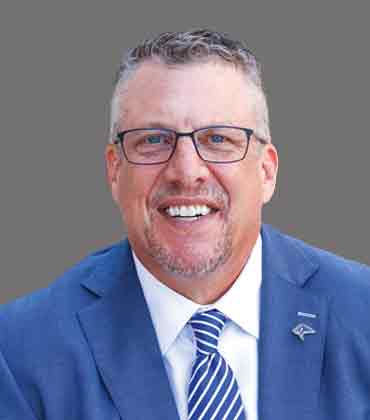
DR. Mike Goddard
When Dr. Mike Goddard walks through the halls of Prestonwood Christian Academy (PCA), he does not see classrooms, enrollment numbers, or operational challenges. He sees names, stories, and opportunities.
For Goddard, who has served as Superintendent of two public school districts—Lovejoy and Red Oak—as well as Assistant Superintendent at Prosper and now Superintendent of PCA, education has never been simply about preparing students for the next test, degree, or career milestone. It is about preparing them for a world that is changing faster than ever while helping them remain anchored in who they are and what they believe.
That philosophy has shaped a career that spans nearly three decades across public and private education. Before leading PCA, Goddard spent approximately 20 years in public education, beginning as a speech and debate teacher before moving through roles as a school leader, assistant principal, dean of students, and principal. The transition into Christian education six years ago marked a new chapter, but the underlying mission remained familiar: helping young people discover their potential and use it meaningfully.
Today, Goddard views his role less as an administrator and more as a steward of a mission entrusted to him for this season of leadership.
“I’ve always felt like my role as a superintendent is really about stewardship — how I’m entrusted with people, students, resources, and a mission,” says Goddard. “We have a short window of time with students to be able to fulfill that mission with them.”
That mindset influences every aspect of his leadership, from academic strategy and technology investments to teacher development and school culture. At a time when education leaders are navigating unprecedented change, Goddard’s approach is built around a simple idea: institutions must evolve without losing sight of why they exist in the first place.
Preserving the Foundation While Preparing for the Future
The challenge facing many educational institutions today is balancing the stability of tradition with the urgency of innovation. Goddard believes schools often make the mistake of assuming they must choose one over the other.
“I think one of the biggest mistakes we can make in education is that we tend to have to choose between tradition and innovation,” he says. “I don’t believe we have to. There are things that PCA will never change — Christ at the center, our biblical truth, academic excellence, our belief that we need great teachers and meaningful relationships. But how we prepare students has to evolve.”
That philosophy has become central to PCA’s growth strategy. The school continues to invest in areas designed to prepare students for a rapidly changing economy, including artificial intelligence, STEM education, robotics, engineering, entrepreneurship, communications, and broadcasting.
“ As students graduate, I want them to walk out the door and be godly men and women who know Christ, love others, and are prepared to make a difference. “
For Goddard, innovation is not about adopting technology simply because it is popular. It must serve the mission, not become the mission. Artificial intelligence is one example. Rather than treating AI as a disruption to avoid, PCA views it as a reality students must understand. The question is not whether students will encounter AI, but whether they will have the wisdom and judgment to use it responsibly.
Goddard believes schools have a responsibility to prepare students for that reality by teaching them not only how technology works, but how to think critically about its impact. Students entering the workforce today will encounter tools and challenges that previous generations could not have imagined. The ability to adapt, communicate, collaborate, solve problems, lead, and use technology responsibly will become just as important as traditional academic knowledge.
Building a Culture Where People Flourish
While technology and innovation are shaping the future of education, Goddard believes the foundation of every great school remains unchanged: people.
A school can have strong curriculum, advanced facilities, and innovative programs, but its success ultimately depends on the educators who bring those elements to life. He believes schools cannot expect students to grow if the adults leading them are not continuously learning themselves. At PCA, that philosophy has translated into creating opportunities for educators to collaborate, explore emerging technologies, strengthen their instructional practices, and continue developing both professionally and spiritually.
Goddard emphasizes that growth happens when people feel valued and trusted. His leadership approach centers around creating an environment where employees understand that their work is more than a job; it is part of a larger purpose.
That philosophy has also shaped PCA’s emphasis on what Goddard calls “unreasonable hospitality,” intentionally creating experiences where students, families, and employees recognize that they matter.
The concept reflects a broader leadership principle: culture is not built through statements on a wall or values written in a handbook. It is created through thousands of daily interactions.
For Goddard, that means staying connected to the people the institution serves. He believes superintendents can easily become consumed by meetings, budgets, emails, and operational demands that he describes as the “management monster.”
The solution is visibility: walking through hallways, visiting classrooms, attending student events, listening to teachers and talking with families.
Those moments, he believes, keep leaders connected to the purpose behind every decision. Enrollment numbers represent students with individual stories, and every strategic decision ultimately reaches a classroom, a family, or a community member.
Leading Into the Next Generation of Education
As PCA celebrates its 30th anniversary and looks toward the future, Goddard sees education entering one of its most exciting eras. The challenges are significant, but so are the opportunities.
The next generation of students will enter a world shaped by artificial intelligence, emerging industries, and constant change. Yet Goddard believes the qualities they need most are timeless: wisdom, discernment, courage, adaptability, and a strong sense of identity.
For Christian education in particular, he sees an opportunity to provide students with both the skills to navigate the future and the foundation to do so with purpose. The goal is to help them navigate a changing world without allowing that world to determine who they are.
The ultimate measure of success, he says, is not found only in academic achievements, college acceptances, championships, or accolades. Those accomplishments matter, but they are not the destination.
The goal is who students become.
“As students graduate, I want them to walk out the door and be godly men and women who know Christ, love others, and are prepared to make a difference,” says Goddard.
That vision reflects the larger story of his leadership journey. From a classroom teacher to a superintendent guiding a growing institution, Goddard has remained focused on the same fundamental belief: education is ultimately about people and preparing them not simply to make a living, but to make a difference—leading courageously, serving humbly, and impacting the world for Christ.
The schools that thrive in the coming decades will not be the ones that simply chase the newest technology or the latest trend. They will be the ones that understand what should never change while having the courage to rethink what must. For Goddard, that balance is the future of education: staying deeply rooted while moving relentlessly forward.

Get the best of Education Insider delivered directly to you.
