

Burr Oak Community Schools
Building Stability in a Changing School System
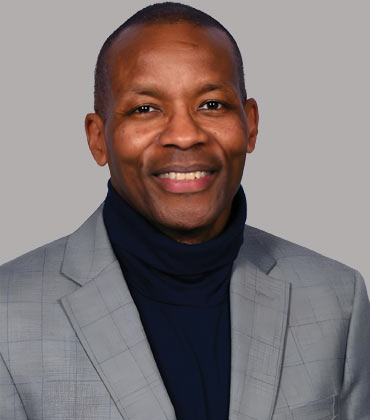
Dr. Kelvin Butts
Dr. Kelvin Butts is a transformative educational leader committed to student success and district stability. After leading meaningful academic and financial improvements at Benton Harbor Area Schools, he now serves as Superintendent of Burr Oak Community Schools, applying a collaborative, data-driven approach to strengthen classrooms and long-term student success.
A grounded, student-first philosophy positions Dr. Kelvin Butts as a respected educational leader and earned him recognition as one of the Top School District Superintendents of 2026. In this feature, he reflects on his journey from classroom teaching to district leadership and shares his perspective on the structures, accountability and community engagement that drive effective school governance and long-term student success.
Leadership Forged Across Every Level
My journey in education started where learning is most personal—the classroom. I spent more than a decade teaching biology and anatomy and over time expanded into chemistry, earth science, environmental science and physics. Teaching across rural, urban and suburban communities in Georgia gave me a front-row view of how differently students learn and how much teachers need strong support to meet those needs.
Administration came later, first in Georgia and then in Michigan, with Benton Harbor Area Schools. I served in several leadership roles before becoming Interim Superintendent and then Superintendent. Those years were about turning instability into footing. Step by step, we rebuilt both academic confidence and financial health.
Through careful use of COVID-19 relief funds and Michigan’s debt forgiveness program, our fund balance grew from $4 million to $26 million. That stability allowed us to reinvest in students and spaces: 32 mini-diverse libraries, a refreshed curriculum across subjects, improved cafeterias, two new gym floors, a new track, new boilers, and a new elementary playground. Each investment sent a simple message: students deserve environments that reflect their potential.
“Students have a genuine affinity for learning and we work to support that curiosity.”
Today at Burr Oak, I oversee fiscal management, academics and community relations. Every decision from the central office must earn its way back to the classroom. My responsibility is to keep the district steady while creating a forward-looking environment for our Bobcat family.
Balancing Accountability, Equity and Whole-Child Learning
Leading a district today means standing in the middle of competing demands. I see my role as a buffer. I handle the adult-side pressures of policy, politics and compliance so educators can keep their attention on students.
Fiscal stewardship is part of that protection. We work within our budget but remain intentional about directing resources where they matter most. I treat federal and state requirements as a baseline, following established rubrics and guidelines to keep the district in good standing, while framing every decision through a student-centered lens. My goal is to ensure equity is not a buzzword, but a daily practice, with resources aligned to individual student needs for collective success.
Empowering Educators to Drive Student Success
I believe in leading by example and cultivating a culture of psychological safety. High expectations are only sustainable when they are supported by continuous, high-quality training and coaching. My aim is to move away from a “gotcha” mindset and toward an environment grounded in growth, trust and professional development.
When teachers and principals feel supported and are free to innovate and even make mistakes without fear of retribution, they become more effective educators. I often remind my staff that students are only as well-equipped as their teachers. By prioritizing collaborative professional learning communities and leading with transparency, we foster a culture of lifelong learning where everyone is aligned around a shared goal: student success.
That same commitment to supporting educators must be reflected in how we value and compensate them. When I arrived at Burr Oak Community, teacher pay lagged behind neighboring districts. To address this, I conducted a salary study with school board member Mr. TJ Baxter, which informed the development of a compensation scale benchmarked against surrounding districts while remaining mindful of our fund balance. With approximately 200 in-person and 200 online students, we designed a five-year, financially sustainable plan.
The study strengthened our ability to attract and retain high-quality educators, fostering stability and continuity in student–teacher relationships. In a small community, these relationships are essential and play a direct role in sustained academic growth.
Personalized Support in Every Classroom
Curiosity is already there in students. Our job is to keep it alive. Our hybrid model helps us do that in a post-COVID world. Equity guides our approach: online students receive structured follow-ups, mentoring and nearby testing sites, while in-house students receive personalized support. For hard-to-fill positions, we use a “live lab” model, with a classroom monitor in the classroom and a teacher providing live instruction remotely, allowing students to experience uninterrupted, interactive learning. If a student falls behind, completing only part of their work, the classroom monitor contacts the teacher, who then identifies gaps and provides targeted support. This system ensures every student gets the guidance they need to succeed.
Accountability That Drives Results
Students don’t all learn the same way. Some thrive through projects, others through inquiry and others with step-by-step guidance. Data helps reveal these patterns.
I treat data as a flashlight, not a hammer. While it may ‘speak for itself,’ data should illuminate possibilities rather than enforce rigid, one-size-fits-all practices. It should guide thoughtful, flexible approaches.
Doing what is right for students often means doing something different for each one. Our use of data is always driven by student growth, not mere compliance.
Strengthening Education Through Community Engagement
My leadership philosophy is built on transformational leadership. A true leader should 'work themselves out of a job' by preparing the next generation. In Benton Harbor, I enrolled principals in superintendent academies to expose emerging leaders to the behind-the-scenes roles, including politics, fiscal responsibilities, and state mandates.
Succession planning protects continuity. In small districts, it preserves stability. In larger ones, it prevents the repetition of old cycles. When leaders understand both the weight of the office and students' needs, the vision carries forward.
The Long Road to Effective District Leadership
My advice is twofold: stay grounded in your why and value professional maturity. The role of Superintendent is not about glitz or glamour. It demands 18- to 20-hour days, sacrificed weekends and the reality of managing emergencies even on Christmas Day. Because the seat is heavy, the circle of influence remains small. Choose that circle with care and discernment.
I also recommend pursuing this role toward the latter half of your career. Having a full gamut of administrative experience across different demographics allows you to lead with a level of credibility and impact that can only be earned through time. Despite the hours and the sacrifices, knowing that you have the power to positively transform an entire district makes this work one of the most rewarding callings in the world.

Get the best of Education Insider delivered directly to you.
