
Protecting childhood in a world that never stops
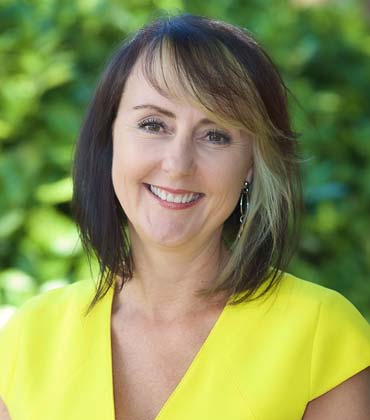
Every September, I have the privilege of welcoming a new cohort of children to Bronte School. They arrive full of curiosity. They ask wonderfully unexpected questions, notice things adults often overlook and approach each day with enthusiasm and imagination. In our work with children, our role is not simply to teach them new things; it is to ensure they do not lose those qualities as they grow.
That feels more important today than ever before.
We live in a world that celebrates speed. Information is available in seconds, technology evolves almost daily and children are growing up surrounded by constant stimulation. It is tempting to believe that schools should simply keep pace: introducing every new innovation, accelerating learning and preparing pupils for careers that may not yet exist.
Innovation undoubtedly has its place, and schools should embrace developments that genuinely enrich learning. But I also believe we have an equally important responsibility: to know when to slow things down.
Because while knowledge has never been easier to access, curiosity, resilience, empathy and sound judgement still cannot be hurried.
Information has become abundant; wisdom has not
As educators, we can sometimes fall into the trap of believing that because something is new, it must be better. I don't believe that is always true.
The purpose of a preparatory education has never been simply to fill children's minds with information. Today, when facts are available at the touch of a screen, our role is increasingly about helping pupils think critically, ask thoughtful questions and develop the wisdom to interpret information, weigh evidence and form their own considered opinions.
One of the aspects of the curriculum at Bronte School that I value most is the emphasis we place on developing critical thinking, not as a standalone subject, but as a thread that runs through everything we do. Whether pupils are analysing a text in English, using evidence and reasoning to justify their conclusions in mathematics, investigating a scientific concept or exploring big questions in our Philosophy lessons, they are encouraged to think deeply, question assumptions and consider different perspectives.
Watching children discuss fairness, friendship, justice or responsibility is a powerful reminder that some of life's most important questions do not have simple answers. These conversations are often thoughtful, occasionally surprising and always respectful. Pupils learn to listen with empathy, challenge ideas rather than individuals, articulate their own thinking with confidence and understand that changing their mind in the light of new evidence is a sign of intellectual maturity, not weakness.
In doing so, they begin to develop wisdom: the ability to apply knowledge with discernment, compassion and good judgement. These are qualities that extend far beyond the classroom. They prepare children not simply to achieve academically, but to become discerning, adaptable and compassionate young people, equipped to navigate an increasingly complex world with confidence and integrity.
Slow Childhood is not a Passive Childhood
When I talk about slowing childhood down, I do not mean lowering expectations. Quite the opposite. Children thrive when they are challenged, but they also need time to immerse themselves in learning rather than constantly rushing towards the next achievement.
Our school motto, Labor Ipse Voluptas – Work itself is pleasure – perfectly captures this philosophy. Real satisfaction does not come from finding everything easy. It comes from perseverance, determination and the quiet pride of mastering something that once seemed difficult.
I see it when a child finally performs confidently in a LAMDA examination after weeks of practice. I see it during rehearsals for a school production, when nervousness gradually gives way to self-belief. I see it on the sports field, where teamwork and resilience often matter far more than the final score. I see it when pupils lose themselves in a book, become absorbed in a creative project or spend time outdoors exploring and discovering.
Sometimes the best learning isn't rushed. Sometimes the best lesson isn't even on the timetable.
Children need opportunities to wonder, to reflect and occasionally to be bored enough for imagination to take over. These moments are not distractions from learning; they are often where the deepest learning begins.
Joy and Belonging are the Foundations of Confidence
One of the greatest joys of leading a small preparatory school is seeing every child become genuinely known, valued and understood. That may sound simple, but it has a profound impact.
Teachers understand not only how each pupil learns, but what excites them, where they need encouragement and when they are ready to be stretched. Just as importantly, families become true partners in their children's education. The conversations we have with parents are ongoing, honest and centred on helping every child flourish.
Confidence is rarely built through one grand achievement. It grows through hundreds of seemingly ordinary moments, bringing with it the quiet joy of achievement and self-belief.
It is the child who once hesitated to contribute an idea beginning to offer their thoughts with confidence. It is the pupil who encounters a difficult mathematical problem and, rather than saying, "I can't do it," approaches it with curiosity, resilience and the determination to find another way. It is the nervous performer who eventually steps onto the stage with pride, or the older pupil who instinctively takes responsibility for welcoming visitors or supporting younger children.
Those transformations do not happen by accident. They happen because children feel safe enough to take risks, secure enough to make mistakes and encouraged to see challenge not as something to fear, but as an opportunity to learn and to experience the satisfaction that comes from overcoming it. When children discover that effort, perseverance and asking for help are strengths rather than weaknesses, confidence grows naturally alongside capability.
At Bronte, that confidence is rooted in a strong sense of belonging. Our older pupils naturally look out for younger children. Friendships develop across year groups, and kindness is modelled as well as encouraged. Children know they are valued for who they are, not simply for what they achieve. It is this sense of belonging that gives children the confidence to embrace challenge, take risks and experience the genuine joy that comes from learning, growing and succeeding together.
Children experience the greatest joy not when everything is easy, but when they discover they can achieve something they once believed they couldn't.
Preparing deeply human young people
No one can say with certainty what today's Reception children will be doing twenty years from now.
The world they inherit will undoubtedly look different from the one we know today. Technology will continue to evolve, careers will change and new challenges will emerge. Yet I remain convinced that the qualities which matter most will stay remarkably constant.
• Kindness.
• Curiosity.
• Creativity.
• Integrity.
• Adaptability.
The ability to communicate well, work collaboratively and think independently.
These deeply human qualities cannot be downloaded, automated or measured through a single assessment. They are cultivated gradually through a childhood rich in opportunity, responsibility, encouragement and reflection. They grow each time a child solves a problem independently, shows compassion to a friend, finds the courage to contribute an idea, learns from a setback or experiences the satisfaction of achieving something that once felt beyond their reach. Over time, these moments shape the character, confidence and judgement that will serve children throughout their lives.
Looking ahead
Independent preparatory schools have always looked beyond the next assessment or the next set of results. Our responsibility is not only to prepare children for senior school, but to prepare them for life.
As education continues to evolve, we should embrace innovation where it genuinely enhances learning. Equally, we should have the confidence to protect those timeless elements of childhood that remain just as important today as they have always been: the freedom to be curious, the courage to make mistakes, the joy of discovering something for oneself and the security of belonging to a community where every child is known.
If there is one lesson I have learned as a Headmistress, it is this: children do not need us to make childhood faster. They need us to make it richer.
In preparing children for a rapidly changing future, perhaps the greatest gift we can offer is not to hurry childhood along, but to protect it. Because children who are given the time to think deeply, work joyfully and grow confidently will be ready not only for whatever tomorrow brings, but for a lifetime of learning beyond it.
Every September, I have the privilege of welcoming a new cohort of children to Bronte School. They arrive full of curiosity. They ask wonderfully unexpected questions, notice things adults often overlook and approach each day with enthusiasm and imagination. In our work with children, our role is not simply to teach them new things; it is to ensure they do not lose those qualities as they grow.
That feels more important today than ever before.
We live in a world that celebrates speed. Information is available in seconds, technology evolves almost daily and children are growing up surrounded by constant stimulation. It is tempting to believe that schools should simply keep pace: introducing every new innovation, accelerating learning and preparing pupils for careers that may not yet exist.
Innovation undoubtedly has its place, and schools should embrace developments that genuinely enrich learning. But I also believe we have an equally important responsibility: to know when to slow things down.
Because while knowledge has never been easier to access, curiosity, resilience, empathy and sound judgement still cannot be hurried.
Information has become abundant; wisdom has not
As educators, we can sometimes fall into the trap of believing that because something is new, it must be better. I don't believe that is always true.
The purpose of a preparatory education has never been simply to fill children's minds with information. Today, when facts are available at the touch of a screen, our role is increasingly about helping pupils think critically, ask thoughtful questions and develop the wisdom to interpret information, weigh evidence and form their own considered opinions.
One of the aspects of the curriculum at Bronte School that I value most is the emphasis we place on developing critical thinking, not as a standalone subject, but as a thread that runs through everything we do. Whether pupils are analysing a text in English, using evidence and reasoning to justify their conclusions in mathematics, investigating a scientific concept or exploring big questions in our Philosophy lessons, they are encouraged to think deeply, question assumptions and consider different perspectives.
Watching children discuss fairness, friendship, justice or responsibility is a powerful reminder that some of life's most important questions do not have simple answers. These conversations are often thoughtful, occasionally surprising and always respectful. Pupils learn to listen with empathy, challenge ideas rather than individuals, articulate their own thinking with confidence and understand that changing their mind in the light of new evidence is a sign of intellectual maturity, not weakness.
In doing so, they begin to develop wisdom: the ability to apply knowledge with discernment, compassion and good judgement. These are qualities that extend far beyond the classroom. They prepare children not simply to achieve academically, but to become discerning, adaptable and compassionate young people, equipped to navigate an increasingly complex world with confidence and integrity.
Slow Childhood is not a Passive Childhood
When I talk about slowing childhood down, I do not mean lowering expectations. Quite the opposite. Children thrive when they are challenged, but they also need time to immerse themselves in learning rather than constantly rushing towards the next achievement.
Our school motto, Labor Ipse Voluptas – Work itself is pleasure – perfectly captures this philosophy. Real satisfaction does not come from finding everything easy. It comes from perseverance, determination and the quiet pride of mastering something that once seemed difficult.
I see it when a child finally performs confidently in a LAMDA examination after weeks of practice. I see it during rehearsals for a school production, when nervousness gradually gives way to self-belief. I see it on the sports field, where teamwork and resilience often matter far more than the final score. I see it when pupils lose themselves in a book, become absorbed in a creative project or spend time outdoors exploring and discovering.
Sometimes the best learning isn't rushed. Sometimes the best lesson isn't even on the timetable.
Children need opportunities to wonder, to reflect and occasionally to be bored enough for imagination to take over. These moments are not distractions from learning; they are often where the deepest learning begins.
-
Children experience the greatest joy not when everything is easy, but when they discover they can achieve something they once believed they couldn't.
Joy and Belonging are the Foundations of Confidence
One of the greatest joys of leading a small preparatory school is seeing every child become genuinely known, valued and understood. That may sound simple, but it has a profound impact.
Teachers understand not only how each pupil learns, but what excites them, where they need encouragement and when they are ready to be stretched. Just as importantly, families become true partners in their children's education. The conversations we have with parents are ongoing, honest and centred on helping every child flourish.
Confidence is rarely built through one grand achievement. It grows through hundreds of seemingly ordinary moments, bringing with it the quiet joy of achievement and self-belief.
It is the child who once hesitated to contribute an idea beginning to offer their thoughts with confidence. It is the pupil who encounters a difficult mathematical problem and, rather than saying, "I can't do it," approaches it with curiosity, resilience and the determination to find another way. It is the nervous performer who eventually steps onto the stage with pride, or the older pupil who instinctively takes responsibility for welcoming visitors or supporting younger children.
Those transformations do not happen by accident. They happen because children feel safe enough to take risks, secure enough to make mistakes and encouraged to see challenge not as something to fear, but as an opportunity to learn and to experience the satisfaction that comes from overcoming it. When children discover that effort, perseverance and asking for help are strengths rather than weaknesses, confidence grows naturally alongside capability.
At Bronte, that confidence is rooted in a strong sense of belonging. Our older pupils naturally look out for younger children. Friendships develop across year groups, and kindness is modelled as well as encouraged. Children know they are valued for who they are, not simply for what they achieve. It is this sense of belonging that gives children the confidence to embrace challenge, take risks and experience the genuine joy that comes from learning, growing and succeeding together.
Children experience the greatest joy not when everything is easy, but when they discover they can achieve something they once believed they couldn't.
Preparing deeply human young people
No one can say with certainty what today's Reception children will be doing twenty years from now.
The world they inherit will undoubtedly look different from the one we know today. Technology will continue to evolve, careers will change and new challenges will emerge. Yet I remain convinced that the qualities which matter most will stay remarkably constant.
• Kindness.
• Curiosity.
• Creativity.
• Integrity.
• Adaptability.
The ability to communicate well, work collaboratively and think independently.
These deeply human qualities cannot be downloaded, automated or measured through a single assessment. They are cultivated gradually through a childhood rich in opportunity, responsibility, encouragement and reflection. They grow each time a child solves a problem independently, shows compassion to a friend, finds the courage to contribute an idea, learns from a setback or experiences the satisfaction of achieving something that once felt beyond their reach. Over time, these moments shape the character, confidence and judgement that will serve children throughout their lives.
Looking ahead
Independent preparatory schools have always looked beyond the next assessment or the next set of results. Our responsibility is not only to prepare children for senior school, but to prepare them for life.
As education continues to evolve, we should embrace innovation where it genuinely enhances learning. Equally, we should have the confidence to protect those timeless elements of childhood that remain just as important today as they have always been: the freedom to be curious, the courage to make mistakes, the joy of discovering something for oneself and the security of belonging to a community where every child is known.
If there is one lesson I have learned as a Headmistress, it is this: children do not need us to make childhood faster. They need us to make it richer.
In preparing children for a rapidly changing future, perhaps the greatest gift we can offer is not to hurry childhood along, but to protect it. Because children who are given the time to think deeply, work joyfully and grow confidently will be ready not only for whatever tomorrow brings, but for a lifetime of learning beyond it.


