
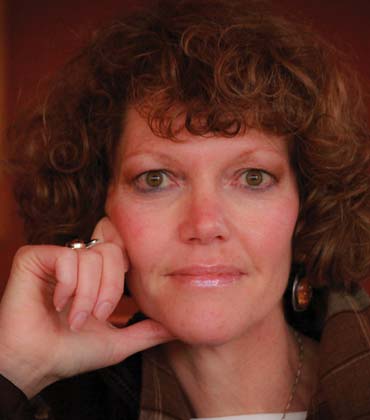
After three decades working with children and schools, a psychologist reflects on trauma, attachment, and the growing challenges facing teachers today.
I was a high school special education teacher and spent a year working with street kids and dropouts early in my career. My behavior management skills were honed out of necessity—a student lit another student’s coat on fire, I was bit by a student (the principal was more interested in getting me back in the classroom than expressing concern for the tendon damage in my hand) who later stabbed a pencil in my hand (same student, with a history of behavioral issues), and a student threaten to blow my brains out. The last student had taken a loaded gun to the middle school two years before; the school expelled him and he spent a year going to school on the East Coast before returning to the school district and my study skills classroom. Despite the student’s explicit threat and prior history, the administrator gave him one day of in-school suspension, and he returned to my classroom.
Addressing student threats and aggressive behavior has certainly changed since my early teaching career decades ago. States have responded with legislation aimed at preventing violence; school districts often utilize structured risk assessments to assess violence and lethality risk to provide recommendations and interventions. Some may argue that zero-tolerance practices have gone too far and further harm kids, without understanding the underlying issues and motivations.
Despite the proactive changes over the past decades, there were 233 school shootings in 2025 (Riedman, 2025). The number is down from 2024, when 336 school shootings occurred. These numbers indicate something deeper and more endemic related to aggression and violence in our schools.
While I loved teaching, I was more interested in the social/emotional obstacles to my students’ learning, so I obtained my PhD in counseling psychology, specializing in families, trauma, and child behavior disorders. Since then, I’ve conducted national training on children and adolescents. I consult with school districts and agencies regarding complex behaviors in children. Over the 32 years since I became a psychologist, I’ve completed hundreds of lethality/risk evaluations on children who have made threats towards other students and staff. Most threats have been benign, consisting of impulsive, ill-conceived actions or comments; only a handful have resulted in substantial threats and risk behaviors that merit further action.
While treating children and families, and working with schools, I have noticed several themes that merit further consideration:
1. A lack of attachment is prominent in students who pose a risk to themselves and others. If students are attached to staff and other students, they’re less likely to want to hurt them.
2. Trauma is pervasive among children and adolescents. Roughly 2/3 of children and adolescents in the United States experience trauma by the age of 16 (Lawrence-Sidebottom, et al., 2024), negatively impacting anxiety, depression, and learning.
3. Although we’ve made gains since the 1970s, authoritarian and punitive behavior management practices still exist and decrease students’ attachment to school and increase oppositional-defiant behaviors. Often, positive behavioral management practices within schools aren’t implemented appropriately; they lack curricula fidelity, lack data, and interventions either don’t happen or are misguided and ineffective.
4. Great strides have been made towards research-based, student-centered instructional practices, however, students still spend too much time on didactic instruction that doesn’t include divergent learning styles. Boys and girls learn differently, and our systemic failure to understand the nuances of these differences increases risk for school failure, dropout, and juvenile delinquency, especially among males.
5. Bullying remains a very real issue (ies.ed.gov, 2024). Antiquated values such as “boys will be boys” and “you need to work it out between yourselves” still prevail. If kids knew how to work it out, they wouldn’t be asking for help. Helping students mediate with each other while modeling social-emotional language and skills can create a pathway for resolving conflict. Understanding and intervening in the bully/bystander/bullied cycle and responding appropriately are essential if we want to decrease school violence.
6. Teaching is harder now, and we need to acknowledge that truth. Teaching is one of the most important jobs that exists; teachers should be given greater respect, increased pay, and more support. Kids are different than just ten years ago. COVID impacted students in measurable and deleterious ways, disrupting bonding and attachment. While some students were unaffected during the school shutdowns and remote learning, the pivotal role schools have in supporting students was fractured for many students. It accentuated how important educators are in students' lives.
7. Climate change is the biggest threat humans have ever faced (Attenborough, 2021). In the largest study of its kind, nearly 60% of 16-to-25-year-olds felt ‘very worried’ or ‘extremely worried’. Many associated negative emotions with climate change — the most commonly chosen were ‘sad’, ‘afraid’, ‘anxious’, ‘angry’ and ‘powerless’ (NPR, 2021). Housing and food insecurity, immigration-related stress and family separations, and ongoing political strife are impacting kids’ view of the world. They no longer feel hopeful about their futures.
I am the director of two online continuing education programs that provide continuing education to educators around the world. ArmchairEd is in partnership with Seattle Pacific University (SPU) and provides graduate-level credits. ArmchairEdClockHours is an approved provider through the Washington Office of Superintendent of Public Instruction (OSPI) and provides approved clock hours in Washington and in other states where accepted. Both programs offer approximately 60 continuing education courses across 24 genres.
What sets ArmchairEd apart from other continuing education programs? When you take an ArmchairEd course, you get to stay at home, sit in your comfy chair, and complete the course on your own schedule. No nights and weekends away from home. Teachers have busy, hectic lives, and you deserve to learn in a comfortable, convenient manner. Our understanding of pertinent educational issues shapes each of the courses we offer. We stay abreast of cutting-edge research and don’t believe in busy work. When you take an ArmchairEd course, you’ll read great texts from leading educational publishers. We don’t want you to take a meaningless course to maintain certification and go up the salary schedule; we want you to renew your passion for teaching and become better at what you do. There’s always space for growth in our personal and professional lives.
Check out our courses and browse our website. Courses like Practicing Presence Through Mindfulness, Teaching Boys, Boys and Girls Learn Differently , Effective Classroom Management, and In Teachers We Trust: Teach Like Finland are educator favorites. If you need courses in STEM diversity/equity, literacy, math, climate change, behavior management, inclusion….we have those too.
Email if you have questions at info@armchaired.com. ArmchairEd strives to provide quality continuing education with a personal touch. That’s why educators voted us Top Teacher Continuing Education Provider for 2025.
I was a high school special education teacher and spent a year working with street kids and dropouts early in my career. My behavior management skills were honed out of necessity—a student lit another student’s coat on fire, I was bit by a student (the principal was more interested in getting me back in the classroom than expressing concern for the tendon damage in my hand) who later stabbed a pencil in my hand (same student, with a history of behavioral issues), and a student threaten to blow my brains out. The last student had taken a loaded gun to the middle school two years before; the school expelled him and he spent a year going to school on the East Coast before returning to the school district and my study skills classroom. Despite the student’s explicit threat and prior history, the administrator gave him one day of in-school suspension, and he returned to my classroom.
Addressing student threats and aggressive behavior has certainly changed since my early teaching career decades ago. States have responded with legislation aimed at preventing violence; school districts often utilize structured risk assessments to assess violence and lethality risk to provide recommendations and interventions. Some may argue that zero-tolerance practices have gone too far and further harm kids, without understanding the underlying issues and motivations.
Despite the proactive changes over the past decades, there were 233 school shootings in 2025 (Riedman, 2025). The number is down from 2024, when 336 school shootings occurred. These numbers indicate something deeper and more endemic related to aggression and violence in our schools.
-
Teaching is harder now, and we need to acknowledge that truth.
While I loved teaching, I was more interested in the social/emotional obstacles to my students’ learning, so I obtained my PhD in counseling psychology, specializing in families, trauma, and child behavior disorders. Since then, I’ve conducted national training on children and adolescents. I consult with school districts and agencies regarding complex behaviors in children. Over the 32 years since I became a psychologist, I’ve completed hundreds of lethality/risk evaluations on children who have made threats towards other students and staff. Most threats have been benign, consisting of impulsive, ill-conceived actions or comments; only a handful have resulted in substantial threats and risk behaviors that merit further action.
While treating children and families, and working with schools, I have noticed several themes that merit further consideration:
1. A lack of attachment is prominent in students who pose a risk to themselves and others. If students are attached to staff and other students, they’re less likely to want to hurt them.
2. Trauma is pervasive among children and adolescents. Roughly 2/3 of children and adolescents in the United States experience trauma by the age of 16 (Lawrence-Sidebottom, et al., 2024), negatively impacting anxiety, depression, and learning.
3. Although we’ve made gains since the 1970s, authoritarian and punitive behavior management practices still exist and decrease students’ attachment to school and increase oppositional-defiant behaviors. Often, positive behavioral management practices within schools aren’t implemented appropriately; they lack curricula fidelity, lack data, and interventions either don’t happen or are misguided and ineffective.
4. Great strides have been made towards research-based, student-centered instructional practices, however, students still spend too much time on didactic instruction that doesn’t include divergent learning styles. Boys and girls learn differently, and our systemic failure to understand the nuances of these differences increases risk for school failure, dropout, and juvenile delinquency, especially among males.
5. Bullying remains a very real issue (ies.ed.gov, 2024). Antiquated values such as “boys will be boys” and “you need to work it out between yourselves” still prevail. If kids knew how to work it out, they wouldn’t be asking for help. Helping students mediate with each other while modeling social-emotional language and skills can create a pathway for resolving conflict. Understanding and intervening in the bully/bystander/bullied cycle and responding appropriately are essential if we want to decrease school violence.
6. Teaching is harder now, and we need to acknowledge that truth. Teaching is one of the most important jobs that exists; teachers should be given greater respect, increased pay, and more support. Kids are different than just ten years ago. COVID impacted students in measurable and deleterious ways, disrupting bonding and attachment. While some students were unaffected during the school shutdowns and remote learning, the pivotal role schools have in supporting students was fractured for many students. It accentuated how important educators are in students' lives.
7. Climate change is the biggest threat humans have ever faced (Attenborough, 2021). In the largest study of its kind, nearly 60% of 16-to-25-year-olds felt ‘very worried’ or ‘extremely worried’. Many associated negative emotions with climate change — the most commonly chosen were ‘sad’, ‘afraid’, ‘anxious’, ‘angry’ and ‘powerless’ (NPR, 2021). Housing and food insecurity, immigration-related stress and family separations, and ongoing political strife are impacting kids’ view of the world. They no longer feel hopeful about their futures.
I am the director of two online continuing education programs that provide continuing education to educators around the world. ArmchairEd is in partnership with Seattle Pacific University (SPU) and provides graduate-level credits. ArmchairEdClockHours is an approved provider through the Washington Office of Superintendent of Public Instruction (OSPI) and provides approved clock hours in Washington and in other states where accepted. Both programs offer approximately 60 continuing education courses across 24 genres.
What sets ArmchairEd apart from other continuing education programs? When you take an ArmchairEd course, you get to stay at home, sit in your comfy chair, and complete the course on your own schedule. No nights and weekends away from home. Teachers have busy, hectic lives, and you deserve to learn in a comfortable, convenient manner. Our understanding of pertinent educational issues shapes each of the courses we offer. We stay abreast of cutting-edge research and don’t believe in busy work. When you take an ArmchairEd course, you’ll read great texts from leading educational publishers. We don’t want you to take a meaningless course to maintain certification and go up the salary schedule; we want you to renew your passion for teaching and become better at what you do. There’s always space for growth in our personal and professional lives.
Check out our courses and browse our website. Courses like Practicing Presence Through Mindfulness, Teaching Boys, Boys and Girls Learn Differently , Effective Classroom Management, and In Teachers We Trust: Teach Like Finland are educator favorites. If you need courses in STEM diversity/equity, literacy, math, climate change, behavior management, inclusion….we have those too.
Email if you have questions at info@armchaired.com. ArmchairEd strives to provide quality continuing education with a personal touch. That’s why educators voted us Top Teacher Continuing Education Provider for 2025.


