
Preparing Students Beyond Their First Job
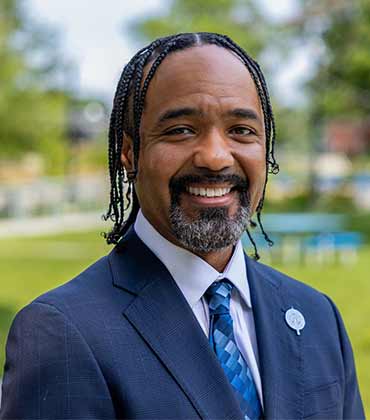
What initially drew me to liberal arts education was the belief that college should prepare students for more than a first job. It should help them think critically, communicate effectively, understand different perspectives and develop the confidence to navigate a changing world. Over my career, that understanding has grown through my experiences as a counselor, faculty member, advisor, administrator and now academic affairs leader. I have seen firsthand that education is not simply about what students learn in a classroom. It is about who they become.
Connecting Liberal Arts Education to the World of Work
I think the greatest challenge is demonstrating the connection between a liberal arts education and the world of work. We cannot assume that students, families or employers will automatically see that connection. Our response should be to make that connection much more intentional. We need to show students how critical thinking, communication, problem solving and adaptability translate into career success, while also providing meaningful opportunities for applied learning, employer engagement and internships. We should not move away from the liberal arts. We should become better at demonstrating why they matter, both for a student's first career and for the many careers they may have throughout their lives.
Balancing Tradition with Student Needs
The principle that has guided me most is to keep students at the center of the decision, while remaining grounded in the institution's mission and values. Tradition is important because it gives an institution its identity, but we cannot allow tradition to prevent us from responding to the needs of today's students. Throughout my career, I have tried to ask two questions: What is best for our students and what is best for the long-term health of the institution? For me, good leadership is finding the balance between honoring who we are and having the courage to evolve when our students and our communities need us to.
Connecting Learning to Real-World Application
Liberal arts education must become more intentional about connecting learning to application. Students need opportunities to take what they learn in the classroom and apply it to real-world problems, workplaces and communities.
At the same time, we need to preserve the intellectual curiosity and critical thinking that are at the heart of a liberal arts education. The world our students will enter will continue to change and we cannot predict every career or challenge they will face. What we can do is prepare them to ask good questions, evaluate information, adapt to change and approach new challenges with confidence.
Building Skills for a Purposeful Career
My advice would be to stay curious, be willing to learn and do not become too focused on having your entire career mapped out from the beginning. A liberal arts education gives you the ability to think critically, communicate well, build relationships and adapt when opportunities or circumstances change. My own career has taken me through advising, counseling, teaching, administration and academic leadership. Each experience built on the one before it, even when I could not see that connection at the time.
I would encourage students and early-career educators to focus less on having a perfect plan and more on building the skills, relationships and character that will allow them to recognize and pursue meaningful opportunities as they arise. A purposeful career is often something you build over time, not something you discover all at once.
What initially drew me to liberal arts education was the belief that college should prepare students for more than a first job. It should help them think critically, communicate effectively, understand different perspectives and develop the confidence to navigate a changing world. Over my career, that understanding has grown through my experiences as a counselor, faculty member, advisor, administrator and now academic affairs leader. I have seen firsthand that education is not simply about what students learn in a classroom. It is about who they become.
Connecting Liberal Arts Education to the World of Work
I think the greatest challenge is demonstrating the connection between a liberal arts education and the world of work. We cannot assume that students, families or employers will automatically see that connection. Our response should be to make that connection much more intentional. We need to show students how critical thinking, communication, problem solving and adaptability translate into career success, while also providing meaningful opportunities for applied learning, employer engagement and internships. We should not move away from the liberal arts. We should become better at demonstrating why they matter, both for a student's first career and for the many careers they may have throughout their lives.
Balancing Tradition with Student Needs
The principle that has guided me most is to keep students at the center of the decision, while remaining grounded in the institution's mission and values. Tradition is important because it gives an institution its identity, but we cannot allow tradition to prevent us from responding to the needs of today's students. Throughout my career, I have tried to ask two questions: What is best for our students and what is best for the long-term health of the institution? For me, good leadership is finding the balance between honoring who we are and having the courage to evolve when our students and our communities need us to.
Connecting Learning to Real-World Application
Liberal arts education must become more intentional about connecting learning to application. Students need opportunities to take what they learn in the classroom and apply it to real-world problems, workplaces and communities.
At the same time, we need to preserve the intellectual curiosity and critical thinking that are at the heart of a liberal arts education. The world our students will enter will continue to change and we cannot predict every career or challenge they will face. What we can do is prepare them to ask good questions, evaluate information, adapt to change and approach new challenges with confidence.
-
A purposeful career is often something you build over time, not something you discover all at once.
Building Skills for a Purposeful Career
My advice would be to stay curious, be willing to learn and do not become too focused on having your entire career mapped out from the beginning. A liberal arts education gives you the ability to think critically, communicate well, build relationships and adapt when opportunities or circumstances change. My own career has taken me through advising, counseling, teaching, administration and academic leadership. Each experience built on the one before it, even when I could not see that connection at the time.
I would encourage students and early-career educators to focus less on having a perfect plan and more on building the skills, relationships and character that will allow them to recognize and pursue meaningful opportunities as they arise. A purposeful career is often something you build over time, not something you discover all at once.


