

What defines the division’s recognition within Catholic education in Canada?
Recognized as Education Insider Magazine’s Top Catholic School Division in Canada for 2026, the division’s distinction is grounded not only in broad claims of innovation, but in a consistent, system-wide approach shaped by its identity as a Catholic institution. At its core, the division positions itself as both faith-centered and teacher-led, ensuring that progress is anchored in purpose and that change is shaped by those closest to students.
This internal focus reflects a deliberate strategy that sets Grande Prairie & District Catholic Schools apart from many systems that rely heavily on external direction. The division has chosen instead to invest in its own people, building a culture where teachers are not simply implementing initiatives but actively leading the system itself. That decision has defined the division’s trajectory and continues to shape its growth.
 Dr. Jessie Shirley, Superintendent of Grande Prairie & District Catholic Schools, identifies this as the central force behind the division’s progress. “We’re a faith-based school division, but what really moves us forward is that our teachers are driving this work from the ground up,” she says. This perspective reinforces the division’s identity as a Catholic learning community, where leadership is shared and grounded in both professional expertise and faith-based purpose.
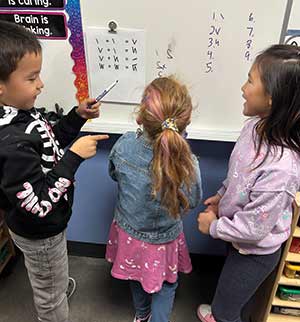
The process is visible in the division’s implementation of the Building Thinking Classrooms framework, one of several approaches used to support its broader mission. The goal is not simply to introduce new strategies, but to create learning environments where students engage in problem-solving, communicate their reasoning, and take ownership of their learning. This aligns with the division’s commitment to developing the whole child, integrating academic growth with faith formation, character development, and personal responsibility.
Framework Embedded Across the System
What distinguishes Grande Prairie & District Catholic Schools is not only its use of this framework, but also how it has been integrated within the broader identity of the division. Rather than positioning it as a standalone program, the division treats it as one expression of its commitment to strong teaching and meaningful learning. Teachers, administrators, and support staff participate in a coordinated effort to continuously improve instructional practice while remaining aligned with the division’s Catholic mission.
 How does internal professional learning support sustainable instructional leadership across schools?
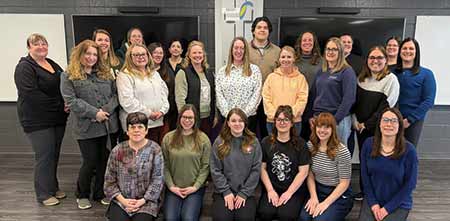
A key component of this work is the division’s approach to professional learning. Over time, Grande Prairie & District Catholic Schools has developed a strong internal model that prioritizes sustainability and shared responsibility. External expertise is used selectively, ensuring that knowledge is retained and strengthened within the system. This has resulted in a network of educators across every school, as well as within the central office, who are equipped to lead ongoing learning.
We believe that moving away from traditional structures, where rote learning dominates, toward students doing the thinking is what today’s world demands and how we best serve our students and our community.
The impact of this approach is evident in how professional learning is conducted. Teachers take active roles in leading sessions, sharing classroom experiences, and facilitating discussions with colleagues. They guide grade-level groups, contribute to division-wide conversations, and support one another in refining instructional practices. This peer-led model ensures that professional development remains practical, relevant, and grounded in real classroom experience.
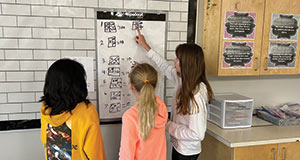 Toward a More Active and Participatory Form of Learning
Christie Watson, Assistant Superintendent of Teaching and Learning, describes this as a deliberate and phased process. “This has been a tiered approach over a four-year plan, where teachers continue to build their understanding and refine their comfort level with building thinking classrooms,” she explains. By structuring the work over multiple years, the division allows educators to engage deeply while maintaining alignment with its broader mission.
This long-term strategy reflects an understanding that meaningful change in education requires both time and clarity of purpose. Teachers are supported as they adapt, collaborate, and reflect, ensuring that changes are not temporary shifts but lasting improvements. The division’s approach avoids short-term initiatives in favor of sustained, mission-aligned progress.
Why does the division emphasize active student thinking in classrooms?
The results are visible in classrooms across the division. Students are engaged in learning that requires critical thinking, collaboration, and communication. They are encouraged to take risks, learn from mistakes, and grow both academically and personally. These environments reflect not only instructional change but also the division’s commitment to forming confident, capable individuals grounded in faith.
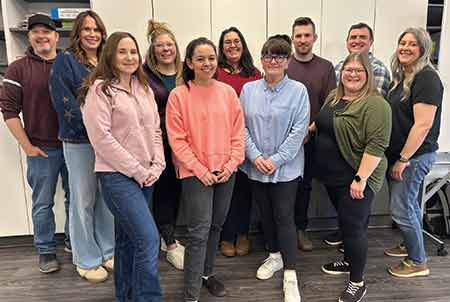 A Collaborative Culture That Extends Beyond Classrooms
At the same time, the role of the teacher has evolved. Educators are not simply delivering content but guiding student thinking and development. This requires strong professional judgment and a deep understanding of both learners and context. The division’s collaborative culture ensures that teachers are supported in this role through shared learning and collective responsibility.
This collaboration extends beyond classrooms. School administrators and central office staff work alongside teachers, supporting both instructional practice and system-wide alignment. Educational assistants also play an important role in ensuring that all students can participate meaningfully in learning. Together, these roles contribute to a unified system focused on student success.
Underlying these efforts is a clear and consistent foundation in faith. Grande Prairie & District Catholic Schools approaches education as a vocation—one that shapes not only knowledge but also values, character, and relationships. Principles of respect, dignity, and service guide interactions across the division, ensuring that its Catholic identity remains central as it evolves.
Aligning Assessment Practices with the Evolving Learning Approach
In what ways will assessment alignment shape the division’s next phase?
As the division moves forward, its focus is shifting toward aligning assessment practices with its approach to teaching and learning. While progress has been made in classroom instruction, there is recognition that assessment must also reflect how students think, collaborate, and grow.
-
Over time, we’ve developed teachers in every school, as well as at central office, who are willing to lead, stand in front of their peers, share what’s happening in their classrooms, and guide learning across the division.
Dr. Shirley emphasizes the importance of this work. “As we continue to move teaching and learning forward, we need to explore how our assessment practices align with that, and what this will look like,” she says. This reflects a commitment to coherence across the system, ensuring that all aspects of education support the division’s mission.
Watson adds that this work is part of preparing students for the future. “We believe that moving away from traditional structures, where rote learning dominates, toward students doing the thinking is what today’s world demands and how we best serve our students and our community,” she notes. This reinforces the division’s focus on developing well-rounded individuals equipped for both life and learning.
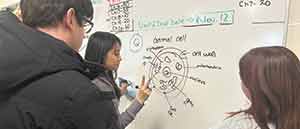 The Emphasis on Teacher Leadership
The division’s structured approach also accounts for staff continuity and growth. As new teachers join and experienced educators transition, ongoing professional learning ensures that the division’s philosophy remains consistent. This creates a system that is both stable and adaptable.
Professional development days support this continuity by combining structured learning with opportunities for collaboration. Teachers engage with new ideas and apply them directly to their practice, reinforcing the division’s emphasis on practical, classroom-focused improvement.
The strength of Grande Prairie & District Catholic Schools lies in its alignment—between faith, teaching, and leadership. Its Catholic identity provides a clear purpose, while its emphasis on teacher leadership ensures that decisions remain grounded in classroom realities. By investing in its people, the division has built a system that is both effective and sustainable.
This alignment has positioned the division as a leader within Catholic education in Canada. Its recognition reflects not only its outcomes but also its clarity of purpose. Rather than focusing on isolated initiatives, Grande Prairie & District Catholic Schools remains committed to its identity as a faith-based institution dedicated to student growth and community impact.
Ultimately, the division’s success is a reflection of its people. Teachers, administrators, and support staff work together to create learning environments that are engaging, inclusive, and grounded in faith. Their shared commitment defines the division and ensures that its work remains focused and meaningful.
As Grande Prairie & District Catholic Schools continues forward, it remains guided by its core purpose: to provide education that integrates faith, learning, and student development. By strengthening teacher leadership, maintaining alignment, and staying rooted in its Catholic identity, the division continues to serve both its students and its community with clarity and conviction.

