

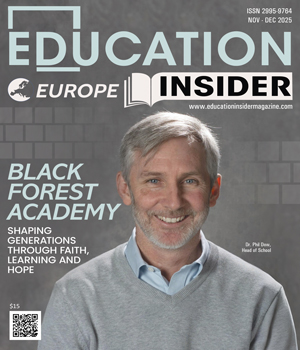
“The grass withers and the flowers fall, but the word of our God endures forever” (Isaiah 40:8). For Black Forest Academy (BFA), a Christ-centred school for grades 5 to 12, these words are lived truths rather than a verse to memorise. Scripture is opened alongside textbooks here and faith shapes culture, decisions and daily practice. BFA’s USA-modelled curriculum— including Advanced Placement (AP) courses—prepares graduates for universities worldwide while grounding them in biblical thought, character and action. Beyond academics, music, drama, service and sports, co-curricular opportunities build teamwork and leadership. “The measure of our work is not only in academic results but in the way students leave here with the courage to step into the world with faith and purpose,” says Dr. Phil Dow, Head of School. Academic pathways at BFA are designed with both rigour and flexibility. All graduates meet core requirements, yet students can tailor their learning through various courses. AP classes provide globally recognised preparation for university but remain an option rather than a mandate. An 11th grader, for example, may choose between Grade 11 English or AP Language & Composition, ensuring each student finds the right balance of challenge and fit. Alongside core subjects, electives in art, music, drama and other disciplines invite students to explore creativity and showcase individual talents. Serving students in grades 9 to 12, BFA’s boarding programme offers gender-specific and integrated boarding homes where students share meals, pray together and celebrate traditions that forge lifelong friendships. Each boarding house is guided by dorm parents and resident assistants who seek to create a nurturing environment where students are seen as individuals of eternal value. “By the 2026–27 school year, all boarding houses will be within walking distance of the campus, but still apart from the school. This model creates healthy separation, as students can ‘go home’ at the end of the school day," says Dr. Dow.
The journey to higher education abroad often begins with excitement but also brings a sense of uncertainty. Faced with countless programs across countries, intricate application processes, and fierce global competition, students frequently find the path to studying abroad overwhelming. But with the right strategy, structure and guidance, their educational dreams can become a reality. This is where Warsaw-based Elab Education steps in, helping students turn their ambitions into achievable goals. Founded in 2012, it has spent more than a decade redefining how students plan and pursue international education. What began as a UK-focused UCAS agency has evolved into a post-Brexit premium consultancy, with additional offices in Rome, Milan, Madrid, and London. Over the years, Elab has guided thousands of students to top universities, consistently achieving results up to five times higher than official acceptance rates. From medicine to art and design, it provides specialized guidance wherever additional preparation is required. Aspiring doctors benefit from focused IMAT and HPAT courses, while architecture students gain from ARCHED prep and portfolio workshops conducted in collaboration with highly ranked institutions such as UAL. These tailored programs, combined with expert mentoring and strategic insight, define what the consultancy proudly calls ‘The Elab Effect’. “Every student has potential. Our role is to turn that potential into real opportunity with structure, insight, and care transforming aspiration into achievement,” says Thomas Ravensdale, CEO and owner. Bridges to Global Classrooms ‘Where to start’ is the most common question that arises in the minds of families when they think about enrolling their children in courses abroad. The consultancy’s five steps to success program removes that uncertainty and provides a clear, guided journey. The diagnostic testing helps map out a student’s possible career path by identifying their strengths and interests. This is followed by shortlisting of countries, universities, and programs that align with budget, personal preferences, and the long-term goals of students. Once the direction is set, experts manage the detailed application process, making sure every course requirement, such as academic records, essays, entrance exam and language test are complete, precisely formatted and delivered on time in the particular university portal. The process concludes with final course selection from offers received and relocation support, ensuring students transition smoothly into their chosen universities..

Student Accommodation Service

Finding student housing should be hassle-free. Many students, especially those coming from outside the European Union, face difficulties in finding comfortable accommodations across Europe. For instance, in major university cities, skyrocketing rents and subpar living conditions leave students scrambling for a place to call home. SHED Living is changing this narrative, offering modern, affordable community-focused spaces where students can live, learn and thrive. In this interview with Education Insider Europe, Eglė Garnienė, SHED Living group general manager for the Baltics (I Asset Management), provides insights into SHED’s expertise in student accommodation. She emphasises how stylish co-working spaces enable students and young professionals to balance their responsibilities and comfort needs. With student housing being a problem across Europe, how Is SHED providing a suitable alternative and alleviating the situation? Finding quality, affordable student housing in Europe is increasingly difficult, particularly in major university cities where demand far exceeds supply. Over 50 percent of students struggle to secure accommodations that balance comfort, convenience and cost, with cities like London, Berlin and Warsaw facing critical shortages. In Central and Eastern Europe, students often have limited options—outdated dormitories, overcrowded flats or expensive private rentals that fail to meet their needs. Our mission at SHED is to address this challenge through purpose-built student housing via our Student Housing Funds. We have launched high-quality, student-focused accommodations in Lithuania, Latvia and Poland, with plans for expansion across the CEE region. More than just a place to sleep, our properties foster supportive communities where students thrive academically and personally. With flexible lease terms, modern, fully-equipped rooms and dedicated study areas, we offer an exceptional living experience at an affordable price. Expanding our portfolio, we aim to alleviate the student housing crisis and provide a much-needed alternative to traditional options. Our vision is to build safe, thriving communities where students can live, learn and grow—free from the stress of inadequate housing. How does SHED create a supportive, community-driven living experience for students? What makes SHED unique in the student housing space? Under SHED, we provide safe, engaging environments where students can focus on their studies while enjoying a balanced life. Operating high-quality, purpose-built accommodations in Vilnius, Riga and Krakow, we are expanding this year with two new locations in Warsaw to meet the rising demand for student housing in these regions.
Christian School

Role of Creativity and Innovation in Tourism Education
Dr. Julia Calver, Course Director: School of Events, Tourism & Hospitality Management, Leeds Beckett University
Christian School

AI: an Intelligent New Approach to Teaching?
James Carroll, Director of Education UK, Cognita
Christian School

Leading with Vision and Cultivating Inclusive, Life-ready Learners
Peggy Murphy, Principal, Five Acre Wood School
Christian School

Leading With Trust, Vision and A Global Perspective
Tunde Olah, Principal, Avalon International School
Christian School
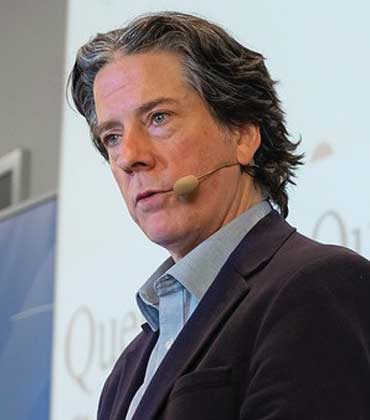
Teaching in a Time of Transition
Ronan Gruenbaum, Dean of International Affairs & Program Development, Hult International Business School

IN MY OPINION
Christian School
Elevating Engaged Teaching in a Digital Era
Dr. Robert Reuter, Assistant Professor in Educational Technology and Head of the Research Institute for Teaching and Learning, University of Luxembourg

LAST WORD
Christian School
Unlocking the Charm of Rural Mediterranean Education Tourism: The Role of Guest Houses
Laurent Yacoub, Adjunct Assistant Professor, Holy Spirit University of Kaslik
IN FOCUS

Christian Schools as Catalysts for Community Transformation
Christian schools can transform communities by integrating service learning, fostering civic engagement, and building partnerships, thereby nurturing empathetic leaders who actively pursue the common good.

Study Abroad as a Platform: The Rise of API-Driven Ecosystems in Europe
The study abroad process is transforming into a seamless, integrated platform, enhancing students' experiences through API-driven services for housing, insurance, and career opportunities in Europe.
EDITORIAL
Shaping the Future of Learning in Europe
In this edition, we explore how Christian education models are blending values-based learning with modern academic expectations to help students build character alongside global awareness. At the same time, study abroad services are increasingly centered on real-world skills, immersive industry experience and pathways to international careers. Together, these shifts reflect an educational landscape focused on producing resilient, ethically grounded and internationally prepared graduates.
This issue also highlights perspectives from leaders shaping the future of learning. Ronan Gruenbaum, Dean of International Affairs & Program Development at Hult International Business School, emphasizes that students must prepare for multiple careers, not just multiple jobs. With AI poised to redefine work far beyond current expectations, he argues that universities must pivot toward developing capabilities.
We also feature insights from Dr. Julia Calver, Course Director: School of Events, Tourism & Hospitality Management at Leeds Beckett University, who stresses the importance of innovation and experiential learning in tourism and events education. She highlights the value of project-based partnerships with real organizations, which help students gain practical experience and build skills that AI tools cannot replace. For Calver, the priority is empowering learners to think critically about technology, apply it responsibly and use it as a catalyst for new ideas.
As European education moves forward, the mission is clear: cultivate learning ecosystems that are globally minded, technologically aware and deeply human. By embracing innovation while preserving purpose, institutions can prepare the next generation to thrive in a world defined by constant change.

Get the best of Education Insider delivered directly to you.
