

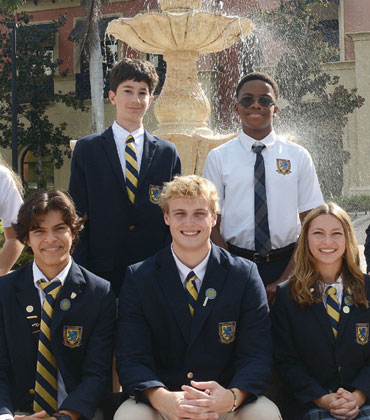
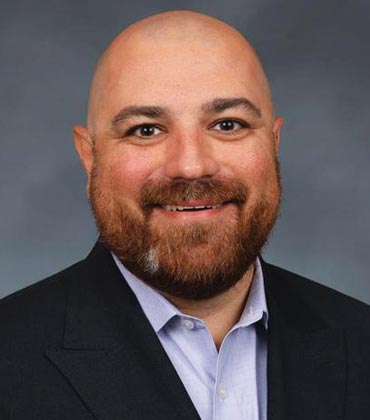
The story of Washington Heritage University (WHU) begins with a vision. In 1983, Dr. Taekyong Kim recognized the growing Korean church community in the U.S. and saw an urgent and profound need. Ministers and missionaries required training to meet the spiritual, cultural, and practical demands of their congregations. Out of that need, Washington Theological Seminary was founded. It began in partnership with the Korean Presbyterian Church of Washington to offer theological education to men and women who would, in turn, serve others. This humble seminary, with its small classrooms and close-knit faculty, became the seed that would eventually grow into a university with an international mission. Four decades later, that seed has flourished into WHU. What started as a single-ethnic seminary has become a multi-ethnic, multilingual institution whose impact reaches far beyond the borders of the United States. Its academic offerings now include bachelor’s, master’s, and doctoral programs across fields such as literature, biology, mathematics, and organizational psychology. President Nam Cho, who first served as Provost before becoming President five years ago, says, “Our scope has widened, but our heart remains the same: to prepare men and women to live out and share the gospel wherever they are called.” Shaping Students Personally and Spiritually Accredited by the Transnational Association of Christian Colleges and Schools (TRACS), WHU now enrolls more than two fifty students from over thirty nations. Faculty members bring their own cultural backgrounds and perspectives, enriching classrooms with diversity that reflects the global church the university seeks to serve. Courses are taught in multiple languages, creating an atmosphere where barriers fall and learning becomes truly shared. The result is a campus where cultures, faith traditions, and academic disciplines intermingle in meaningful and transformative ways. Graduates of WHU testify to its impact on their lives and ministries. Many have gone on to become pastors, missionaries, and church leaders across the globe. Others have returned to teach at their alma mater, creating a cycle of service and mentorship that sustains the school’s mission. They carry with them a way of living out faith that bridges cultures, engages thoughtfully with scripture, and embraces both the challenges and opportunities of global Christianity. Personal attention to students is one of the school’s most cherished features. At WHU, classes are small enough that professors know their students by name and story. Mentorship is an essential part of the learning process. Professors are published scholars and national experts in their fields, as well as pastors, mentors, and friends. This environment allows students to grow in knowledge while being shaped personally and spiritually.
Top Charter School 2025
There is a buzz in the education world around Mason Classical Academy (MCA), a K-12 classical charter school located in sunny Naples, Florida that is offering something new while returning to something old. The attention is understandable when considering their accomplishments and statistics: U.S. News & World Report recently ranked MCA High School among the top one percent of public schools nationwide, placing it 177th out of nearly 18,000 evaluated. Florida has awarded the school an A-grade every year since its founding in 2014 – that’s 12 consecutive A-ratings! Even more telling, MCA’s senior class achieved a 100 percent pass rate on the Florida Senior Civics Literacy Exam—outperforming both the local district (58 percent) and the state (48 percent)! So what makes MCA so different? For starters, it is their traditional teaching methods and classical curriculum. For centuries, classical education shaped civilizations—from the Greeks and Romans to America’s Founders—by cultivating citizens capable of self-government. A century ago, this proven model was abandoned in favor of progressive pedagogy that prioritized workforce training over virtue and knowledge, leaving American culture, tradition, and academic standing weakened. MCA exists to restore what was lost. MCA’s achievements are no accident. They are the fruit of a rigorous, knowledge-rich curriculum and time-tested teaching methods. Students in Kindergarten through 8th grade follow the Core Knowledge Sequence across literature, history, geography, math, science, and the arts. In high school, MCA expands into a curriculum designed to sharpen critical thinking, foster lifelong learning, and prepare students to be virtuous and productive citizens. It is important to note that MCA’s mission extends well beyond academics. Its mission extends to shaping hearts as well as minds. The school enforces an absolute cell-phone ban, a strict uniform policy, and structured discipline across every grade level. In a culture of distractions and shifting standards, MCA holds firm to the belief that objective truths exist—even in morality—and that education should form character as well as intellect. “We nurture the hearts of students rather than mislead them with the notion of relative truth,” says David Hull, MCA’s CEO, who has been with the school since its opening. “We train the minds of students rather than reducing their abilities to fit an ever-changing workforce.” MCA’s families, employees, and leaders believe they are not only offering a service of education to their individual students, but also to the country as a whole. It is an imperative detail of MCA’s mission that the school is a charter school and not a private school or a magnet school – this means that all students apply through a lottery system and get free tuition! “Children are the living messages we send to a time we will not see.” These words from author Neil Postman embody the mission of Mason Classical Academy (MCA): to prepare the next generation of American citizens with the wisdom, virtue, and knowledge needed to lead and live in freedom.
Top Christian School 2025
Home lays the foundation, church sets the direction and school shapes the mind. At Schaumburg Christian School (SCS), a ministry of Bethel Baptist Church, these convictions are lived out daily as church and school come alongside families to nurture children in faith and learning. Serving students from preschool through 12th grade, SCS delivers a Christ-centered academic experience that integrates spiritual formation, academic achievement and personal growth. The school believes the best way to reach the child’s heart is to care about the family as much as the student. Many begin at age three, learning routines and structure. Teachers partner with parents to establish the same patterns at home when challenges arise. By sharing strategies and reinforcing practices across school and family, children gain the consistency needed to thrive in academics, faith and daily life. “We see students for over 1,300 hours a year, but they’re with their parents the rest of the time. Education has to be a cooperative effort centered on the family as God intended, because when the family is strong, the child will thrive,” says Marc Popovici, head of school.
Top Catholic Institution 2025
When education is rooted in faith, learning becomes a journey that shapes lives with purpose, compassion and integrity. King’s College, located in WilkesBarre, Pennsylvania, embodies this philosophy. Founded by the Congregation of Holy Cross from the University of Notre Dame in 1946, it takes a holistic approach to education by combining knowledge with a focus on intellectual, emotional and spiritual aspects. Students receive top-tier education in accredited courses along with personalized guidance that fosters their growth as individuals. Every learner at the college is enrolled in a core liberal arts curriculum, encompassing theology, philosophy and other core subjects, ensuring a well-rounded education regardless of their chosen major. A hallmark of King’s College is its vibrant community, where students experience a strong sense of belonging across campus. Rooted in the Holy Cross tradition, the priests and brothers on campus work hand-in-hand with the faculty, staff and alums to provide mentorship and guidance. The college encourages active participation in meaningful, service-oriented initiatives, turning learning into action that benefits others and strengthens their sense of purpose. Whether it’s residence halls, sports teams, clubs or service opportunities, these connections form the cornerstone of student life. “Our community is central to who we are and the students feel it in the welcoming, connected atmosphere on campus,” says Father Brogan C. Ryan, C.S.C., Director of Campus Ministry and College Chaplain. Ninety-two percent of faculty members at King’s College hold a Ph.D. or an equivalent terminal degree and are highly proficient in their field of study and research. They are deeply involved in student development through various means, including teaching, mentorship and scholarships.
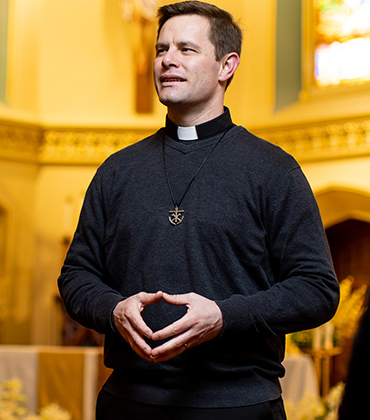
Healthcare and Allied Health Training
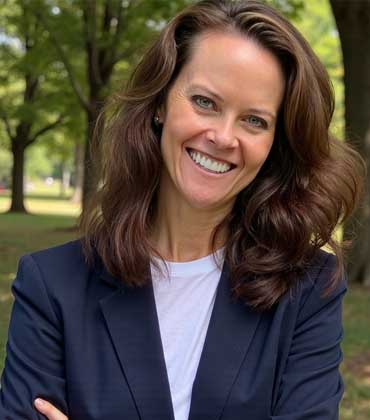
Adapting to Thrive: A Scientific Imperative for Evolving Education
Dr. Kelli McCall Smith, Ed.D., Director of Health, Wellness, and Prevention, Douglas County School District
Hospitality and Service Industry Training

Nourishing the Future with Innovation, Sustainability and Leadership
Kaci Kelly, Director of Child Nutrition, Ocean Springs School District
Christian Colleges

Rethinking Education in the Age of AI
Rick Upchurch, Associate Vice President E-Learning and Educational Innovation, Belhaven University
Christian Colleges
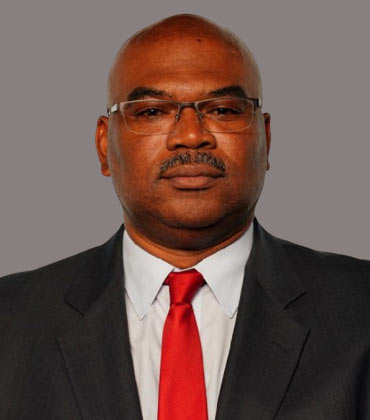
Protecting Precious Cargo: A Comprehensive Look at School Bus Safety
Keba Baldwin, Director of Transportation and Central Garage, Prince George’s County Public Schools
Healthcare and Allied Health Training

Inspiring Through Experience, Advancing Therapeutic Recreation at Aurora University
Kris Johnson, Associate Professor of Therapeutic Recreation, Aurora University
IN MY OPINION
Christian Colleges
Building Digital Excellence Through Team Empowerment
Dave Moretti, Senior Director of Digital Marketing & Technology, Columbia Business School

LAST WORD
Christian Colleges
Elevating Community Voice through Educational Advocacy
Micheal Bray, Director of External Affairs, Rocketship Public Schools
IN FOCUS

The Christian University's Approach to Purpose-Driven Learning
Christian universities blend vocational discernment with career readiness, redefining vocation as a divine calling that integrates faith, holistic education, and experiential learning in students' journeys.

Catholic Institutions and the Pursuit of Educational Equity
Catholic education balances advocacy, autonomy, and commitment to the common good, promoting educational pluralism and serving both local communities and global development goals through inclusive policies.
EDITORIAL
Where Values Still Lead the Lesson
That search for purpose is drawing families back to faith-based classrooms—Christian universities, charter schools and Catholic institutions—where learning is anchored in something meaningful than a textbook.
Families are choosing smaller communities where students feel known, where service projects carry as much weight as academic exams and where reflection is an integral part of the routine. Because when a school teaches children to lead with conscience, to see work as service and knowledge as responsibility, it gives them more than a diploma. It gives them direction, discovering that achievement without empathy is hollow and that real success begins when the mind and the heart move in the same direction.
The magazine features a thought-provoking article by Rick Upchurch, Assoc. V.P. eLearning and Educational Innovation at Belhaven University, highlighting how students can effectively use GenAI tools to enhance their academic performance with critical thinking. Additionally, an article by Micheal Bray, Director of External Affairs at Rocketship Public Schools, discusses that lasting educational change is born from relationships, representation and collective action, which creates stronger, more empowered communities.
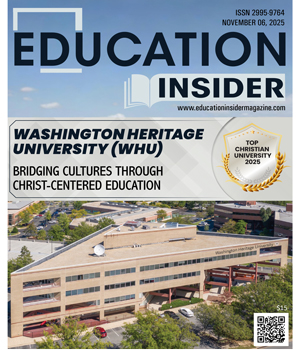
The publication spotlights Washington Heritage University (WHU) as the cover story, recognizing its personalized theological and academic education that equips global Christian leaders through faith-integrated learning, a diverse faculty and a vibrant, spiritually rich campus community.
We hope this edition offers insights that help educators, faith-based leaders and advocates nurture stronger communities and shape character-driven learning. This edition celebrates the quiet power of values, relationships and purpose; the timeless foundations of education that shape both hearts and minds.

