
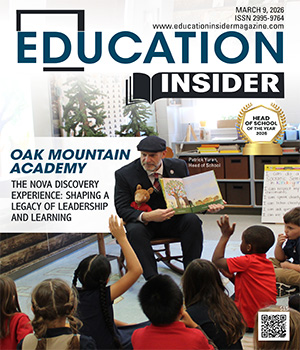
As I sit down to share my story, I realize that my career and life have never followed a straight line. I have often described my professional journey as anything but linear, and I say that with both gratitude and humility. If you had told me in my early years that I would one day be the Head of School at Oak Mountain Academy, I would have been skeptical, to say the least. In many ways, I can trace the origins of my leadership style back to my roots in the performing arts, where lessons of collaboration, creativity, and resilience were first instilled in me. My journey began on stage, not in a classroom. I spent many years immersed in the world of theatre, where I learned not only how to perform, but how to listen, adapt, and respond to the unexpected. The lessons I learned in those early years proved to be surprisingly transferable. Whether I was rehearsing for a play or teaching students in a classroom, I was working with people, discovering purpose, and creating new possibilities. The theatre became a place where I could experiment with ideas, but also where I learned that mistakes were not only inevitable, they were an essential part of the creative process. The Intersection of Performing Arts and Education At some point, the stage began to feel like a stepping stone to something greater. As I grew in my craft, I found myself drawn to the world of education. I began working at a public performing arts school, where I quickly realized that the skills required for teaching were strikingly similar to those required in the performing arts. Both demanded creativity, structure, empathy, and, above all, the ability to guide others through moments of uncertainty. It was not long before I understood that teaching, much like performing, is a form of leadership: a way to inspire, ignite passion, and help others grow in ways they might not yet see in themselves.
Student Services
Across higher education, student mental health is often tracked through activity metrics rather than outcomes. Appointment counts, session volumes, and logins show usage, but they do not show whether students get better or whether institutions improve retention and completion. Why is measuring clinical improvement more important than tracking usage metrics in student mental health? This gap defines the care delivery system at TimelyCare, recognized as Virtual Student Health and Wellness Services Company of the Year 2026. The company built its platform on a simple standard that care must have measurable results. Instead of optimizing for utilization, TimelyCare measures clinical improvement, speed to first appointment, and the academic impact that follows, including persistence, grades, and graduation rates. “Every data point represents a student working to stay enrolled and move forward,” says Luke Hejl, TimelyCare CEO and co-founder. “That is why we look beyond logins and session counts. We measure clinically validated symptom improvement and partner with institutions to understand how well-being impacts persistence and completion. When students feel better, they engage more fully in campus life and stay on track toward graduation. That is the outcome that truly matters.”.
Christian Schools
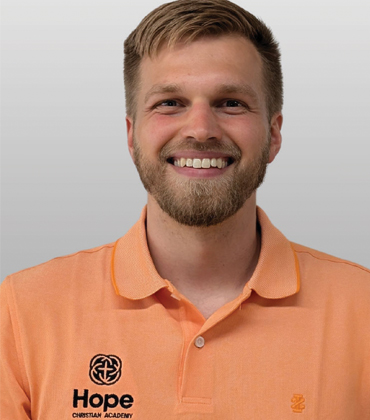
In a world where many families feel disconnected from schools, Hope Christian Academy has spent the last 50 years creating a close-knit, faith-centered community. Here, students are known, families are engaged, and education is deeply personal. Founded by local churches to provide Christian secondary education, the school serves students in grades 6-12, blending rigorous academics with spiritual formation and fostering meaningful relationships. Hope Christian Academy views education as a partnership with families, grounded in shared values and principles. Its commitment to comprehensive education, leadership development, and real-world preparedness has made it a leading Christian school. The school’s values, represented in its logo—a seal centered on the cross, surrounded by four interlocking Cs: Christian faith, Critical Thinking, Collaboration, and Communication— guide instruction and shape graduates who lead with integrity, responsibility, and compassion. “We want families who are looking for hope and connection to find that here, not just for their children, but for the whole family,” says Eric Uher, Vice Principal. A Framework for Lifelong Success At the core of Hope Christian Academy’s approach is a focus on critical thinking, discernment, and independent judgment. In a world driven by technology, it’s easy to rely on tools like calculators and AI. However, the school teaches students to engage with ideas, question assumptions, and make informed decisions. This life skill equips students to solve problems and make thoughtful decisions in all areas of life.
Medical Colleges and Universities
For many families, choosing a college begins with academics. For Christian families, it often begins one step earlier with a deeper question about formation. Will a university challenge a student intellectually while also strengthening faith and clarifying purpose? At Cedarville University, those priorities are not treated as competing goals. They are designed to work together from the first point of contact through graduation and beyond. What educational philosophy guides Cedarville University’s integration of rigorous academics and Christian faith formation? The university serves students who profess a relationship with Jesus Christ and are serious about integrating faith into everyday life. These students typically come with average to strong academic preparation and consistent church involvement, often attending one or two times per week. They arrive looking for guidance on how belief informs learning, decision-making, and future vocation. “Our approach reflects that intent: rigorous academics, spiritual development, and career preparation advance together to shape students for both vocation and life,” says Dr. Janice Supplee, vice president for marketing and communications. How does Cedarville University structure its admissions process to evaluate academic readiness and lived faith? That alignment is evident early in the admissions process. Undergraduate applicants complete an online application, submit a high school transcript, and provide a Christian leader reference who can speak to character and lived faith. Cedarville remains test-optional, allowing students to submit ACT, SAT, or CLT scores if they wish to. With rolling admissions, completed applications are typically reviewed within 48 to 72 hours, giving families timely clarity during a critical season of decision-making.
Top Catholic Elementary School 2026
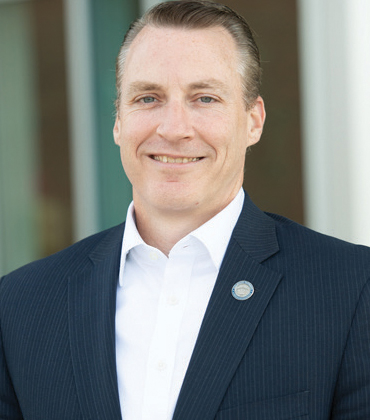
Marist St. Francis Elementary is a vibrant school where children develop in three inseparable areas. Guided by Catholic faith taught by priests, deacons, catechists and religious sisters, they are immersed in the Samoan language and culture and challenged in academics aligned with diocesan standards. Building on this foundation, each year, students from Samoan, Filipino, Fijian, Tongan and Indian families proudly showcase their heritage through Samoan speeches, traditional dances and remembrance songs. During Samoan Day, students come together to share lessons on Pacific cultures. Marist St. Francis Elementary weaves identity into academics and faith for a holistic experience, addressing parental concerns about children losing their heritage in a modernizing world. “It’s important for them to know who they are and what makes them different from the whole world, through our culture and language,” says Dr. Annie Fuavai, treasurer, Alao Parish. This 119-year-old school exemplifies perseverance in a tight-knit community. When it nearly closed in 2017 due to financial issues, parish members united to keep it alive. Their solidarity and communal efforts made it possible for the school to have improved amenities, such as a gymnasium, cafeteria and covered walkways to protect children during rain. Families, Culture and Faith in Action Cultural resilience informs teaching methods. The school offers multidimensional Catholic education from preschool through grade eight, integrating faith, culture and academics. Children take part in innovative activities such as studying a Pacific island per class, allowing them to explore and share the regional way of life.
Top Integrative Medicine University 2026
The National University of Health Sciences (NUHS) is shaping the future and setting the standard of excellence in healthcare education by preparing physicians and healthcare practitioners for collaborative, evidence-driven care rooted in prevention and patient-centered outcomes. Its graduate programs in chiropractic medicine, naturopathic medicine, and acupuncture share a collaborative academic setting, giving students early exposure to integrated care pathways and the clinical judgement required to operate within them. A Legacy Of Innovation And Academic Excellence Experience anchors this model. With 120 years of experience, NUHS has consistently evolved alongside clinical evidence to meet the demands of modern healthcare. From its inception, the university has focused on understanding why treatments work and adapting its programs as research and science advance. This commitment has produced an educational model aligned with real-world environments, where collaboration across disciplines is consequential to effective patient care. Integration At The Core Of Every Program At NUHS, integration is a core principle, not just a slogan. Students across health programs learn side-by-side, mirroring real-world team-based care. This collaborative approach strengthens clinical reasoning and prepares graduates to work confidently across disciplines for better patient outcomes. “Integration is at the heart of everything we do and it is our strongest differentiator” says Joseph Stiefel, MS, EdD, DC, President of NUHS. “Collaboration is built into every program, reflecting the realities of modern patient care and preparing graduates to thrive in team-based environments.” Shared science courses and clinical experiences foster mutual respect, co-management of cases and accountability—hallmarks that set NUHS graduates apart in today’s evolving healthcare landscape.
Art Classes Provider of the Year 2026
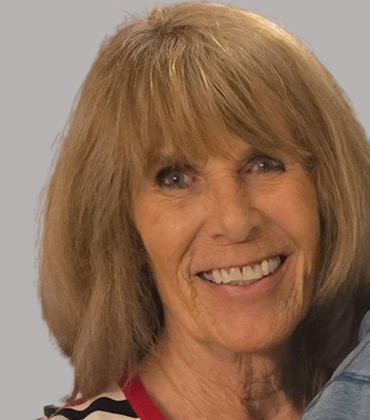
Children do not learn art in a single class or a short series of projects. They learn it through repetition and sustained practice. At Children’s Art Classes, that long view of learning has shaped the program from the beginning. Designed for students as young as three and extending through adolescence and beyond, Children’s Art Classes offers structured, studio-based art education that unfolds over years, allowing students to grow steadily while forming a lasting relationship with art. A School Built from Experience Children’s Art Classes was founded in 2009 in Jacksonville, Florida, by Barbara Gay, a certified art educator with more than 45 years of teaching experience across public schools and private instruction. Long before opening the first studio, Gay taught art from her garage in New Mexico, where she encountered a recurring problem. Young students dedicated to pursuing art seriously had nowhere to go once introductory classes ended. When she relocated to Florida to be closer to her daughters, Gay rebuilt the program with that gap in mind. “My goal was designing a curriculum that would allow instruction to deepen year after year,” she says. She opened the first studio along with her daughter Stephanie, who now leads franchise operations, while her other daughter, Jessica, teaches at one of the Jacksonville locations today.
Top Catholic High School in New Jersey 2026
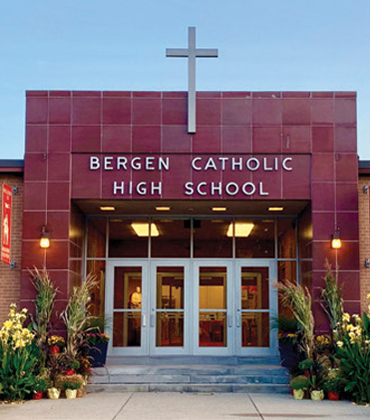
When we think about schools, we usually think only of academics. But what if it also meant becoming your truest self? In a world of rapid change and uncertainty, we need an environment built on purpose, empathy, faith, and integrity that goes beyond just test scores and degrees. There is no better place to cultivate this than a school where academic excellence meets integrity, intellect is shaped by character, and service grounds every lesson. Bergen Catholic , an all-male Roman Catholic high school, embodies that vision. Guided by the goal of shaping young men into purposeful leaders and responsible citizens, the school is supported by a deeply committed faculty. These educators design transformative programs that extend beyond academics, reflecting Bergen’s Catholic identity rooted in faith, inclusivity, and the development of the whole person. “We become a space of unity in a world often divided,” says Dr. Brian Mahoney, president. “Our doors are open to students of all faiths, creating a place where differences are embraced and voices are heard.” Inspired by the traditions of the Edmund Rice Christian Brothers, Bergen Catholic nurtures each student into a true gentleman. From a firm handshake to meaningful conversation, the school teaches values of manners, etiquette, and emotional intelligence. Students learn to treat others with dignity and carry themselves with integrity on and off campus.
Student Services

Reimagining Student Wellness Through Integrated Systems
Dr. Sherra McMillan Watkins, AVP for Student Health and Wellness, University of Utah
Education and Admission Consulting

Lifelong Skills for Today and Tomorrow
Christine Albright, Director of Careers and Community Service, Perrysburg Schools
Catholic Schools
Empowering Students to Lead: A New Vision for Civic Learning
Rashid Duroseau, Senior Director of Civic Learning, Democracy Prep Public Schools
Catholic Schools
Building Future Leaders with Faith and Integrity
Scott Hamm, Director of Pedagogical Partnerships, Assistant Director of the Adams Center for Teaching & Learning, Abilene Christian University
Catholic Schools
Empowering Your Team to Make Decisions
Dean Holik, Director of Information Systems, Springfield Missouri Public Schools
Catholic Schools
The Importance of Advanced Technology and Career Pathways in K-12 Education
Colin Rickman, Director of Communications and Engagement, St. Vrain Valley Schools
Catholic Schools
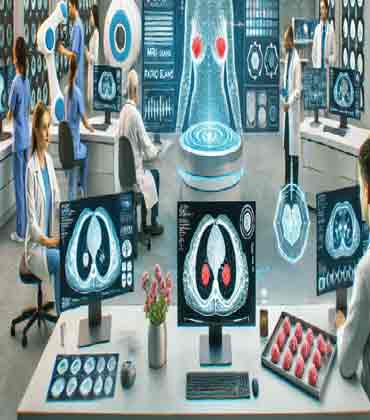
Artificial Intelligence in Radiology and Breast Imaging
Fernando Collado-Mesa, MD, Associate Vice Chair, AI Research and Ethical Use, Department of Radiology, University of Miami Miller School of Medicine
Catholic Schools
Will Skilled Trades Jobs Survive AI in the Future?
Dr. Claude Toland, Director of Education, Universal Technical Institute – Houston
Catholic Schools
A Formative Assessment's Transformative Capacity in K-12 Education
Heather Bolinger, Assistant Director at K-12 Assessment Solutions, The University of Georgia

IN MY OPINION
Private Colleges and Universities
How Christian Universities Can Lead In the Age of Artificial Intelligence
Jean Mandernach, Executive Director, Center for Innovation in Research and Teaching, Grand Canyon University

LAST WORD
Catholic Schools
Designing Schools Around Student Voice
Colleen A. Timm, Chief of Schools, School District of Lee County
IN FOCUS

Creative Connections: The Evolution of Art Classes in the Digital Age
Art classes are evolving with technology, enhancing creativity and community engagement while addressing challenges through innovative teaching and collaboration strategies.

Redefining Campus Care: Expansion of Virtual Student Health and Wellness Services
Virtual student health platforms enhance access, reduce costs, improve outcomes, and transform institutional care delivery through digital integration and data intelligence.
EDITORIAL
Leadership That Forms Mind and Mission
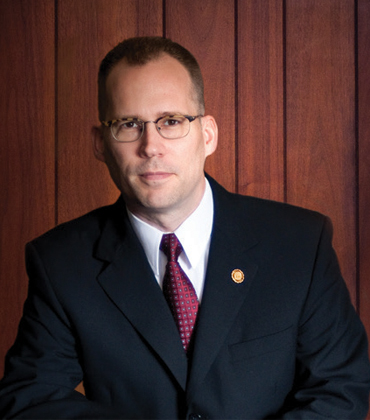
Patrick Yuran, recipient of the Head of School of the Year 2026 award, leads this issue’s cover story through his work at Oak Mountain Academy. Under his direction, the Nova Discovery Experience advances a skills based instructional model centered on collaboration, critical thinking and real world application. Drawing on his background in performing arts leadership and further refined during the operational disruptions of the pandemic, the model has sustained academic performance above local and national benchmarks while strengthening student confidence and sense of purpose.
Creative formation begins early. Children’s Art Classes, recognized as Art Classes Provider of the Year 2026, has developed a nine year progressive curriculum that builds technical mastery through disciplined repetition and structured portfolio development. In secondary education, Bergen Catholic High School, recognized as Top Catholic High School in New Jersey 2026, integrates faith formation with technology adoption and defined career pathways. At the university level, Cedarville University, recognized as Top Christian University 2026, aligns rigorous academic programming with a required biblical core that shapes both scholarship and worldview.
Community rooted education continues through Hope Christian Academy, recognized as Top Christian School 2026, and Marist Saint Francis Elementary, recognized as Top Catholic Elementary School 2026, where institutional culture and faith instruction operate as a unified framework. In health sciences, National University of Health Sciences, recognized as Top Integrative Medicine University of 2026, prepares practitioners for collaborative, evidence driven models of care grounded in clinical rigor. TimelyCare, recognized as Virtual Student Health and Wellness Services Company of the Year 2026, a leading virtual health and well-being platform serving higher education and K-12 communities nationwide.
Leadership insight reinforces these priorities. Christine Albright of Perrysburg Schools links career readiness with service learning as pathways to confidence and civic awareness. Colin Rickman of St. Vrain Valley Schools highlights advanced technology integration and career pathways that give students measurable competitive advantage.
Educational impact endures when mission, structure and leadership move in alignment. We invite readers to explore how these institutions are translating vision into measurable preparation for lives of purpose, service and long-term contribution.

