
Ellen Robb serves as Assistant Dean of Career Services at Mississippi College School of Law (MC Law), where she draws on her background as a practicing attorney and former law clerk to connect students with legal professionals and career opportunities. Through strong employer engagement and alumni relationships, she has contributed to strengthening placement outcomes, including the school’s growing success in federal clerkships. Her recognition as Assistant Dean of Career Services of the Year 2026 by Education Insider reflects an approach grounded in preparing students not just to enter the legal profession, but to step into it with confidence and clarity. Building Professional Confidence through Real-World Connections Looking back at my journey, without a doubt, the network of contacts I built during my years as a practicing attorney has been instrumental in how I do my job today. In many ways, I came into this role with what you might call a “book of contacts,” built over years in practice. I connect our students and recent graduates with practicing attorneys and others in the legal profession through those relationships, many of which go back to my time in law school. That allows me to talk about the importance of relationships that begin as a 1L in a very concrete way. What stands out most to me is realizing and accepting that the future of the legal system is in the hands of the students I see every day. I remind them often, “The legal profession is yours; you are the leaders of tomorrow. You will decide how our legal foundation will grow and change, or what will remain the same.” My role is to help them see that and feel ready to step into it. Confidence is central. An attorney has to meet with clients, stand in court and present their position, and you have to do that with confidence. That does not happen automatically. I encourage students, point out strengths they may not even recognize and help them understand how those strengths c
Summer Camps
What distinguishes Camp Med-O-Lark’s summer camp environment from more traditional camp models? At Camp Med-O-Lark’s summer camp, the waterfront runs along the main property, visible from nearly every corner. Campers move between a ceramics studio, an open-air circus rig, a music production space and a culinary area. One camper is working with clay while another is learning trapeze as each day unfolds differently for them. At the entrance, a banner reads: “Welcome home.” First-time campers may read it as just another slogan, but over time, those words begin to ring true. Founded in 1965 by Jay Stager, Camp Med-O-Lark was built as a deliberate departure from the dominant camp model of the time—militaristic, competitive and gender-segregated. It became one of the first truly co-ed programs in the country, centered on the arts and self-expression. “Camp is a place with the freedom to be and to become,” says Jody Moser, director of programming and culture, who first arrived as a counselor in 1999. That ideology still guides how the camp runs. It is reflected in a culture of kindness that shapes how people interact, without judgment and with room to grow. A Day at Camp How does Camp Med-O-Lark structure daily learning and creative activity for campers? The camp runs on a six-period structure, with three primary classes taken over roughly nine days and three rotating electives that shift midway through the two-week session. The curriculum spans visual arts in ceramics, hot glass, woodworking, fashion and painting, alongside performance disciplines in theater, cabaret and dance. A circus program, led each summer by visiting instructors from Brazil, covers flying trapeze, silks and aerials. Music instruction covers everything from individual instruments to band formation and a production studio.

Christian Schools
What role does values-based education play in shaping long-term student identity and development? A classroom is often measured by what students achieve—grades, test scores, and visible progress. However, for many families, the deeper question goes beyond outcomes: it is about what kind of person a child is becoming through that journey. At HOPE Academy, education begins with a clear belief: what a child learns matters, but who they become matters more. The school operates as a Christ-centered learning community where faith, behavior, and academics are developed together through daily practice. “We focus on the whole child, where the spiritual aspect is just as important as the academic,” says Mrs. Elena Simmons, principal. At the helm of it all is Pastor P. M. Smith who envisions Hope Academy as a place where education goes beyond academics to nurture the whole child. Here, students are not defined by their circumstances but empowered to rise through faith, discipline, and opportunity. Hope Academy provides a safe, structured, and spiritually grounded environment where every child is seen, valued, and challenged to grow intellectually, emotionally, and morally. His vision unites educators and families in equipping students not only for academic success, but for lives of purpose, resilience, and service. That environment is built through consistency. Each day begins in the chapel, where students gather as a community. They recite Isaiah 40:31, reflect on scripture, and start what the school calls its “morning vitamin.” Parents and grandparents often attend, reinforcing a sense of shared responsibility and connection.
Catholic Schools
At Ss. Robert and William Catholic School, student formation is shaped through Christ-centered interactions, service and community life, not just classroom instruction. Guided by its vision of forming ‘Saints and Scholars,’ the Euclid, Ohio, elementary and middle school integrates academic rigor with social-emotional learning, faith formation and community-based experiences. That emphasis has taken on greater urgency as students spend more time interacting through screens outside school. Many young people today are becoming ‘individuals on islands,’ spending less time in the ‘third spaces’ where communication and relationships once developed more naturally. In response, the school has intentionally built a learning environment that re-centers human connection. “Our goal is not simply to create successful students, but purposeful people,” says Scott Embacher, president. Learning Shaped Through Lived Experience Social-emotional learning and character formation are embedded throughout student life through the CARES framework—Christ centered, accountable, reimagining, empowering and significant. With students living these values daily, they connect accountability and academic effort to a life directed toward serving others. The model takes shape throughout the school day. No-tech days and discussion-driven classrooms encourage students to solve problems collaboratively, engage with peers and build critical thinking skills through dialogue rather than passive screen-based learning. Each morning begins with a structured arrival ritual. Students are greeted by teachers and administrators, often accompanied by uplifting music, and welcomed into a calm environment before beginning academic work. Learning extends beyond traditional classrooms through the school’s ‘doorless learning space.’ Outdoor environments include a greenhouse, prayer spaces, a rosary walk, a water feature and open air classrooms where lessons are conducted in nature. These spaces reconnect students with ‘God’s creation’ while shifting attention away from technology.

Charter Schools

Irvine International Academy was built in response to a growing desire within the community to better align how students learn with the world they are preparing to enter. In Irvine, where multilingual households are common and global mobility shapes family outlooks, some students were attending weekend language classes, and language remained an add-on rather than part of everyday learning. The academy was designed to close that gap by making language not a subject, but a structure. Its Mandarin-English dual immersion model divides instruction evenly between the two languages, embedding biliteracy at the core of academic learning. “Our motto is educating students today to be global leaders tomorrow,” says Dr. Stephanie Henry, Executive Director. “Language opens doors to cultures, ideas and opportunities and helps prepare students for a global society.” In five years, their approach has earned recognition, including Top TK-8 Public Charter School of 2026 by Education Insider, California Distinguished School, Best Bilingual School in Orange County, and Top TK-8 Charter School in Orange County by Niche. Building Proficiency through Consistency, Not Exposure Irvine International Academy serves a diverse international community in which students build proficiency in multiple languages within a structured immersion environment. Research on dual language immersion shows that students develop bilingualism, biliteracy and strong academic performance alongside greater cultural understanding. What defines the program is the consistency of that immersion. Students use both languages daily, which accelerates how quickly proficiency develops. In kindergarten, roughly two percent of students meet grade-level Mandarin benchmarks at entry; by year’s end, that figure rises to about 78 percent.
Hospitality and Service Industry Training

Nourishing the Future with Innovation, Sustainability and Leadership
Kaci Kelly, Director of Child Nutrition, Ocean Springs School District
Publishing Services

Summer Planning Inspired by Design Thinking
Carolyn Noll Sorg, President, John Carroll University
COED Schools

Transforming School Leadership through Practice and Equity
Debbie Armendariz, School Principal, Portland Public Schools
Christian Schools

Building the Next Generation of Edtech Leaders
Eden Konja, Director of Information and Academic Technology, Notre Dame Preparatory School
Hospitality and Service Industry Training
Trust Relationships and the Work of Keeping Schools Safe
Sara Cordova, Director of Safety and Security, Yakima School District #7
Catholic Schools

What it Really Takes to Keep Schools Safe
Todd Rohlwing, Director of Safety and Security, Community Consolidated School District 21
Catholic Schools
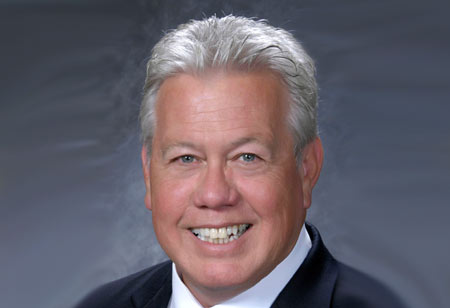
Preparing Mental Health Professionals Beyond Textbooks and Theory
Cynthia Vejar, Program Director and Associate Professor of Clinical Mental Health Counseling, Lebanon Valley College
IN MY OPINION
Catholic Schools
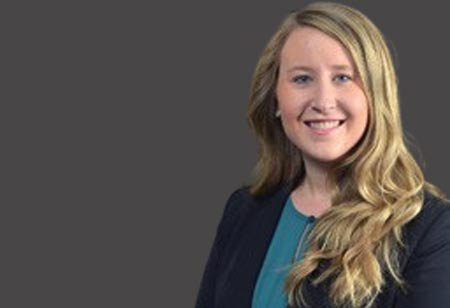
Rebuilding Human Connection in a Digital World
Claude Toland, Director of Education, Universal Technical Institute Houston
LAST WORD
Bible College
Supporting Student Success through Holistic Well-Being
Beth Northuis, Senior Associate Director Wellbeing, Western Michigan University
IN FOCUS

Personalized Learning and Faith-Based Growth in Catholic Montessori Schools
Catholic Montessori schools combine personalized learning and faith-based values to nurture academic growth, compassion, independence, responsibility and spiritual development in children.

Impact of Educational Communication Platforms on Learning Outcomes
Educational communication platforms enhance student engagement, streamline academic coordination, and encourage greater parental involvement.
EDITORIAL
Shaping Education through Purpose and Belonging
At the center of this issue is Ellen Robb of the Mississippi College School of Law, who is recognized as the Director of Career Services of the Year 2026. Through her hands-on approach to career development, employer partnerships and student mentorship, she has helped future attorneys gain confidence, broaden their professional networks and approach the transition from law school to legal practice with greater direction and purpose.
Across the education sector, schools support students in various ways to help them succeed. Camp Med-O-Lark, recognized as the Top Summer Arts Camp Provider 2026, gives young people opportunities to explore the arts while building confidence and independence. Irvine International Academy, recognized as the Top TK-8 Public Charter School 2026, combines bilingual immersion, STEAM learning and international perspectives throughout the student experience. Ss. Robert and William Catholic School, recognized as the Top Catholic School 2026, integrates academics, faith and service into daily school life. The H.O.P.E. Academy, recognized as the Top Christian School 2026, focuses on academic success while encouraging strong character and spiritual development.
This edition also includes insights from education leaders addressing important developments across the sector. Dr. Claude Toland, Director of Education at Universal Technical Institute Houston, explores how digital communication reshapes interpersonal skills and why human connection remains essential. Beth Northuis, Senior Associate Director of Well-being at Western Michigan University, shares insights on how wellness initiatives, student engagement and support systems contribute to academic achievement and student success.
Together, the leaders and organizations highlighted in these pages are helping students grow into confident, capable and purpose-driven individuals. We invite you to explore their stories and the valuable insights they bring to the future of education.

