

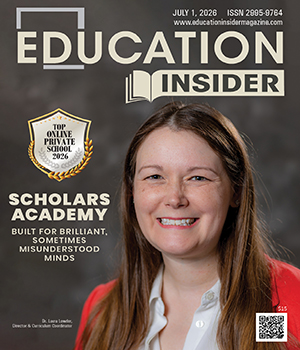
simply seeking a better fit, finally begin to thrive—not just academically, but as people? At Scholars Academy, an accredited K–12 school offering real-time online education, the answer begins with a simple observation. Students do not disengage because they lack ability. They disengage when they feel unseen, unsupported, or out of sync with how they are being taught. That insight has shaped Scholars Academy’s model, which centers on live, teacher-led small-group learning where interaction is continuous and instruction adapts in real time to each student’s needs. Instead of asking students to fit into a fixed system, the system adjusts to them academically, socially, and emotionally. In these small Zoom classrooms, typically consisting of five to fifteen students, learning is not passive. Teachers are able to read subtle cues, respond immediately, and build the kind of trust that allows students to take risks. Peer interaction becomes part of the process rather than a distraction from it. Over time, that environment changes how students engage. They participate more, persist longer, and begin to see themselves as capable learners. Students are often taught directly by Dr. Lowder herself and are affectionately referred to as “Dr. Lowder’s kids,” benefiting from the guidance of a career educator who holds a doctorate in education from the University of Florida and brings more than decades of experience across K–12 and higher education. This focus on relationships first and instruction second underpins every part of the Scholars Academy model.
School Services
Meal service providers are expected to manage high-volume service within short windows of time while balancing nutrition and affordability. At the same time, they play a key role in shaping student experience and campus life. Hanna-Que Inc works within this reality. Having grown from within the Notre Dame High School community, it aligns meal service with daily school cafeteria requirements. The Hanna family has been part of the Notre Dame community since 1999, volunteering at campus sports events where its homemade grilled hamburgers and hot dogs became a favorite part of school gatherings. The nickname ‘Hanna-Que,’ coined by students during baseball doubleheaders, eventually became the company’s identity when the family took over cafeteria operations. Over the last two decades, Hanna-Que has grown to serve 97 percent of students at Notre Dame and has also established operations at St. Mel Elementary School. “We’re passionate about the food we serve, and that enthusiasm carries into the school environment,” says Brenda Hanna, president and owner. Managing Scale with Cost Efficiency With prior experience in cooking at scale, the early stages focused on testing food items within a daily operating system. The focus was on cooking in volume while keeping costs manageable. A key part of this was balancing supply and demand to avoid waste while ensuring sufficient availability. As items sold out faster than expected, quantities were accordingly adjusted. Across its operations, Hanna-Que’s focus remains on freshness. Ingredients are delivered daily to manage storage constraints. It also evaluates vendors to keep sourcing cost-effective without compromising quality. .

Top Reading and Writing Solutions 2026

For many students, learning to read and write begins in elementary school. But as they move into middle and high school, reading becomes more about absorbing content than developing literacy skills. The shift leaves many behind as they struggle to keep up with academic demands. This gap in secondary literacy instruction is what inspired Jonathan LeMaster and Lee Ramsey to establish Literacy Geeks. Combining LeMaster’s expertise in education with Ramsey’s background in computer science, Literacy Geeks is transforming the way students in grades 6–12 learn to read and write. The company bridges the literacy gap in secondary education by providing explicit and skill-based instruction. Close Reading Comprehension Strategies LeMaster and Ramsey recognized a persistent pattern in school teachers. While elementary school teachers often have a strong literacy background, secondary educators tend to focus more on content. “In secondary education, teachers are specialists in their subject but many are not equipped to teach students the skills needed to truly understand and engage with texts,” says LeMaster. Research supports this claim. As students move past elementary grades, they often struggle to adapt to more complex reading tasks. By middle school, it is no longer about learning to read but reading to learn. Here, the gap between students who are proficient and those who are struggling widens. Explicit literacy instruction is crucial at this stage.
Top Christian Preschool
Bergen County Christian Academy (BCCA) is a mission-driven, faith-based school dedicated to nurturing academic excellence and the growth of character in each student. It welcomes students of all backgrounds who are open to learning through a Christian and biblical worldview. The school cultivates an environment where faith is lived, not just taught. Teachers model Christian values, guiding students to reflect, make thoughtful choices, and internalize principles. The environment is intentionally print-rich, where learning materials are vetted to ensure positive values and ethical lessons. Learning comes to life through hands-on opportunities. Students participate in activities such as the “seed-to-harvest” gardening project, robotics, and school-wide fundraising initiatives that cultivate teamwork, school spirit, and generosity. Guest authors read to students, and older students hear from speakers, including representatives from Samaritan’s Purse, to understand how compassion and service can change lives. The school also hosts prayerful gift-packing events, where students thoughtfully prepare boxes for children in need and reflect on what might bring each recipient joy. After-school programs, such as music, chess, and taekwondo, help students develop patience, resilience and creativity. “We guide them so they can grow into individuals who choose the right values in life well beyond their time in school,” says Lily Ahn, head principal at BCCA.

Art and Design Colleges

Serving Up Change: The Evolution of a School Nutrition Leader
Darcy Stueber, Director of Nutrition Services, Mankato Area Public Schools
Nursing Colleges

Leading the Charge in Transforming Online Education
Sarah Rasmussen, Director of Online Education, Dakota State University
Career Colleges

We Need to Stop Asking Students What They Want to Be When They Grow Up
Dr. Samuel Mormando, director of technology, innovation, and online learning for the Garnet Valley School District in Glen Mills, Pennsylvania
Career Colleges
Utilizing 19th-Century Practices in a 21st-Century Environment
Terri Webb, Instructional Technology Manager III, DeKalb County School District
Career Colleges

Transform Your Professional Growth One Day at a Time
Eva Harvell, Director of Technology, Pascagoula-Gautier School District

IN MY OPINION
Career Colleges
The Benefits of Attending a Trade School
Dr. Claude Toland, Director of Education, Universal Technical Institute

LAST WORD
Career Colleges
Envisioning Success in the Postsecondary Path
Daniel A. Lopez, Managing Director of Program, OneGoal
IN FOCUS

Redefining College and Career Readiness: The Impact of Online Private Schools
Online private schools personalize learning, integrate career skills, and leverage technology to prepare students for higher education and future careers.

Building Healthier Campuses: Trends in Education Meal Catering and Consumer Preferences
Education meal-catering services are developing through technology, nutrition standards, sustainability, and scalable models to meet growing institutional food-service demands efficiently.
EDITORIAL
Redefining Learning and Student Support Systems
Our cover story recognizes Scholars Academy as the Top Online Private School 2026. The school has built a live, teacher-led model that emphasizes small-group instruction and learning experiences that adapt to each student's needs. Rather than following a fixed pace, educators respond in real time to both academic and emotional needs, helping students regain confidence and become more engaged. This approach has created a supportive environment for gifted, neurodiverse and twice-exceptional learners who may not thrive in traditional settings.
The organizations recognized in this edition show that supporting students goes far beyond academics. Hanna-Que, Inc. recognized as the Top Meal Catering Services 2026, has grown alongside the school communities it serves. Even while managing large meal programs, the organization remains focused on providing fresh, familiar and accessible food. By paying close attention to dietary needs and daily operations, it ensures that students have reliable access to nutritious meals throughout the school day.
Contributors featured in this edition share perspectives on the many factors that shape student success and future readiness. Darcy Stueber, Director of Nutrition Services at Mankato Area Public Schools, discusses the role food security plays in helping students stay focused and ready to learn. Dr. Samuel Mormando, Director of Technology, Innovation at Garnet Valley School District, explores why adaptability and transferable skills are becoming increasingly important as the world of work continues to evolve.
The organizations and leaders featured in this issue reflect a shared focus on adaptability, access and student-centered design. We invite readers to explore the insights presented throughout this edition.

