

Located in a picturesque center of North Carolina; southwest of Raleigh, Grace Christian School stands as a testament to the power of a comprehensive, Christ-centered education. Under the guidance of Stuart Shumway, the head of school, it has become a place where students not only excel academically but are also nurtured in their spiritual, emotional, social, and physical development. With a clear commitment to integrating a Christian worldview into every facet of student life, the school provides a unique and holistic approach to education, one that places an emphasis on the whole person, body, mind, and spirit. At the heart of Grace Christian School’s philosophy is a belief in the importance of incorporating a Christian worldview into all aspects of academic life. For Shumway, this is not merely an addition to the curriculum but an essential aspect of the educational process. “Our purpose as a school is to move kids closer to Jesus, and the entirety of the curriculum is integrated with both the biblical worldview and that purpose,” he explains. This approach is evident across every subject and extracurricular activity, from fine arts and athletics to core subjects such as English, science, math, history, and humanities.

Pre-Schools
The mother still remembers the moment clearly. She walked in expecting a routine preschool tour, but instead felt something rare, an immediate sense of peace and belonging. Children moved through the hallway with ease, and teachers greeted families by name; the atmosphere carried a quiet confidence. Within minutes, she knew this was where her child belonged. That instinctive feeling of being welcomed is not decorative at the International School of Tucson (IST). Under Jessica Palma’s leadership, the school intentionally cultivates stability, cultural immersion and emotional safety as its defining signature for meaningful learning. But IST’s preschool is more than a warm beginning. It is built on a student-centered program where language immersion, developmentally appropriate inquiry, and hands-on learning shape every moment of a child’s day. What strengthens this model is IST’s exceptional staff stability, including two teachers that have been a part of the preschool for more than 16 years. In a field where turnover often disrupts continuity, IST’s retention fosters lasting relationships and an ecosystem that enables children to grow academically, socially, and emotionally. Bringing the World into the Classroom One of IST’s strongest differentiators is its global-lens teaching model, where native-speaking or equivalent teachers don’t simply teach; they model cultures. “Children don’t learn words. They absorb stories and customs from native teachers from Africa, France and Mexico, making the wider world their classroom and passport,” explains Palma, Head of School.
Christian Schools

In the pursuit of elite youth sports, student-athletes are often forced to choose between competitive development, academic stability, and spiritual growth. Demanding schedules, constant travel, and fragmented learning environments leave little room for balance during the most formative years of their lives. Yet true development requires more than performance alone. It needs structure, accountability, and daily intentionality. At NorthStar Christian Academy, that balance is not accidental but a rhythm. Faith, hockey, and school shape each day in deliberate sequence, creating consistency within an otherwise demanding lifestyle for student-athletes pursuing excellence on and off the ice. “We emphasize spiritual growth alongside school and hockey, and create a culture where boys discuss faith in every setting so they mature academically, athletically and spiritually throughout their time here,” says Ashley Mickelson, head of school. Faith serves as the foundation of daily life at NorthStar. Students attend chapel each morning, hear the gospel every day, and pray together after every game. While spiritual growth is encouraged and modeled daily, the academy emphasizes that faith is not forced. Students are given consistent exposure, guidance, and space for personal reflection as seeds are planted over time. Rather than existing as a separate requirement, faith shapes daily behavior, conversations, and decision-making as students pursue both athletic and academic goals. That foundation supports a structured academic model designed specifically for student-athletes. NorthStar operates through a hybrid partnership with Liberty University, where students complete online coursework that includes live virtual classes, recorded sessions, assignments, and regular access to teachers’ office hours. The flexibility of the program allows students to work ahead academically, helping them manage travel-heavy weeks while maintaining steady progress throughout the season.
Student Services
Selecting the right university is never simple, and for soccer players, the process involves far more than athletic ability alone. Academic profile, English proficiency, financial considerations, and long-term goals all play a critical role. When these factors are not adequately aligned, student-athletes risk entering programs that are not a good fit, affecting their development and overall college experience. For many families, navigating these variables without experienced guidance can feel overwhelming, particularly when timelines and eligibility requirements vary by country and institution. Recognizing this challenge, USTARS Group was established 15 years ago in Israel as a college placement agency focused on helping student-athletes find universities that truly match their profiles. Since then, the company has expanded across Europe, including France, Germany, Italy, and Hungary, and over the past three years into North America. Today, USTARS is a U.S.-registered company with a growing presence in the American market, while continuing to support students internationally, including placements in Canada. USTARS works primarily with high school soccer players, from first-year students through seniors, as well as students who have already graduated and are seeking college opportunities later. The company guides families through a complex process with a strong emphasis on realism, transparency, and long-term fit. Parents are actively included to ensure decisions are informed, understood, and aligned with both academic priorities and f inancial expectations. “Our philosophy is to give players and their families an honest evaluation, guiding them toward schools where they can realistically succeed, both academically and athletically,” says David Znaty, founder and CEO.

Top Student Housing Services 2026

Two21 Armstrong Apartments is a haven for students who want convenience and community built into their daily routine. Set in a small-town southern community where people say hello on the sidewalk, it offers a version of Auburn that feels personal, not anonymous. Two blocks from Auburn University's campus library and a short walk to downtown, this property stays in top shape under a dedicated owner who treats it as a cherished family legacy. That location matters in a place that has shifted from a porch swing kind of southern town to a hub for thousands of students. It now has more cars than parking spaces and many students spend longer searching for spots than it would take to walk from Two21 to their class. Most on-campus housing is located on the edges of Auburn’s vast campus, so students living in dorm-suites have a longer journey than Two21 tenants. Residents walk to class in minutes, grab groceries for their apartment, get lunch downtown and are right there with the masses rolling Toomer’s Corner trees and sipping its famed lemonade after a big Auburn win. In short, Two21 is where Auburn happens within walking distance. “We are as close as any on-campus housing to actual classrooms. Residents do not have to move their vehicles around or search for parking that is farther away,” says Carrie Walker, property manager.
School Services

Empowering Students and Educators with Vision and Heart
Chaka C. Hajji, Director of Schools, Rocketship Public Schools
Student Services

Transforming Schools with Visionary Leadership
Rodney Jordan, School Principal, Charlottesville City Schools
Art and Design Colleges
Balancing Data and Humanity in Times of Change
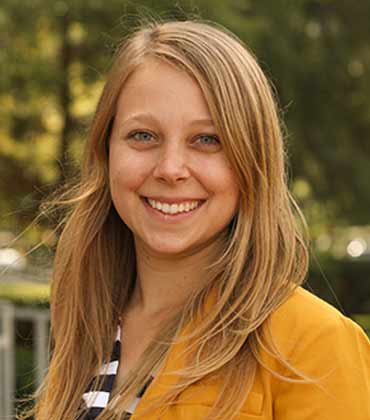
Amy Becker Karl, Assistant Director of Graduate Admissions, Wheaton College
COED Schools

Transforming School Leadership through Practice and Equity
Debbie Armendariz, School Principal, Portland Public Schools
Christian Schools

Tech-Enabled, Human-Centered: Effective Student Support
Travis T. Apgar, Vice President for Student Affairs, Case Western Reserve University

IN MY OPINION
School Services
Planning for Growth from Blueprints to Bayous
Funke Oyesanya Jacob, Director of Facilities Planning and Projects, University of Houston-Downtown

LAST WORD
Christian High Schools
The Lost Value of College Developing Autonomy and Independence
Lindsey Freed, Director of Regional Recruitment and Admission, University of Dayton
IN FOCUS
Private Christian Education as a Strategic Partner in Advancing National Education Goals
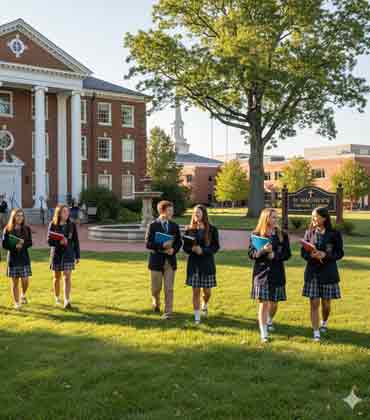
Private Christian education advances national goals by combining academic excellence, strong values, and workforce readiness, fostering holistic development and civic responsibility while supporting literacy, character, and digital skills for future.

The Integrated Ecosystem Shaping the Future of Preschools
Preschools now emphasize holistic child development—integrating physical, cognitive, emotional, and creative growth—to cultivate well-rounded, resilient, and adaptable children prepared for lifelong learning and success.
EDITORIAL
The Coherence Advantage: How Purpose-Aligned Schools Are Shaping Education’s Next Phase
Grace Christian School, our featured institution, demonstrates this shift in action. Its model is built on a unified worldview that shapes curriculum design, leadership development and student life. By treating faith integration, academic excellence, and character formation as mutually reinforcing mechanisms, the school advances a clear thesis: consistency of purpose produces durable academic, cultural, and enrollment outcomes. Even growth planning and capital investment follow this same organizing logic, turning coherence into an operational discipline rather than an abstract ideal.
Contributor perspectives throughout this issue follow a similar trajectory. Rodney Jordan, a public-school principal known for leading schools through accreditation and cultural transformation, reframes shared leadership as a stabilizing force that sustains performance over time. Debbie Armendariz, a principal and system-level leadership coach within Portland Public Schools, extends this view by positioning emotional intelligence and instructional clarity as levers for shaping adult behavior at scale. Their insights converge on a standard signal: leadership maturity transforms relational skill into measurable instructional and equity gains.
Looking ahead to 2026 and beyond, the organizations that will define the next era of education are those capable of operationalizing alignment across leadership practice, instructional execution and institutional values. The leaders who treat pedagogy, culture and leadership as integrated systems rather than soft variables will set the pace. In the next cycle, coherence becomes education’s most durable operational asset.

