

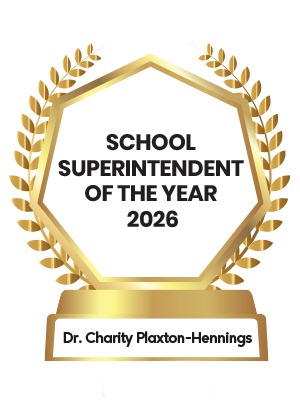
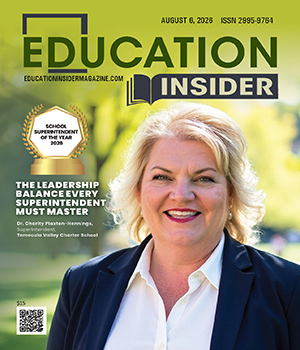
Dr. Charity Plaxton-Hennings is a licensed clinical psychologist, certified trauma specialist, and educational leader with a doctorate in Clinical Psychology, a bachelor’s degree in Speech Communication and Psychology, and two master’s degrees in Public Health and Psychology. She also completed a postdoctoral fellowship in pediatric neurodevelopmental psychology at Loma Linda Children’s Hospital and holds credentials in School Psychology and Administrative Services. With over 25 years of experience, she has served in a variety of capacities focused on education and families including a pediatric neuropsychologist, professor, school psychologist, and senior leader in special education, students services and program development, while also providing consultation and training with various organizations. She has trained and presented at a variety of conferences and professional meetings. Building Community Relationships in Education One of my top priorities has been cultivating strong, authentic relationships within the community. In an era dominated by social media and widespread skepticism about the reliability of information, genuine human connections have never been more vital. When individuals know, trust, and feel connected to their educational leaders, it establishes a solid foundation for collaboration and meaningful progress. This conviction has guided my focus on being present, visible, and intentional in developing authentic relationships with staff and the families we serve. The Expanding Role of Modern Superintendents I believe a superintendent’s core responsibility is to ensure that staff and the broader community are deeply invested in the school’s mission and vision. Beyond fostering initial commitment, the superintendent must continually elevate that mission and vision in every discussion and decision, keeping teachers, staff, and community members anchored to the organization’s fundamental purpose. In today’s fast-paced
Healthcare and Allied Health Training
Many students who consider healthcare training are not held back by ability. They are held back by doubt, difficult schedules, personal challenges and the fear that they may not belong in a clinical environment. Berry Best Phlebotomy Training, a licensed trade school specializing in phlebotomy and laboratory assistant education, helps students overcome these barriers through an accelerated, hands-on learning experience that develops both technical proficiency and professional confidence. Its phlebotomy certification program equips students with the practical skills and industry-recognized credentials sought by laboratory managers in as little as three weeks. Many students enter training uncertain about their abilities and leave with the confidence, practical experience and professional readiness needed to pursue laboratory careers. Its curriculum has consistently produced National Healthcareer Association certification pass rates approximately 17 to 23 percent above national averages. The track record reflects the program's longstanding belief that practical application and clinical exposure are essential to building confidence and producing workforce-ready graduates. “Practical application has always been at the heart of our training. Our strong certification outcomes are the result of the hands-on clinical experience and support that students receive,” says Kelly Ellsberry, education coordinator and executive lab director. Developing Confidence through Practical Learning Berry Best's new hybrid training model removes the barriers that prevent prospective students from pursuing healthcare training. The revised format combines two weeks of online coursework, designed in partnership with Force for Health, with two intensive eight-hour clinical training days. .

STEM Schools

When a student's glasses broke during the school day, the obvious solution would have been for a teacher to fix them. At Somerset Palms Academy, however, the teacher turned the moment into a student-led challenge. Students brainstormed ideas, built prototypes and tested different approaches until they found a design that kept the glasses functional for the rest of the day. What began as an impromptu classroom problem became a STEM exercise in engineering, collaboration and problem-solving. That classroom experience reflects how learning unfolds at the K–8 public charter school. Teachers serve as facilitators while students investigate, experiment, and solve problems independently. STEM is woven throughout the curriculum, encouraging critical thinking and the practical application of learning. "STEM takes learning beyond memorization by challenging students to apply what they know across disciplines," says Adriana Diaz-Garcia, principal. The philosophy shapes instruction across the school. Teachers focus on helping students master academic standards rather than simply emphasizing test preparation. Science, mathematics, literacy, art and physical education are intentionally connected, helping students apply STEM thinking across disciplines. Those ideas take shape through hands-on STEM challenges at every grade level. First graders design their own fidget spinners, while older students build bridges, bottle rockets, rovers, solar-powered cars and fully functional solar ovens. Students also investigate plate tectonics, design Field Day obstacle courses and create artwork using tools they have designed themselves.
Education Programs Provider
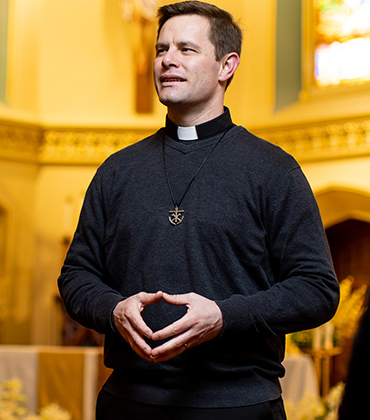
When education is rooted in faith, learning becomes a journey that shapes lives with purpose, compassion and integrity. King’s College, located in WilkesBarre, Pennsylvania, embodies this philosophy. Founded by the Congregation of Holy Cross from the University of Notre Dame in 1946, it takes a holistic approach to education by combining knowledge with a focus on intellectual, emotional and spiritual aspects. Students receive top-tier education in accredited courses along with personalized guidance that fosters their growth as individuals. Every learner at the college is enrolled in a core liberal arts curriculum, encompassing theology, philosophy and other core subjects, ensuring a well-rounded education regardless of their chosen major. A hallmark of King’s College is its vibrant community, where students experience a strong sense of belonging across campus. Rooted in the Holy Cross tradition, the priests and brothers on campus work hand-in-hand with the faculty, staff and alums to provide mentorship and guidance. The college encourages active participation in meaningful, service-oriented initiatives, turning learning into action that benefits others and strengthens their sense of purpose. Whether it’s residence halls, sports teams, clubs or service opportunities, these connections form the cornerstone of student life. “Our community is central to who we are and the students feel it in the welcoming, connected atmosphere on campus,” says Father Brogan C. Ryan, C.S.C., Director of Campus Ministry and College Chaplain. Ninety-two percent of faculty members at King’s College hold a Ph.D. or an equivalent terminal degree and are highly proficient in their field of study and research. They are deeply involved in student development through various means, including teaching, mentorship and scholarships.
Catholic Institution
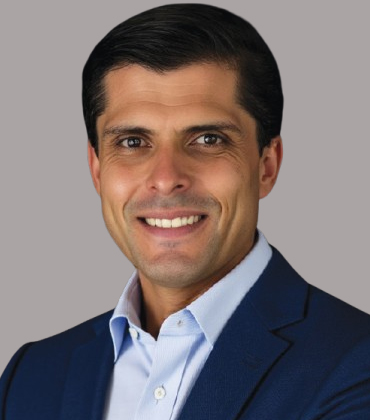
Every school wants their students to step beyond the classroom and into the world — but executing meaningful, safe, and curriculum-aligned educational travel is easier said than done. That’s where Envoys steps in. Envoys is not your typical travel provider. As a best-in-class partner to middle and high schools across the globe, the company specializes in designing and delivering whole-grade and small-group travel programs that are both immersive and academically rigorous. From 120 eighth graders exploring civic engagement in Washington, D.C. to students engaging in music-centered cultural exchange in the Caribbean, Envoys helps schools turn ambitious ideas into transformative learning journeys. “We see travel not as a luxury, but as a classroom,” says Felipe Correa Jaramillo, CEO and Co-Founder of Envoys. “Done right, it helps students grow as citizens of the world — curious, compassionate, and capable of navigating complexity.” Whole-Grade Travel That Goes beyond the Bus Tour Form more than a decade, Envoys has become a trusted partner for schools reimagining their travel programs. A common example? The traditional eighth-grade trip to Washington, D.C. or their Spanish immersion experience in Spain. For one private school in Miami, the trip to DC had long followed a familiar formula — hotel, museum, tour guide, food court, repeat. When Envoys took over, the program was transformed into a civic learning journey. Students explored democracy through monument design challenges, active conversations and interactions with multiple stakeholders, and activities that asked them to drive their own exploration and learning while visiting a new place with their peers.
STEAM Services

Advancing STEM Education: The Journey and Vision
Dr. Justin Luttrell, Director of Secondary Education, Pulaski County Special School District (PCSSD)
Test Prep and Tutoring Services

Enriching Public Education with Equity and Collaboration
Dr. Sandra Lochhead, Director of Schools, Denver Public Schools
Student Services

Transforming Schools with Visionary Leadership
Rodney Jordan, School Principal, Charlottesville City Schools
Bible College
Cost Versus Value In The Edtech/It World
Robert Fishtrom, Director of IT, Mountain View-Los Altos Union High School District
Business, Tech & Corporate Skill Training
Beyond Bunny-Bopping: Using Ai as a Sous-Chef to Plate Student Voice
Tom Foster, Director of Instructional Technology, Saint Viator High School
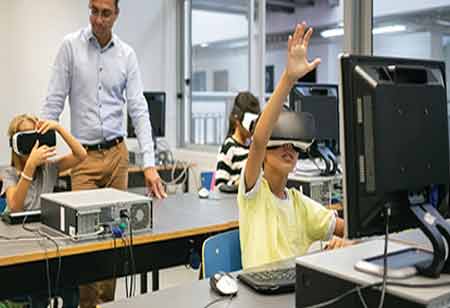
IN MY OPINION
Charter Schools
Responsible Tech for Modern Classrooms
Steve Langford, CIO, Beaverton School District

LAST WORD
Christian Colleges
Reframing Fidelity Toward Freedom in Teaching
Rebecca Tompkins, Director of Curriculum, Sycamore Community Schools
IN FOCUS
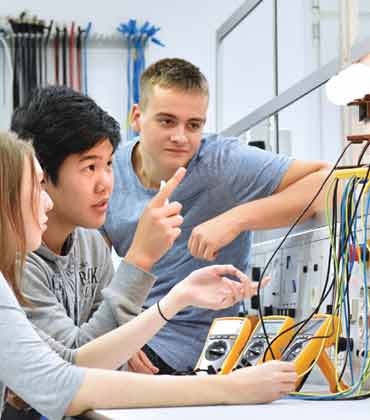
Trade Schools: A Practical Pathway to Career Success
Trade schools provide affordable, practical education that supports faster employment, strong workforce demand, reduced debt and long-term career stability.
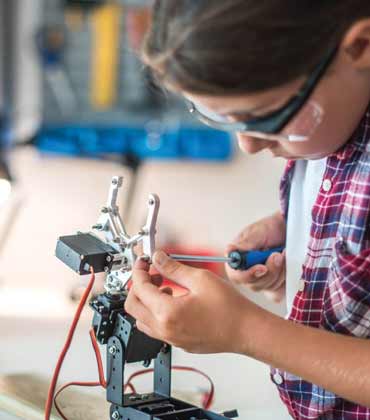
Creating Tomorrow's Innovators: The Impact of K-12 STEM Education
K-12 STEM schools cultivate critical thinking, interdisciplinary learning, technological fluency, innovation, research skills, and real-world problem-solving capabilities.
EDITORIAL
Shaping the Future of Education Leadership
Our cover story features Dr. Charity Plaxton-Hennings, Superintendent of Temecula Valley Charter School, recognized as the School Superintendent of the Year 2026. With a professional background in education, psychology and student affairs, she is an experienced leader who relies on trust, transparency, visibility and the active participation of the school community. By balancing strategic execution with transparent communication and a steadfast commitment to student-centered decision-making, she is helping strengthen school culture while preparing the organization for sustained growth, including the development of its permanent campus.
Also recognized in this edition is Berry Best Phlebotomy Training as the Top Trade School 2026 for preparing workforce-ready laboratory professionals through accelerated, hands-on education that combines clinical experience with individualized student support. Somerset Palms Academy, recognized as the Top K-12 STEM School 2026, is cultivating the next generation of problem-solvers through interdisciplinary, student-led learning experiences that connect STEM with real-world applications, critical thinking and collaboration.
This issue also features perspectives from education leaders shaping the future of teaching and learning. Steve Langford, CIO at Beaverton School District, explores how responsible AI adoption, cybersecurity and collaborative technology leadership can enhance both learning and operational effectiveness. Rebecca Tompkins, Executive Director of Curriculum and Instruction at Sycamore Community Schools, highlights the importance of empowering teachers through meaningful professional learning, evidence-informed instruction and the thoughtful use of curriculum to strengthen student outcomes.
Together, these stories show that excellence in education is built through strong leadership, empowered educators and learning environments that prepare students for an evolving world. We invite our readers to explore these perspectives and discover how thoughtful leadership continues to shape the future of education.

